


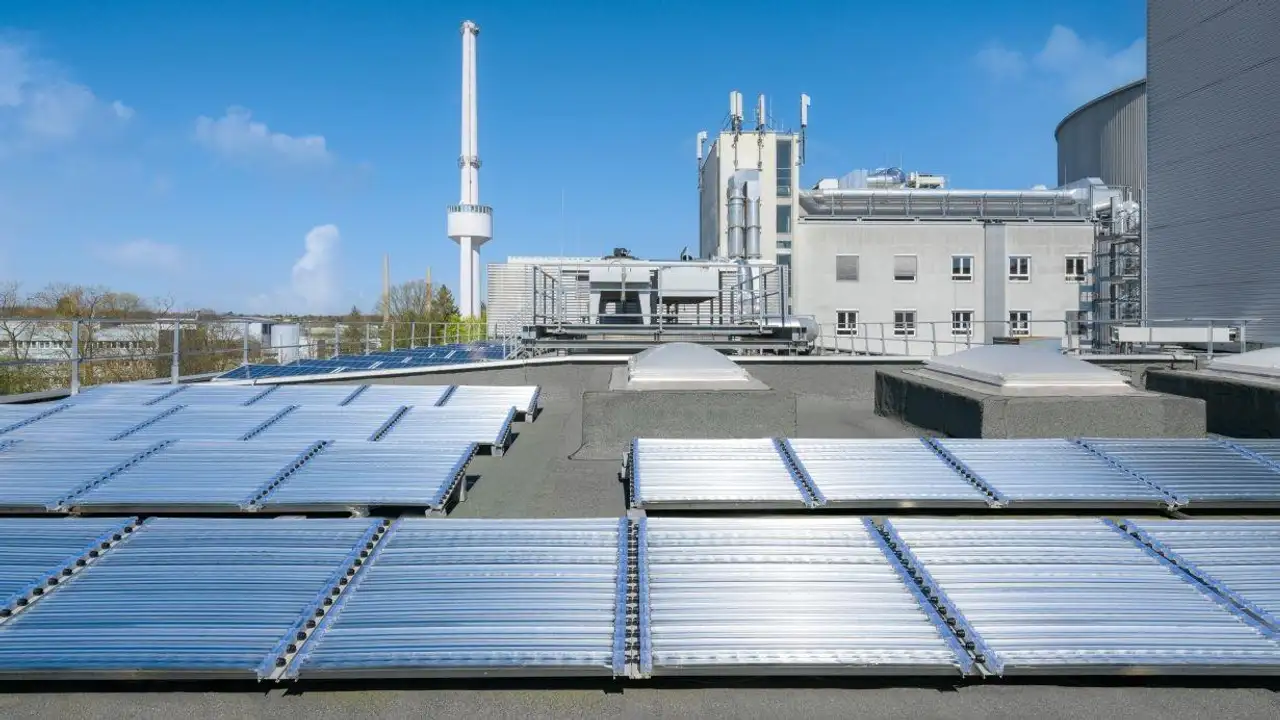
A prototype one-square-meter panel can produce hydrogen directly from sunlight without any electrolyzer or separate electrical grid connection.
The system, developed by Photreon, uses a process called photocatalysis to combine the two traditional steps of green hydrogen production into one. Standard methods require solar panels to generate electricity, which is then fed into an electrolyzer to split water molecules. Photreon’s approach uses light-sensitive materials to absorb solar energy and activate electrons, using that energy directly to break water into hydrogen and oxygen.
Photreon says the photoreactor is designed to optimize the balance between light distribution and the chemical reaction. Efficient collection of the resulting hydrogen gas is also a critical part of the system.
The technology’s independence from the electrical grid provides a major advantage in regions with limited infrastructure. The panel is built with common materials and standard manufacturing techniques, making it suitable for mass production.
Its modular design allows for flexible installations, from small-scale rooftop setups to large farms in areas with high solar potential. This enables on-site hydrogen production for medium-sized businesses in sectors like chemicals, food production, and metal processing.
By reducing dependence on centralized energy infrastructure, the technology promotes local production. Its ability to enable clean fuel production even in off-grid areas could play a critical role in the spread of a hydrogen economy.
Source: Kit.edu