


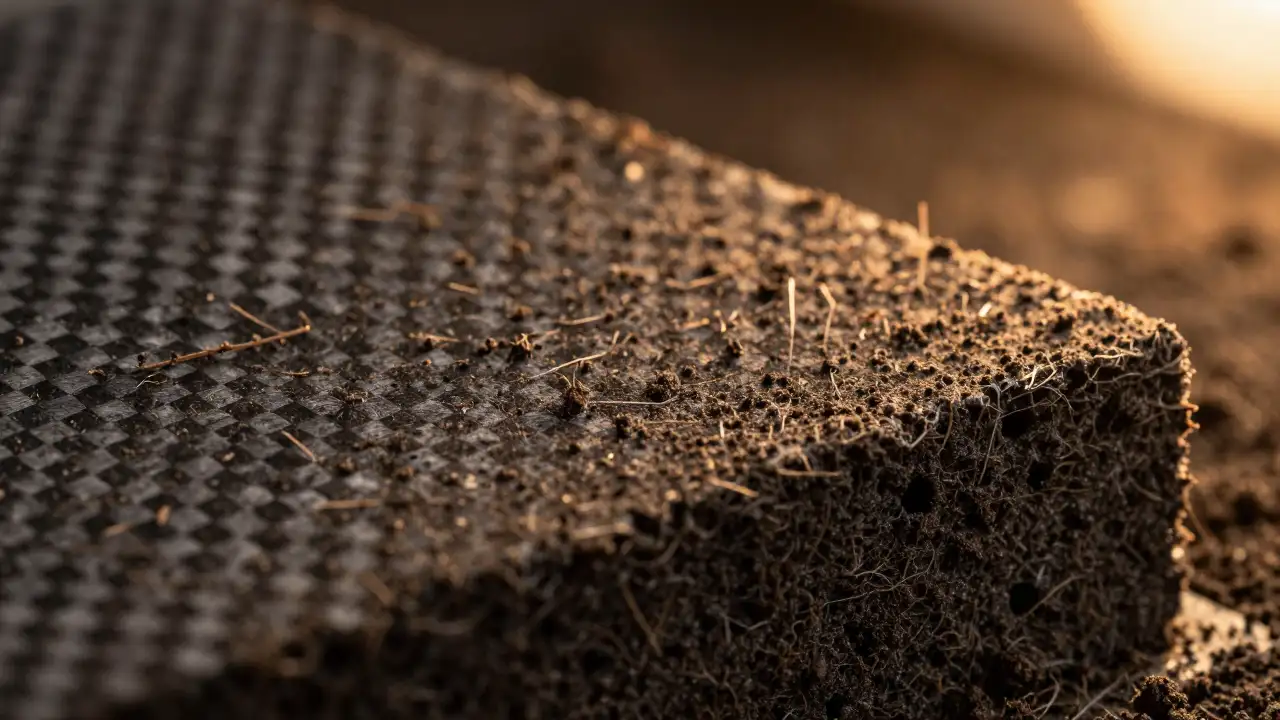
A fuel cell the size of a paperback book now pulls steady electricity from ordinary dirt. In field tests, it generated 68 times more power than its sensors required, running continuously through conditions that kill conventional power sources.
The device, developed by researchers at Northwestern University, captures electrons released when soil microbes break down organic material. Unlike batteries, which demand toxic metals and eventual replacement, or solar panels that fail when dirty or dark, this system draws its energy directly from the environment it monitors.
Precision agriculture relies on dense networks of underground sensors tracking moisture, nutrients, and contaminants. But powering them has meant impossible choices: batteries die, solar panels clog with dust and need sunlight, and both require supply chains that farmers cannot maintain across hundreds of acres.
"If you want to put a sensor out in the wild, in a farm or in a wetland, you are constrained to putting a battery in it or harvesting solar energy," said Bill Yen, who led the work as a Northwestern alumnus. "Solar panels don't work well in dirty environments because they get covered with dirt, do not work when the sun isn't out and take up a lot of space. Batteries also are challenging because they run out of power. Farmers are not going to go around a 100-acre farm to regularly swap out batteries or dust off solar panels."
Soil microbial fuel cells have existed since 1911, yet they never reached practical use. They need both moisture and oxygen, a combination difficult to maintain underground, especially in dry spells. Previous designs produced too little power too inconsistently.
The breakthrough came from a simple geometric change. Instead of parallel electrodes, the new design positions them perpendicular: a horizontal carbon felt anode buried beneath the surface, and a vertical metal cathode rising to the air. This structure keeps the base in moist soil while the top breathes freely. A protective cap blocks debris. A waterproof coating lets the cathode survive flooding and dry gradually as water recedes.
The team tested four designs over two years, collecting nine months of data before selecting the final prototype. It performed across a wide range: from moderately dry soil at 41% water content to fully submerged conditions. On average, it lasted 120% longer than comparable systems.
The researchers demonstrated the system running sensors that measure soil moisture and detect touch, which could track wildlife movement through fields. A small antenna sends data wirelessly by reflecting existing radio signals, keeping energy demand minimal.
"The number of devices in the Internet of Things (IoT) is constantly growing," Yen said. "If we imagine a future with trillions of these devices, we cannot build every one of them out of lithium, heavy metals and toxins that are dangerous to the environment. We need to find alternatives that can provide low amounts of energy to power a decentralized network of devices. In a search for solutions, we looked to soil microbial fuel cells, which use special microbes to break down soil and use that low amount of energy to power sensors. As long as there is organic carbon in the soil for the microbes to break down, the fuel cell can potentially last forever."
George Wells, senior author on the study and a professor at Northwestern, emphasized the scale of what they are capturing.
"These microbes are ubiquitous; they already live in soil everywhere," Wells said. "We can use very simple engineered systems to capture their electricity. We're not going to power entire cities with this energy. But we can capture minute amounts of energy to fuel practical, low-power applications."
The team has released all designs, tutorials, and simulation tools publicly. All parts can be sourced from common hardware materials. The next goal is a fully biodegradable version that avoids complex supply chains and conflict minerals entirely.
Josiah Hester, study co-author now at Georgia Institute of Technology, connected the work to broader vulnerabilities in how electronics are built.
"With the COVID-19 pandemic, we all became familiar with how a crisis can disrupt the global supply chain for electronics," Hester said. "We want to build devices that use local supply chains and low-cost materials so that computing is accessible for all communities."
The researchers continue working to improve efficiency, stability, and materials. The study, "Soil-powered computing: The engineer's guide to practical soil microbial fuel cell design," was published in Proceedings of the ACM on Interactive, Mobile, Wearable and Ubiquitous Technologies (2024; 7 (4): 1 DOI: 10.1145/3631410).