


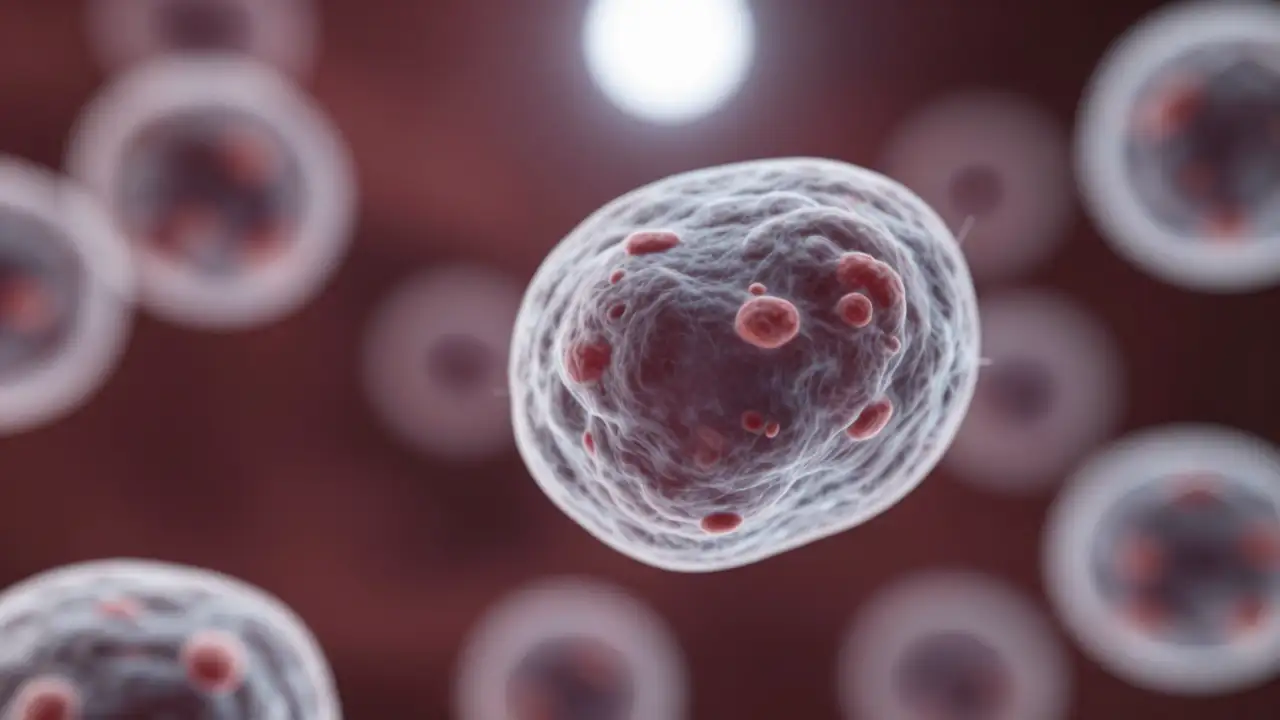
Higher levels of a common white blood cell measured in routine blood work are linked to a greater chance of developing Alzheimer's disease years before any symptoms appear.
The neutrophil-to-lymphocyte ratio (NLR) is a standard value calculated from a complete blood count. It reflects the balance between neutrophils, the body's first immune responders, and other immune cells.
New research analyzing NLR data from nearly 400,000 patients across two large healthcare systems found that a higher NLR was consistently associated with an increased likelihood of developing Alzheimer's or other dementias. The study used each patient's earliest qualifying NLR measurement taken when they were at least 55 years old and before any dementia diagnosis.
Tianshe (Mark) He, PhD, data scientist in the Department of Psychiatry at NYU Grossman School of Medicine:
"Neutrophil elevation is happening before any evidence of cognitive decline, which makes a compelling case for studying whether neutrophils are actively contributing to disease progression."
The relationship held true for both near-term and long-term risk. Researchers defined "high" NLR based on the median value, meaning half of the participants had higher readings.
The analysis revealed differences among subgroups. Hispanic patients showed a stronger association between elevated NLR and dementia risk. Women in both healthcare systems also had a higher risk linked to elevated NLR.
On its own, a high NLR is unlikely to be a definitive predictor. However, when combined with other known risk factors, it could help identify individuals for closer monitoring or early interventions.
The findings also support evidence that neutrophils may play a more active role in the disease process. Neutrophils are essential for fighting infection but can contribute to damage in blood vessels and brain tissue. Signs of neutrophil-driven inflammation have been observed in Alzheimer's patients' brains.
One challenge is that neutrophils have a very short lifespan and must be studied using fresh blood samples, unlike other cell types that can be stored.
Jaime Ramos-Cejudo, PhD, assistant professor in the Departments of Psychiatry and Neurology at NYU Grossman School of Medicine:
"These and future studies will show whether neutrophils are just a marker of Alzheimer's disease or are actively causing dementia progression -- in which case, they could make a compelling therapeutic target."
The study was published online April 3 in Alzheimer's & Dementia (DOI: 10.1002/alz.71335).