


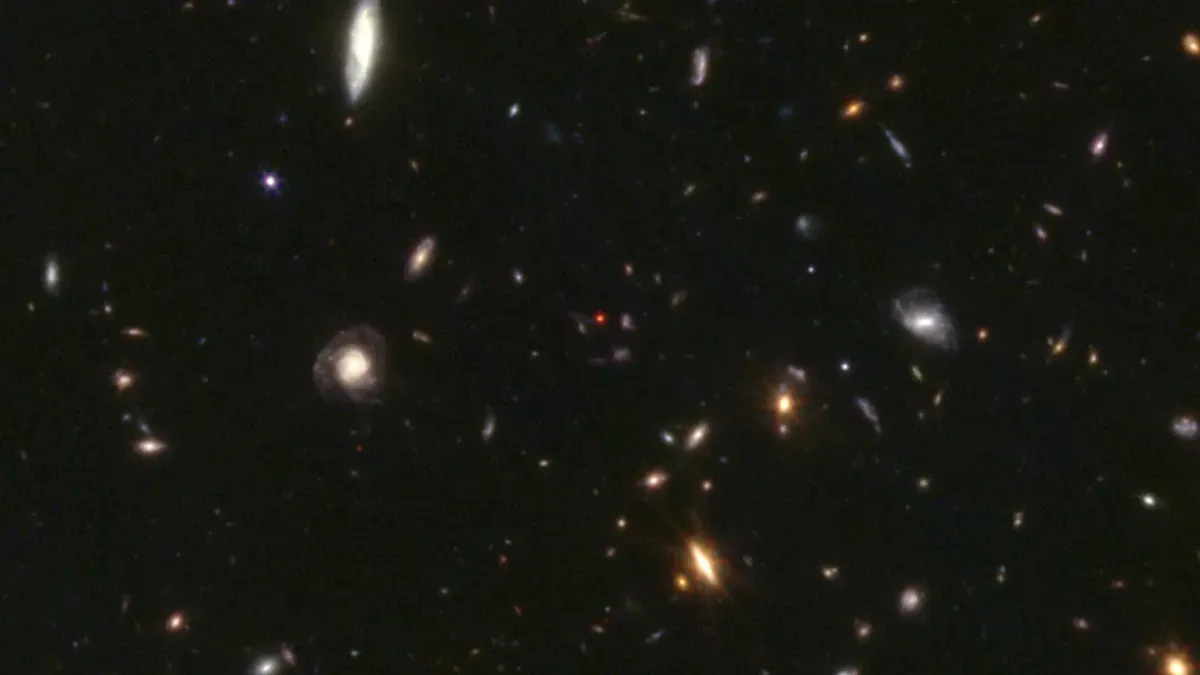
Astronomers have solved the long-standing mystery of the James Webb Space Telescope’s enigmatic red dots—and the answer reshapes our understanding of the early universe.
Strange red dots observed in James Webb Space Telescope images have been identified as young black holes hidden within dense gas cocoons. These findings, published in Nature on January 14, 2026, reveal that these objects are significantly smaller than previously assumed—approximately 100 times less massive—yet play a critical role in the formation of supermassive black holes in the early universe.
Darach Watson explained the phenomenon:
"The little red dots are young black holes, a hundred times less massive than previously believed, enshrouded in a cocoon of gas, which they are consuming in order to grow larger. This process generates enormous heat, which shines through the cocoon. This radiation through the cocoon is what gives little red dots their unique red color."
The study attributes the red color of these objects to intense radiation emitted as gas is consumed by the black holes. This feeding process is described as "messy," with most material being expelled outward.
Researchers observed hundreds of these transient red dots, which appear only briefly in the early universe—when it was a few hundred million years old—before disappearing.
The discovery provides critical insight into how supermassive black holes could form so rapidly after the Big Bang.
Some of these ancient black holes reached billions of solar masses within 700 million years, a timeline that challenges existing models of cosmic evolution.
⚠️ LEGAL DISCLAIMER: It is for informational purposes only. It never substitutes for professional medical advice, diagnosis, or treatment. Always consult your doctor regarding any questions about your health.