Winter Skywatching Guide: Celestial Objects from the Orion Nebula to the Pleiades
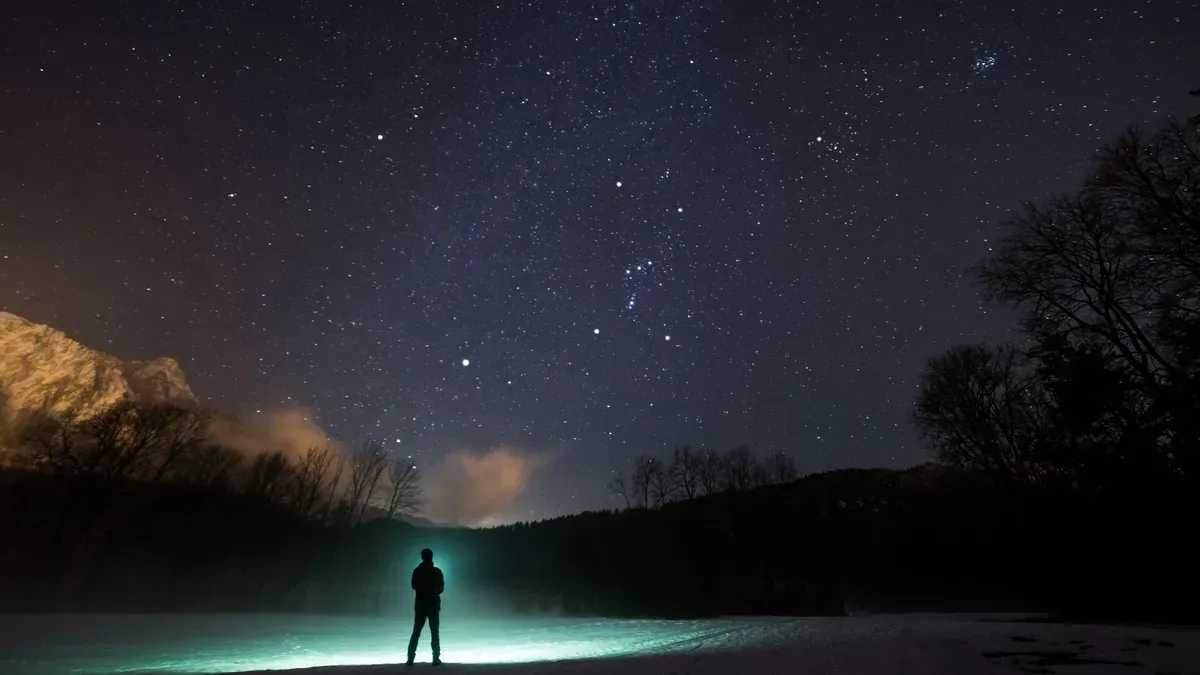
Under a frigid winter sky, stargazers can glimpse the Orion Nebula—a 30-light-year-wide stellar nursery glowing with the light of newborn stars. The Orion Nebula (Messier 42), located 1,500 light-years from Earth, appears as a translucent cloud in telescopes. William T. Olcott described it as 'A glorious and wonderful sight... words fail utterly to describe its beauty.'
Further afield, the Double Cluster of Perseus (NGC 869/884) spans 45 arc minutes each. Observers require low-power optics to capture both clusters simultaneously. In contrast, the Pleiades (M45) belong to the 'Greater Pleiades Complex,' a star-forming region containing over 3,000 stars at 440 light-years distance.
Messier 35 in Gemini hosts approximately 200 stars, visible as curved rows through binoculars.
Meanwhile, the Hyades cluster in Taurus forms a V-shape, with the foreground orange star Aldebaran situated 65 light-years from Earth. These objects represent distinct stages of stellar evolution, from active nurseries to mature clusters.