


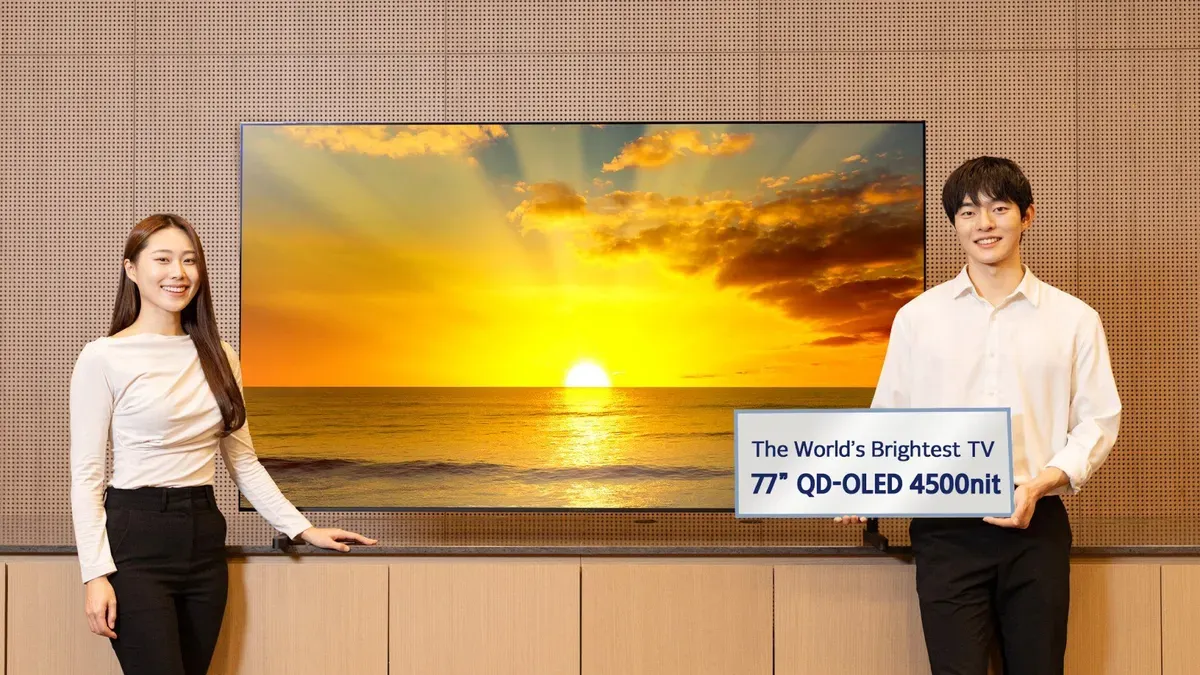
LG and Samsung just cranked their OLED TVs to 4,500 nits—so why are your PC monitors still stuck in the dark?
CES 2026 revealed Samsung’s QD-OLED panels hitting 4,500 nits peak HDR with 450 nits full-screen, while LG’s Tandem WOLED panels matched the 4,500 nits peak. Yet current OLED monitors max at 1,300 nits peak, like the MSI MPG 341CQR.
The gap stems from pixel density differences—PC monitors pack smaller pixels for sharper visuals, but this limits brightness output. Burn-in prevention also forces lower sustained brightness for static content like UI elements.
RGB-stripe technology in LG’s UltraGear Evo models further reduces peak brightness compared to RGB-pixel arrangements.
These monitors are VESA Display HDR True Black 500 certified, prioritizing contrast over raw luminance. Manufacturers balance brightness against longevity for gaming workloads that demand consistent performance over hours of use.