


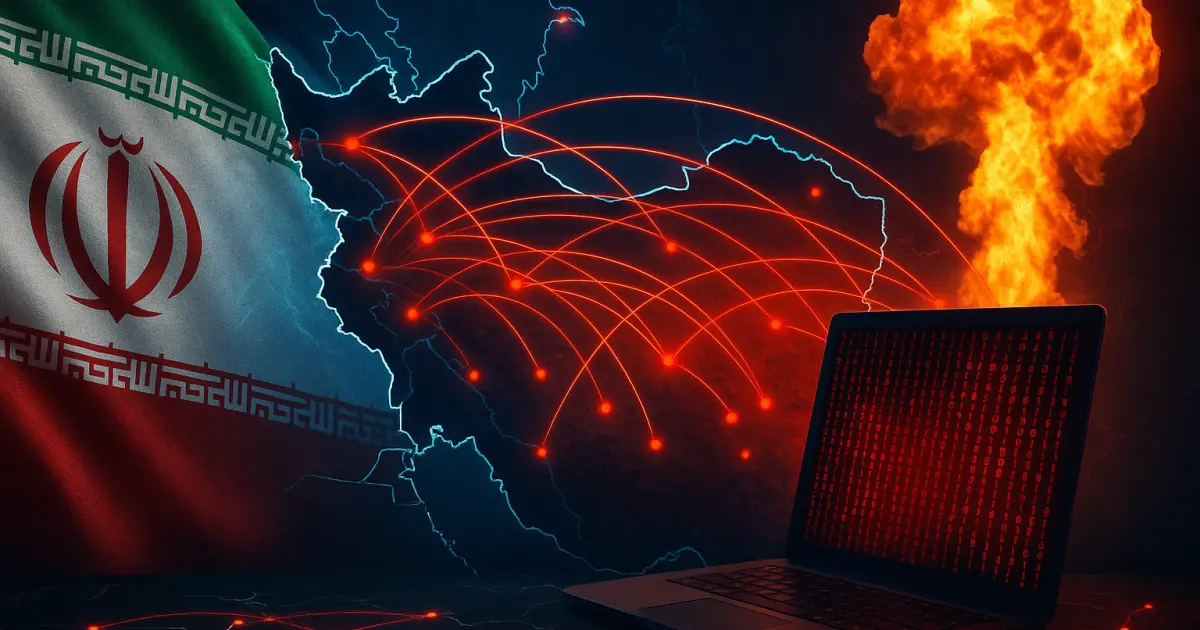
A prayer-timing app became an unexpected weapon in a digital war, flooding Iranian phones with rebel calls to arms during midnight airstrikes.
"The time for revenge has come," read a notification sent via the BadeSaba Calendar app during Israeli-US airstrikes on Iran. Over 5 million users of the app received hacked messages urging military personnel to surrender or join 'forces of liberation.'
"The compromise of assets likely happened some time ago, and these messages of 'help' were timed strategically," says Morey Haber, BeyondTrust chief security adviser.
Iranian state news agencies IRNA and ISNA were targeted in cyberattacks, with ISNA remaining offline at time of reporting. Internet traffic in Iran dropped to 4% of normal levels, with data centers and PoP sites losing international connectivity.
Narges Keshavarznia (Miaan Group) notes "the most urgent concern is not just the technical disruption itself, but the loss of visibility and accountability."
The weaponization of BadeSaba—a tool originally designed for calculating prayer times highlights how digital infrastructure can become a battlefield. Internet blackouts during such attacks amplify civilian vulnerability to both surveillance and information control, as seen in Iran's recent experience.