Vera C. Rubin Observatory Unveils Fastest-Known Massive Asteroid Spinning in Seconds
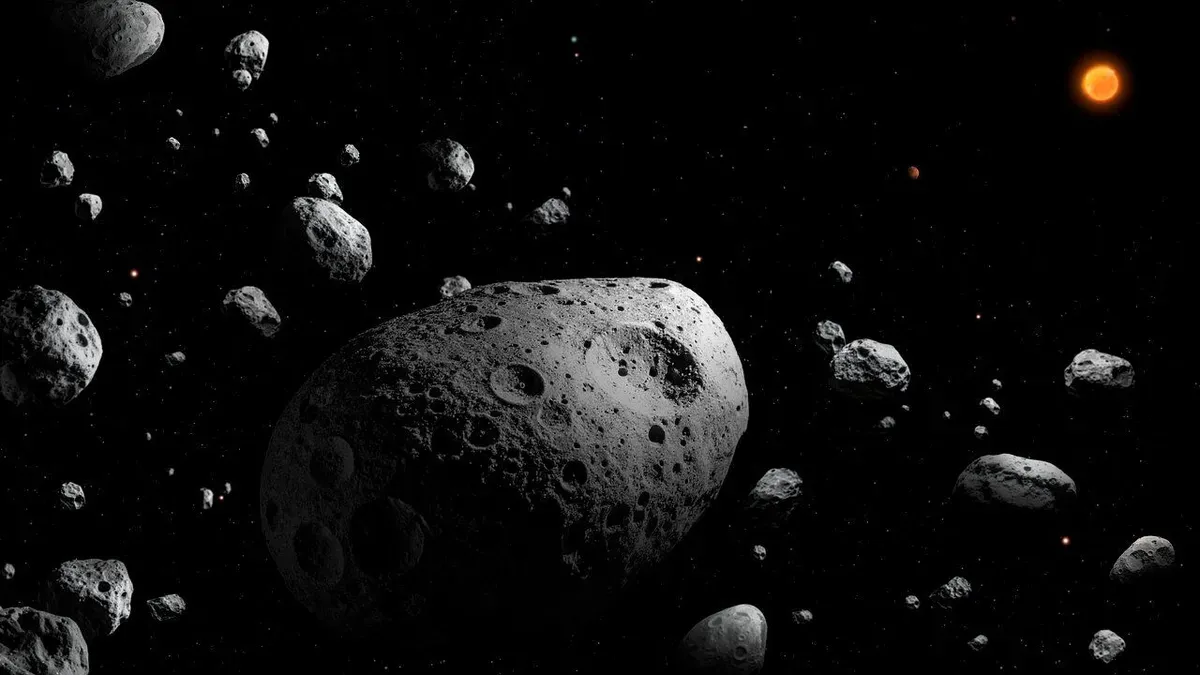
A colossal asteroid spinning at a rate that defies expectations has been unveiled by the Vera C. Rubin Observatory, rewriting assumptions about asteroid composition.
The 710-meter-wide asteroid 2025 MN45 completes a full rotation every 113 seconds, a speed that challenges existing models of asteroid structure and cohesion.
Sarah Greenstreet of the NSF NOIRLab notes that this asteroid must possess "very high strength" to maintain its integrity.
"It would need a cohesive strength similar to that of solid rock," she explains in the peer-reviewed paper published in The Astrophysical Journal Letters on Jan. 7, 2025.
This observation contrasts with the prevailing view that most asteroids are "rubble pile" objects—aggregates of loosely bound fragments held together by gravity.
The discovery is part of the Legacy Survey of Space and Time (LSST) using the Rubin Observatory's LSST Camera.
The 10-year survey, focused on the southern hemisphere, has already identified 1,900 previously unknown asteroids and 16 other "super-fast" rotators with periods between 13 minutes and 2.2 hours. 2025 MN45's rapid rotation is particularly significant because it resides in the main asteroid belt between Mars and Jupiter, where most asteroids require slower rotations to avoid fragmentation.
The paper highlights the implications for asteroid classification and the need to refine models of celestial mechanics.
Greenstreet emphasizes that it is somewhat surprising since most asteroids are believed to be what we call ruble pile asteroids.
The findings suggest that structural cohesion in some asteroids may arise from internal strength rather than gravitational binding alone.