


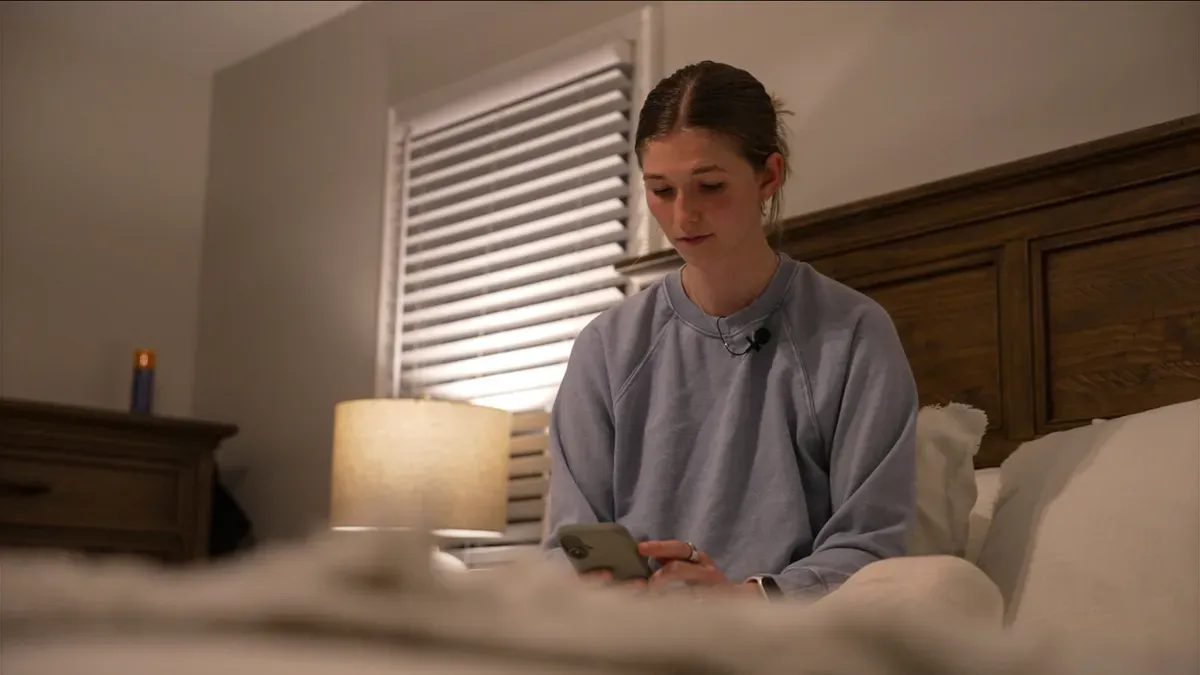
Your watch says you had three hours of deep sleep. Should you believe it?
The U.S. sleep-tracking devices market generated $5 billion in 2023 and is projected to double by 2030. However, experts caution that these devices rely on inferences rather than clinical precision.
Most wearables estimate sleep stages using heart rate variability and motion sensors, which cannot replicate the gold standard of polysomnography—comprehensive in-lab monitoring of brain waves, eye movements, and muscle activity.
Daniel Forger, a researcher in sleep science, emphasized the limitations of consumer-grade technology:
Daniel Forger said:
"If you really want to know definitively how much non-REM sleep you're having versus REM sleep, that's where the in-lab studies really excel."
Dr. Chantale Branson, a sleep medicine specialist, added that while devices can raise awareness, they often fail to address underlying issues:
Dr. Chantale Branson said:
"We would have believed them with or without the device and worked on trying to figure out why they can't sleep—and that is what the wearables do not do."
User experiences reflect this duality. Kate Stoye reported behavioral changes based on her device data:
Kate Stoye said:
"I don't see much reason to drink if I know that it's going to affect how I feel."
Others, like Mai Barreneche, found the metrics anxiety-inducing:
Mai Barreneche said:
"I remember I would go to bed thinking about the score I was going to get in the morning."
Dr. Branson advised prioritizing sleep hygiene—such as consistent bedtimes and limiting screen exposure—over fixation on device metrics. She also warned against self-diagnosis:
Dr. Chantale Branson said:
"These devices are supposed to help you. And if you feel anxious or worried or frustrated about it, then it's not helpful, and you should really talk to a professional."
While current wearables lack clinical accuracy, Forger noted their potential for future applications in detecting systemic changes, such as early signs of infection or mental health shifts. However, the study does not provide clinical guidance for interpreting these findings.
⚠️ LEGAL DISCLAIMER: It is for informational purposes only. It never substitutes for professional medical advice, diagnosis, or treatment. Always consult your doctor regarding any questions about your health.