U.S. and China Race to Return Mars Samples by 2031 and 2040
As China accelerates its Mars sample return ambitions, U.S. scientists and policymakers debate how to reconcile budget constraints with the urgency of maintaining scientific and geopolitical leadership in space.
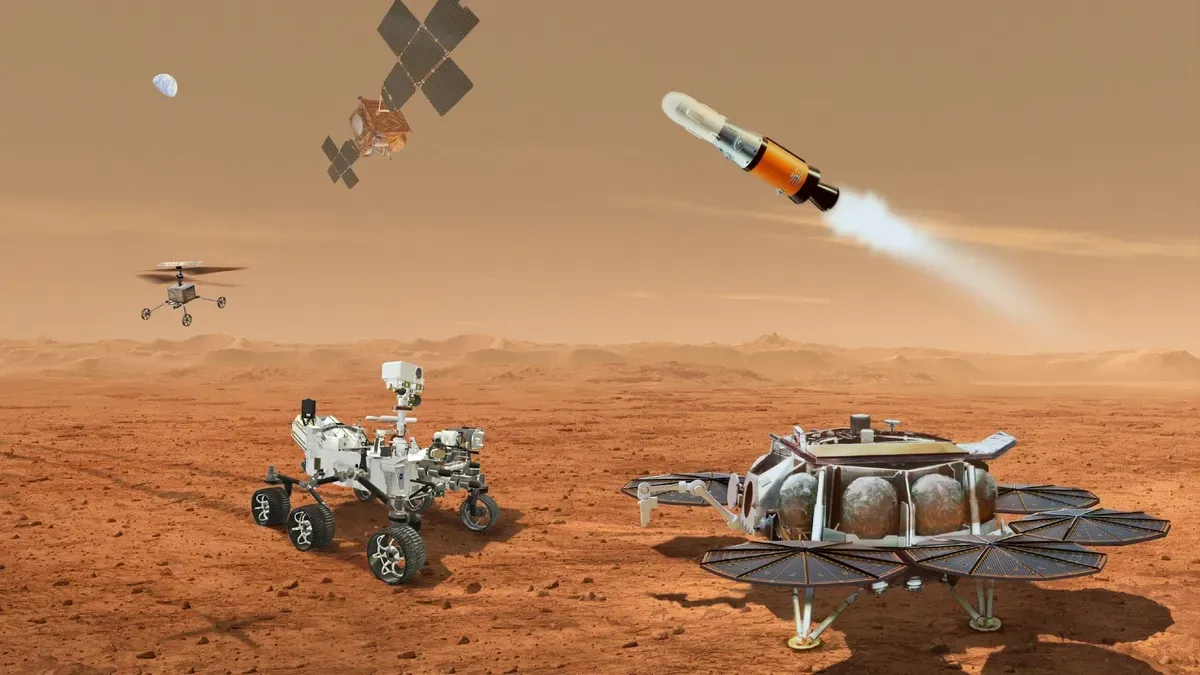
NASA's Mars Sample Return (MSR) mission, estimated to cost $11 billion, faces timeline challenges with sample return targeted for 2040. By contrast, China's Tianwen-3 mission aims to collect 500 grams of Martian samples by 2031, emphasizing surface/subsurface sampling and biosignature detection.
G. Scott Hubbard, former NASA Mars Czar, noted, 'The Chinese may well beat the U.S. with a grab sample.' Bruce Jakosky of the University of Colorado countered, 'MSR may be the most-effective means for reducing risk and developing science.'
U.S. Senator Ted Cruz proposed $10 billion in funding for Mars-focused initiatives, including a $700 million allocation for the Mars Telecommunications Orbiter.
The National Academies report (Dec 2025) prioritizes the search for life as the top science objective for human Mars missions, emphasizing science-driven exploration. This framework underscores the strategic importance of sample return missions in addressing fundamental questions about Mars' habitability.