


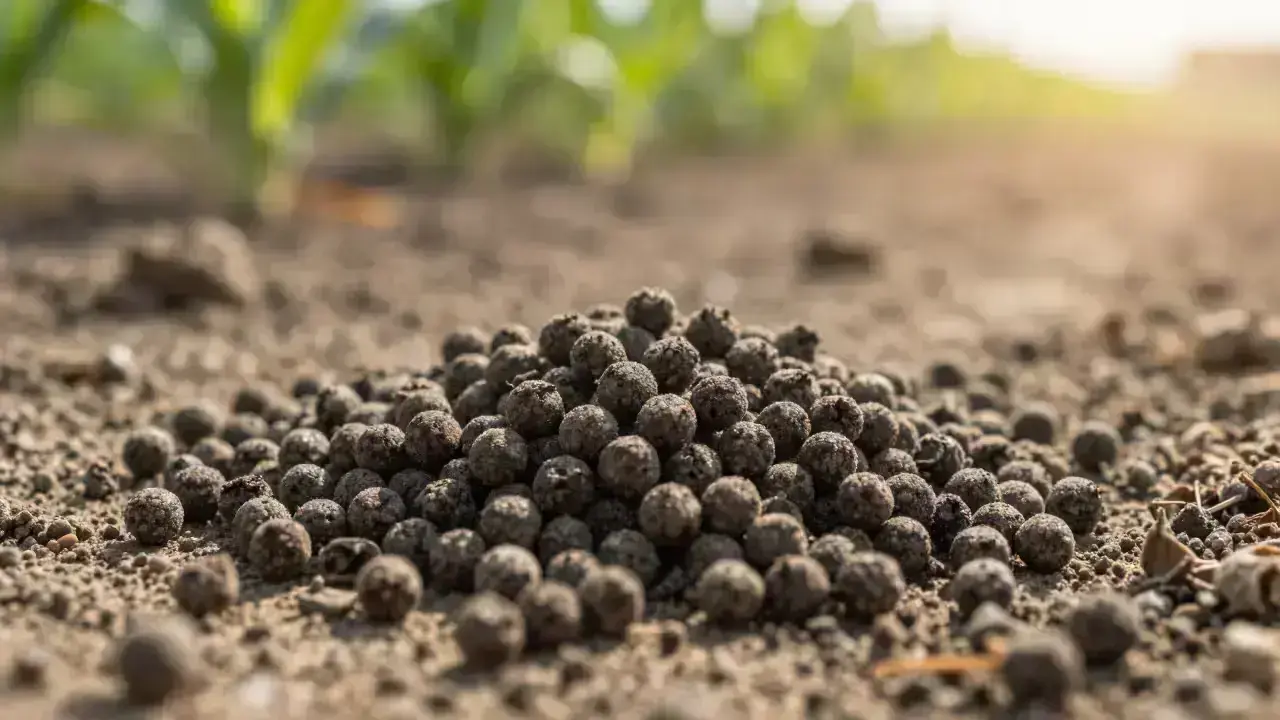
Toxic industrial chemicals never before measured in Western Hemisphere air are drifting through Oklahoma farmland, likely released from sewage sludge spread as fertilizer. The discovery came when University of Colorado Boulder researchers, hunting for clues about airborne particle formation, stumbled onto something their instruments were not designed to find.
Medium Chain Chlorinated Paraffins, or MCCPs, are now being evaluated for possible regulation under the Stockholm Convention, the international treaty governing persistent pollutants. These chemicals have been detected in Antarctica and Asia, but scientists had failed to capture them in Western Hemisphere air until this study, published in ACS Environmental Au.
The research team spent a month running continuous air measurements at an agricultural site in Oklahoma using a nitrate chemical ionization mass spectrometer. Daniel Katz, a CU Boulder chemistry PhD student and lead author, noticed unusual isotopic patterns in the data that did not match any known compounds. Further investigation linked those signatures to chlorinated paraffins.
MCCPs are used in metalworking fluids, PVC production, and textile manufacturing. They frequently appear in wastewater and can concentrate in biosolid fertilizer, the treated residue left after sewage processing.
The researchers believe the chemicals they detected likely originated from nearby fields where this fertilizer had been applied.
Daniel Katz:
"When sewage sludges are spread across the fields, those toxic compounds could be released into the air. We can't show directly that that's happening, but we think it's a reasonable way that they could be winding up in the air."
The finding may reveal an unintended consequence of earlier environmental regulation. Short Chain Chlorinated Paraffins, or SCCPs, are closely related chemicals already restricted under the Stockholm Convention and by the U.S. Environmental Protection Agency since 2009. Those rules followed evidence that SCCPs travel long distances, persist in the environment, and threaten human health.
But limiting SCCPs may have simply shifted industrial use toward their unregulated cousins.
Ellie Browne, CU Boulder chemistry professor, CIRES Fellow, and co-author:
"We always have these unintended consequences of regulation, where you regulate something, and then there's still a need for the products that those were in. So they get replaced by something."
MCCPs share characteristics with PFAS, the "forever chemicals" that resist environmental breakdown. Concerns about PFAS contamination recently led the Oklahoma Senate to ban biosolid fertilizer in the state.
Now that scientists have confirmed how to detect MCCPs in air, the priority is tracking how their concentrations change across seasons and understanding what happens to them once airborne. The mechanism of their release from soil to atmosphere remains unproven, and their atmospheric chemistry is largely unknown.
Daniel Katz:
"We identified them, but we still don't know exactly what they do when they are in the atmosphere, and they need to be investigated further."
ACS Environmental Au, 2025; 5 (4): 415. DOI: 10.1021/acsenvironau.5c00038