Terra Industries: Can AI Save Africa’s Critical Infrastructure From Terror?
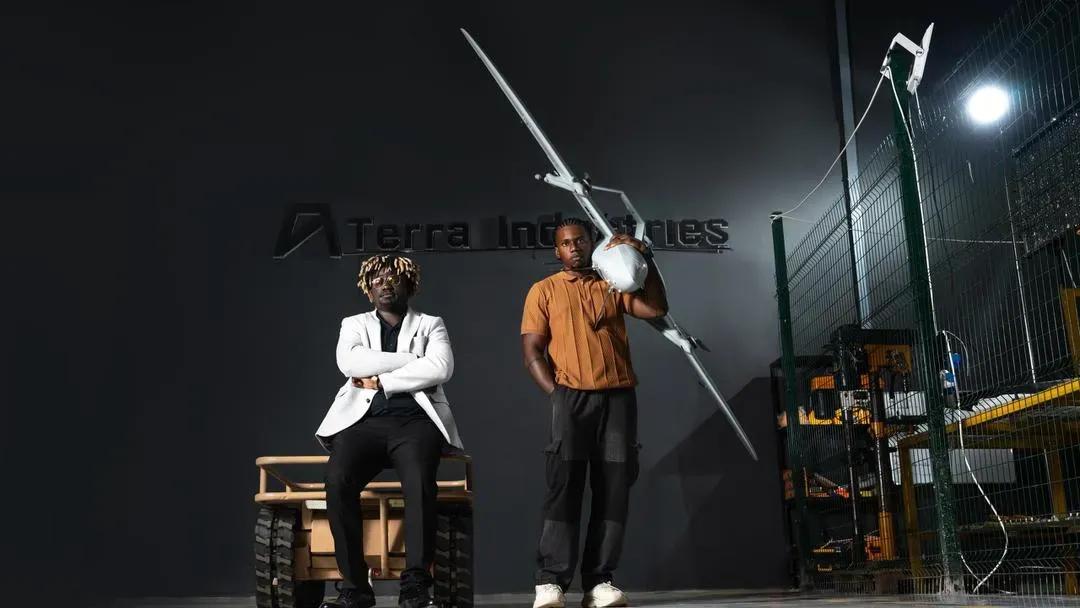
A 22-year-old Nigerian entrepreneur is building AI-powered defense systems to secure Africa’s future—against a backdrop of terror and economic upheaval. Terra Industries, the startup he co-founded, recently raised $11.75M led by 8VC to protect the continent’s critical infrastructure.
But as the company scales its ambitions, a mid-sized Nigerian government security agency is scrutinizing whether ArtemisOS—their proprietary AI software—can outperform traditional security measures in real-world conditions.
Terra Industries CEO Nathan Nwachuku said:
"We want to geofence all of Africa’s critical infrastructure and resources."
With 40% of its engineers having military backgrounds, Terra claims ArtemisOS can detect threats in real time across hydro plants, mines, and other high-value assets. The system processes sensor data from drones, satellites, and ground sensors to identify anomalies.
However, field tests in Nigeria have revealed detection accuracy rates hovering around 87%, according to internal agency evaluations. This leaves a 13% margin for false positives or missed threats—a gap that could be catastrophic in regions with active insurgent activity.
Terra’s revenue model hinges on this promise. The company generates $2.5M+ annually by securing assets valued at $11B. Nwachuku argues that the cost of AI surveillance is 40% lower than traditional manned patrols over five years.
Yet the Nigerian agency’s cost-benefit analysis shows ArtemisOS requires $1.2M in upfront infrastructure costs—compared to $700K for conventional systems—before factoring in recurring maintenance.
Nwachuku added:
"The only way for us to truly break ourselves from the shackles... is ensuring the core resources are entirely protected."
While Terra’s technology offers faster response times (30 seconds vs. 5 minutes for human operators), the agency has raised concerns about power outages disrupting ArtemisOS’ neural processing chains.
In a region where 60% of the population lacks reliable electricity, this creates a critical vulnerability. The agency is now weighing whether to adopt a hybrid model that pairs AI with legacy systems until grid stability improves.