



American teenagers are getting less sleep with each passing year. That alone is alarming enough. But what makes a new study truly surprising is that smartphones and social media — long cast as the main villains — may not be primarily to blame after all.
A new study published in the Journal of the American Medical Association, which analyzed data from nearly 121,000 high school students, paints a stark picture: by 2023, three out of four American adolescents were sleeping less than the recommended eight hours per night — a rate that has climbed 8% since 2007.
Even more troubling, the share of teens sleeping five hours or less rose sharply over that same period, climbing from 15.8% to 23% — nearly a 45% jump in just over a decade. That means roughly one in four teenagers is essentially running on empty.
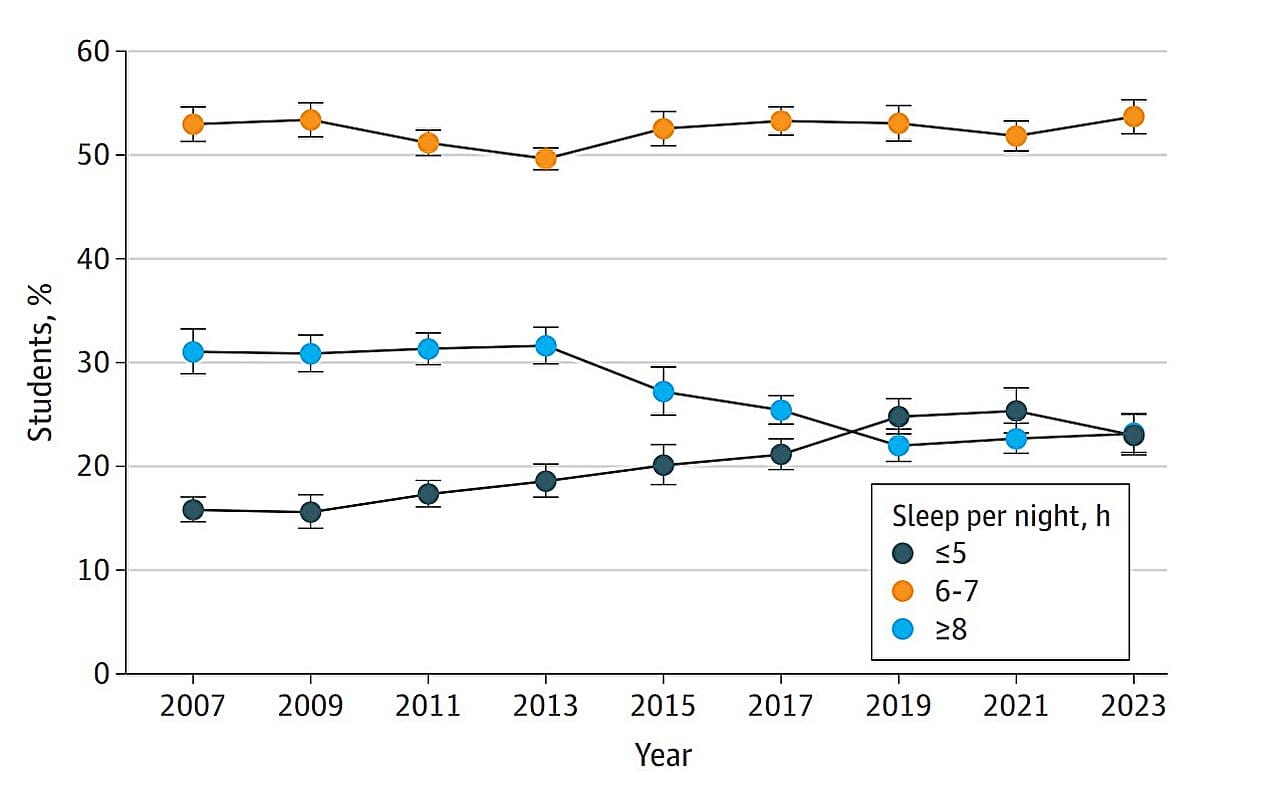
So how much are screens actually to blame? Researchers dug into that question and landed on a counterintuitive finding: teens with low screen time are actually seeing a greater rise in insufficient sleep than their heavy-screen-use peers.
In other words, the kid glued to their phone may be sleeping better than the one who isn't. This challenges the narrative that screen time is the driving force behind the teen sleep crisis.
The data showed that sleep loss increased across all demographic groups, regardless of mental health symptoms, substance use, or time spent on TV and social media. This isn't a lifestyle problem — it looks far more systemic than that.
So what's actually driving it? Researchers stop short of a definitive answer, but point to likely suspects: early school start times, overwhelming extracurricular demands, and declining parental oversight.
Why does this matter so much? According to child and adolescent psychiatrist Tanner Bommersbach of the University of Wisconsin, sleep is critical to adolescent brain development — essential for emotional regulation, mental health, and physical well-being.
Experts offer a few practical steps: dimming lights and stepping away from screens before bed, sticking to a consistent sleep schedule, and keeping the bedroom cool, dark, and quiet.
There's also one underrated piece of advice — getting exposure to bright light, ideally sunlight, first thing in the morning. It sends a wake-up signal to the brain and anchors the body's biological rhythm for the rest of the day.
Neurologist Anita Shelgikar of the University of Michigan, and president of the American Academy of Sleep Medicine, sums it up plainly: "This is an epidemic — the epidemic of adolescent sleep deprivation."
The study's message is clear: the teen sleep crisis is far less about screen habits and far more about structural forces — from school start times to the pressures piled onto young people every day. And that means the solutions need to be just as structural.