Science
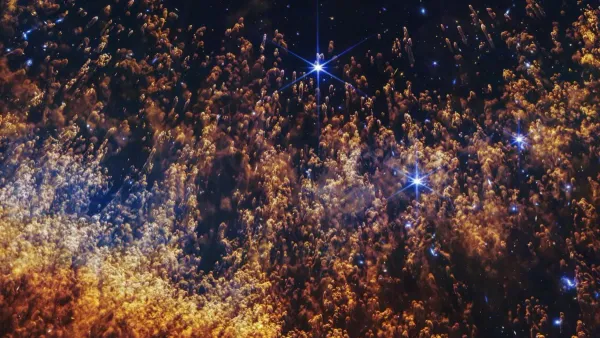
James Webb Telescope Captures Dying Star's Cosmic Recycling in Helix Nebula
The James Webb Space Telescope's image of the Helix Nebula reveals a dying star's role in seeding the galaxy with life's elements.

Peering into the deep universe with the JWST. We break down the science and the stunning discoveries from humanity's most advanced space eye.
Science
The James Webb Space Telescope's image of the Helix Nebula reveals a dying star's role in seeding the galaxy with life's elements.
Science
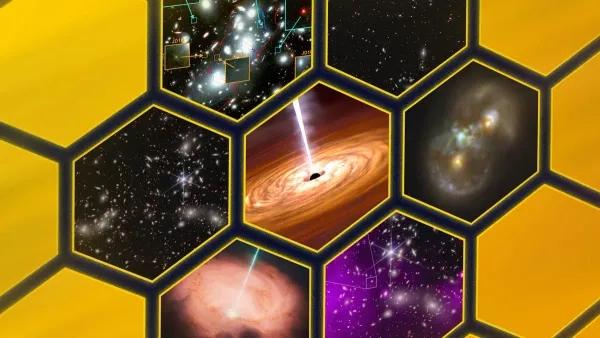
JWST observations of early supermassive black holes challenge formation models, revealing massive objects without host galaxies and supporting direct-collapse theories.
Science
Explore how gravity and relativity explain celestial phenomena, including James Webb's galaxy findings and geomagnetic storm impacts.
Science
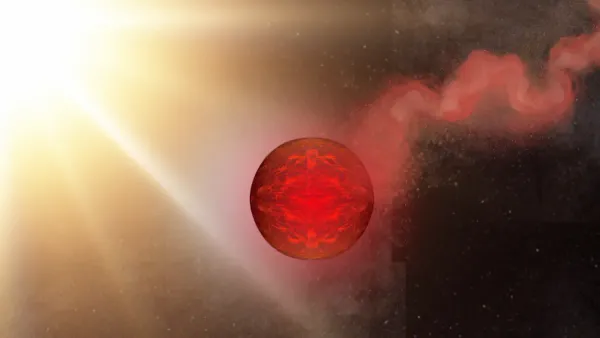
Upcoming telescopes like JWST and ESA's Plato aim to detect alien life by analyzing exoplanet atmospheres for key chemical signatures.
Science
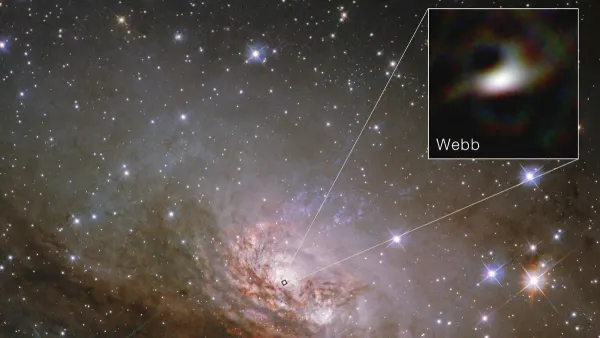
The James Webb Space Telescope has identified the accretion disk as the primary source of infrared emissions near a supermassive black hole, overturning a 30-year-old assumption.
Health
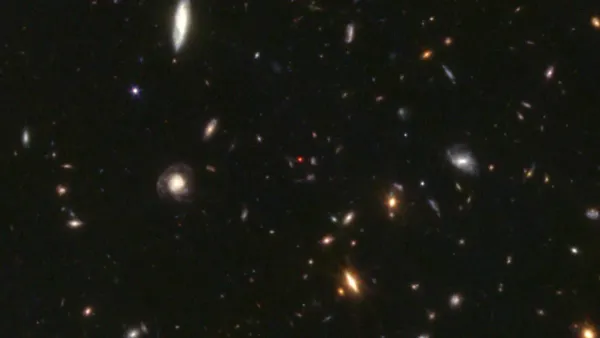
Astronomers have identified strange red dots in James Webb images as young black holes in gas cocoons, offering new insights into supermassive black hole formation.
Science
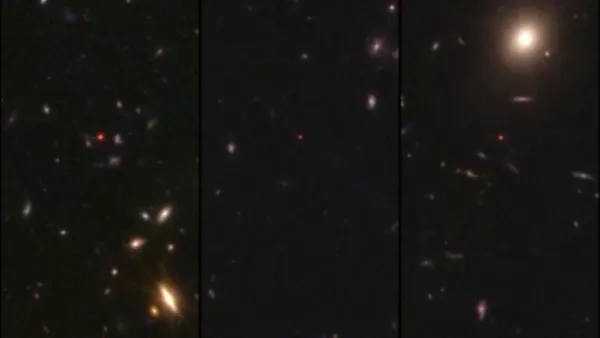
JWST discovers ancient compact objects that may be young supermassive black holes, challenging formation theories.
Science
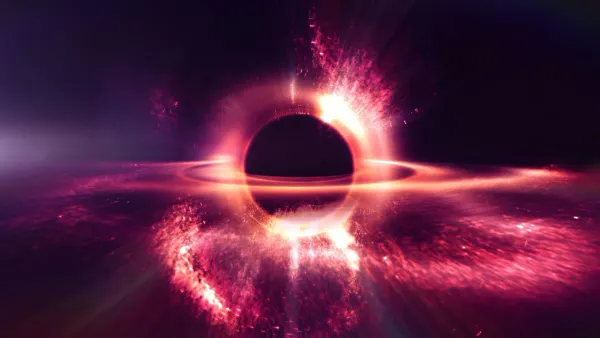
JWST study reveals supermassive black holes formed in gaseous cocoons 500 million years post-Big Bang, challenging cosmic evolution theories.
Science
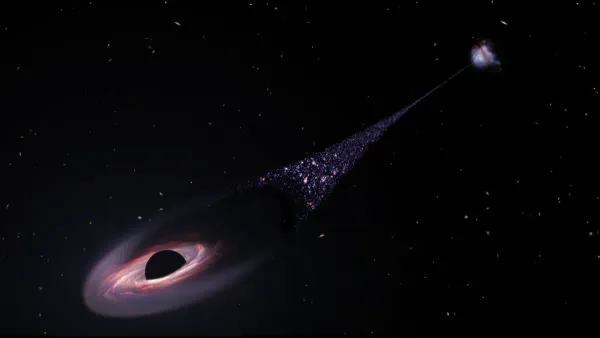
The James Webb Space Telescope detects a supermassive black hole fleeing its galaxy at 2.2 million mph, leaving a 200,000-light-year stellar wake.
Science
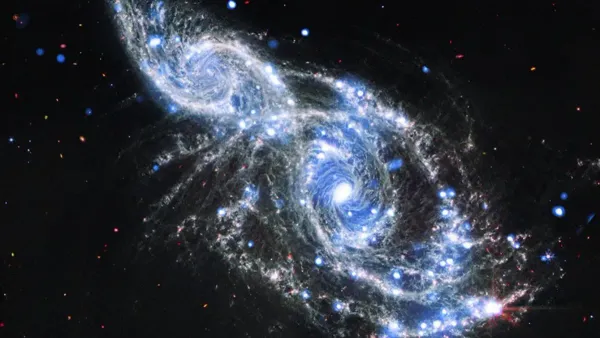
NASA's James Webb and Chandra telescopes reveal a 120-million-light-year-old galactic collision, demonstrating how infrared and X-ray observations illuminate different aspects of galaxy evolution.
Science
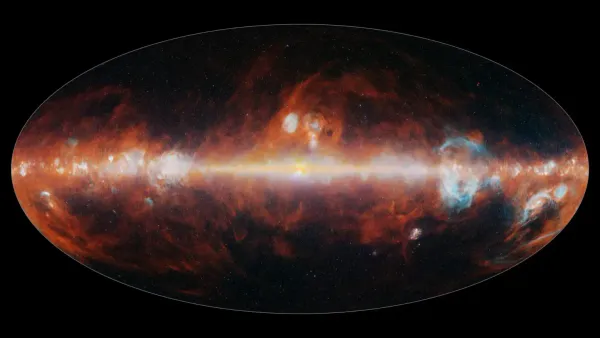
NASA's SPHEREx telescope completes its first infrared sky survey, but faces growing risks from satellite megaconstellations as new research warns 96% of its observations could be affected.
Science
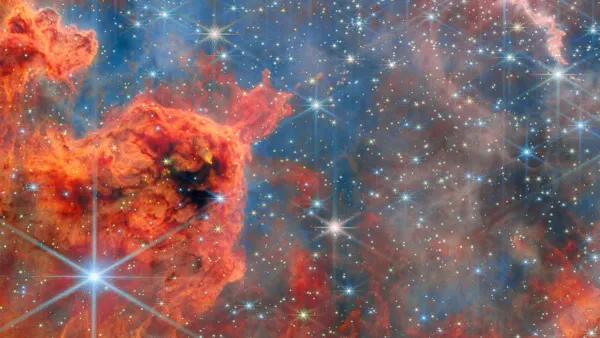
The James Webb Space Telescope has captured the first full population of brown dwarfs in the Westerlund 2 cluster, providing new insights into star formation in high-radiation environments.