


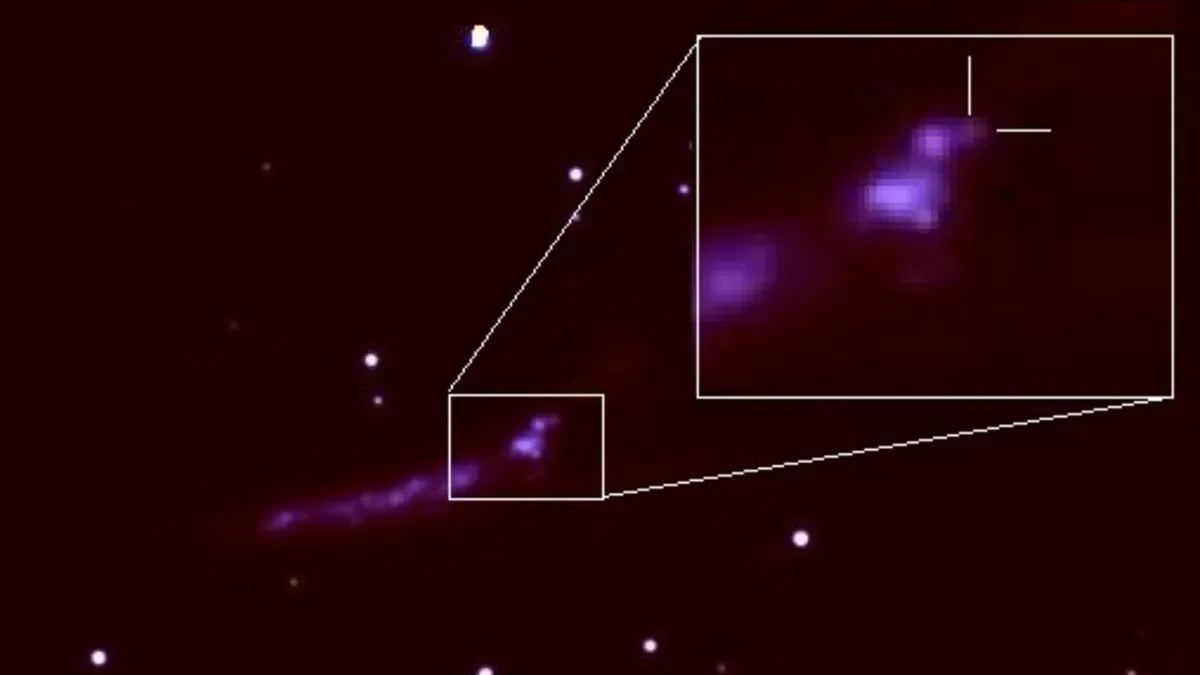
Astronomers have identified a possible link between a massive supernova and the formation of a binary black hole system.
Observations of SN 2022esa, a supernova in the galaxy 2MFGC 13525 located 320 million light-years from Earth, revealed periodic emissions with monthly stability. This pattern suggests the progenitor star was part of a binary system, according to researchers from Kyoto University.
The study, published in Physical Review Letters in November 2023, utilized the 8.2-meter Subaru telescope and the Seimei telescope to analyze the supernova.
The Subaru telescope’s high-resolution imaging capabilities enabled detailed spectroscopic analysis, while the Seimei telescope’s photometric precision detected the recurring emission pattern.
These instruments allowed the team to trace the star’s evolutionary history and infer the presence of a binary companion—either a black hole or a star destined to collapse into one.
Keiichi Maeda, a researcher at Kyoto University, stated, “Our study provides a new direction to understand the whole evolutionary history of massive stars toward the formation of black hole binaries.”
The periodicity observed in SN 2022esa aligns with theoretical models predicting that binary interactions influence the final stages of massive star evolution. However, the team notes that further observations of similar supernovae are required to confirm this hypothesis.