Sunriver Observatory: Preserving Cosmic Vistas Amid Oregon's Expanding Lightscape
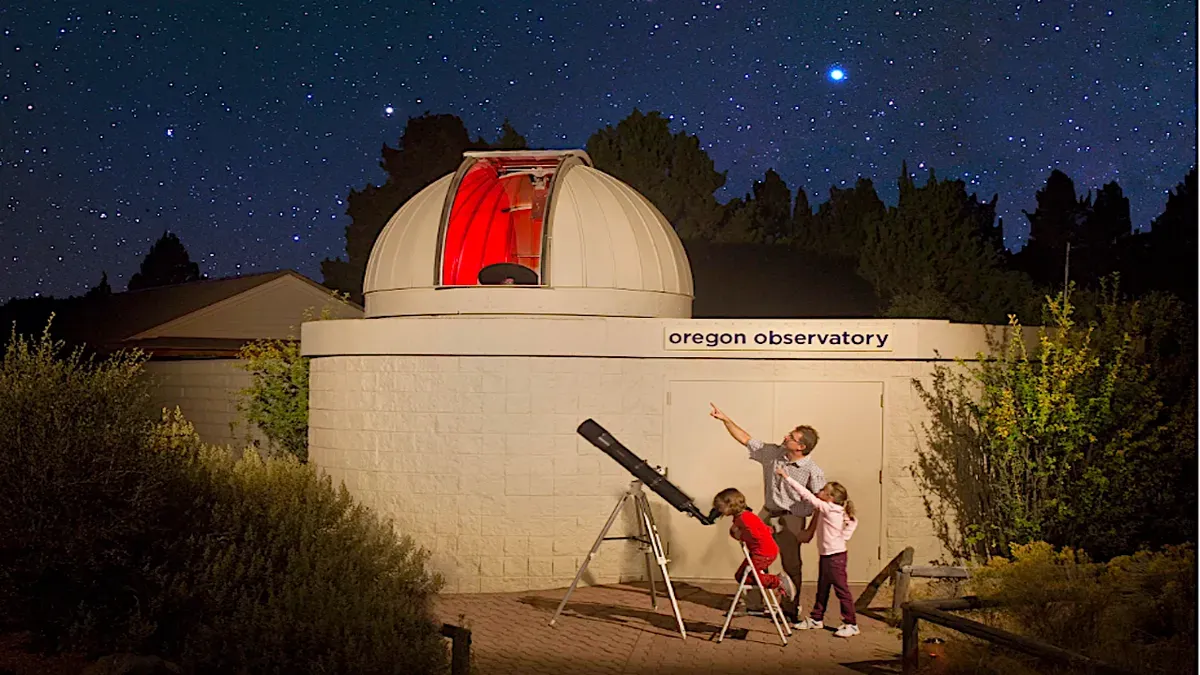
A crimson-lit path leads to a domed observatory where telescopes pierce the Oregon night, revealing galaxies and meteor showers to stargazers bundled against winter's chill. The Sunriver Observatory, constructed in 1991, claims to host the largest collection of publicly-accessible telescopes in the U.S.
Its 20-inch Ritchey-Chretien telescope in the main dome is described as 'very flexible' for observing nebulae, planets, and galaxies.
"Tonight we were able to see a few different types of nebulas like a planetary nebula called the Ring Nebula, then we saw a supernova remnant called the Veil Nebula..." said Alex Yeager, a staff astronomer.
The facility was designated an International Dark Sky Place in 2020, a recognition emphasizing its commitment to light pollution mitigation. Bradley McLain, operations director, noted: "You can definitely tell when people come from a place where they can't see stars..."
In November 2023, the observatory upgraded its solar telescope with a Lunt Calcium K module for detailed solar observations. Scheduled stargazing programs include the Geminid Meteor Shower event on Dec. 14, 2023.
Presentations often feature imagery from the Hubble and James Webb Space Telescopes, though ground-based observations remain central to public engagement. The scientific community has not reached consensus on the full impact of such outreach programs, but staff emphasize their educational value.