


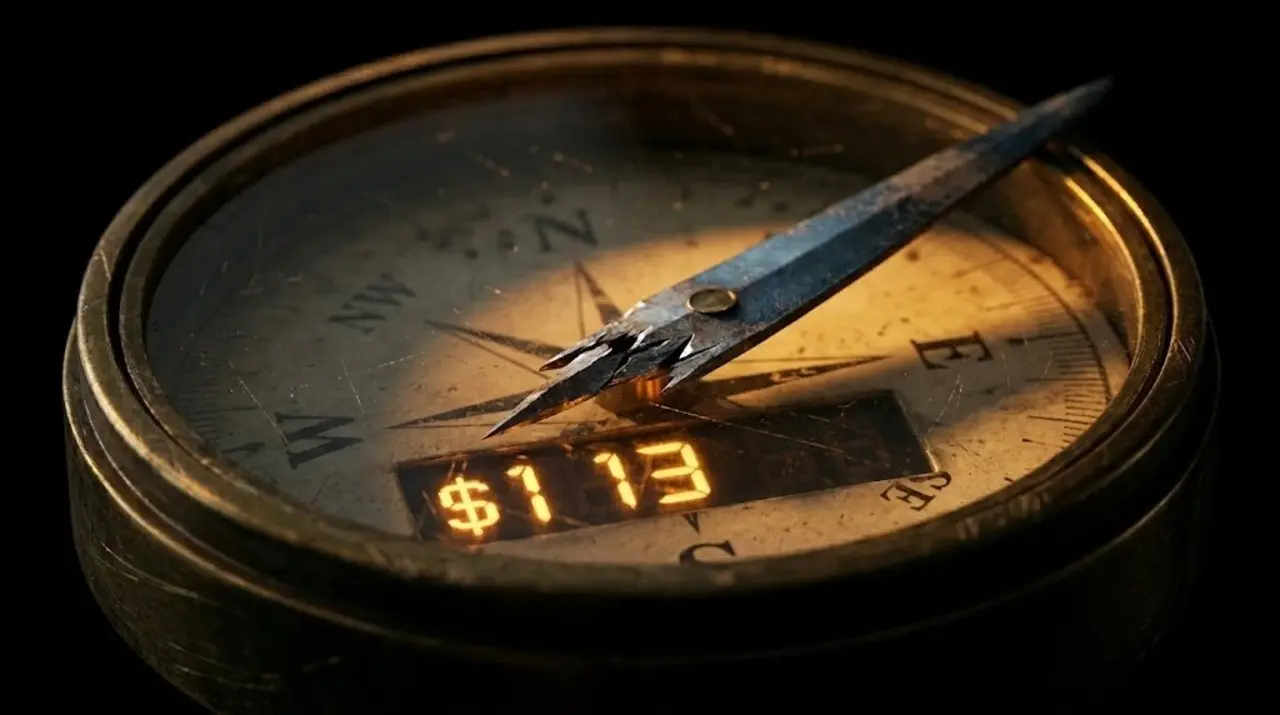
In early March, Steve Eisman said the Iran conflict would be "very, very positive" for markets. He said he wouldn't change a single trade. Four weeks later, with Brent crude near $113 a barrel, he went on his podcast and called it a "unipolar market." The war, in his telling, now runs everything else.
Brent's March surge was roughly 55%. That is the largest monthly gain in the contract's history, surpassing the 46% recorded during the first Gulf War in September 1990. The Energy Select Sector SPDR Fund is the only S&P 500 sector in the green this month. Every other sector is not.
That is what a unipolar market looks like.
What Traders Are Pricing
Bettors on Polymarket give 71% odds that U.S. forces enter Iran by April 30. A separate contract on regime change before 2027 sits at just 34%. The market is not pricing a swift collapse. It is pricing a grind.
On Kalshi, odds that Strait of Hormuz tanker traffic normalizes before April 15 sit below 12%. By June 1, that rises to 47%, implying at least two more months of disrupted flows through the chokepoint that normally handles 20% of global crude. Kalshi's recession market has climbed above 34%, its highest reading this year.
The numbers describe a market that has accepted the war as the baseline condition, not a temporary shock.
The Strait, and What Comes After
Steve Eisman's podcast guest was Steven Cook, the Council on Foreign Relations' senior fellow for Middle East studies. Cook described Iran as constructing a new transit regime in the Strait of Hormuz: friendly vessels pass freely, adversaries get blocked.
Steven Cook, Senior Fellow for Middle East Studies, Council on Foreign Relations: "A total disaster for the United States."
That was Cook's assessment of any deal that permanently locks in that arrangement.
Gulf states, Cook said, have delivered Washington a clear message: they did not want this war, but now that it has started, it needs to end in a way that lets them continue their domestic transformation. Saudi Vision 2030 and Abu Dhabi's technology and finance pivot both depend on stable energy exports and regional security. Those projects do not survive a prolonged Hormuz disruption.
Cook's three-month forecast was a weakened but still dangerous Iran, Gulf states hardening their defenses, and an American military footprint larger than anyone planned for.
If Cook is right, the next catalyst is not a peace deal. It is how Iran responds to threats against its oil infrastructure. That response, or the absence of one, determines whether 55% was the ceiling or the opening move.
Source: Yahoo Finance