Space Debris Re-Entry Risk to Airplanes Sparks Calls for Precision Predictions and Global Coordination
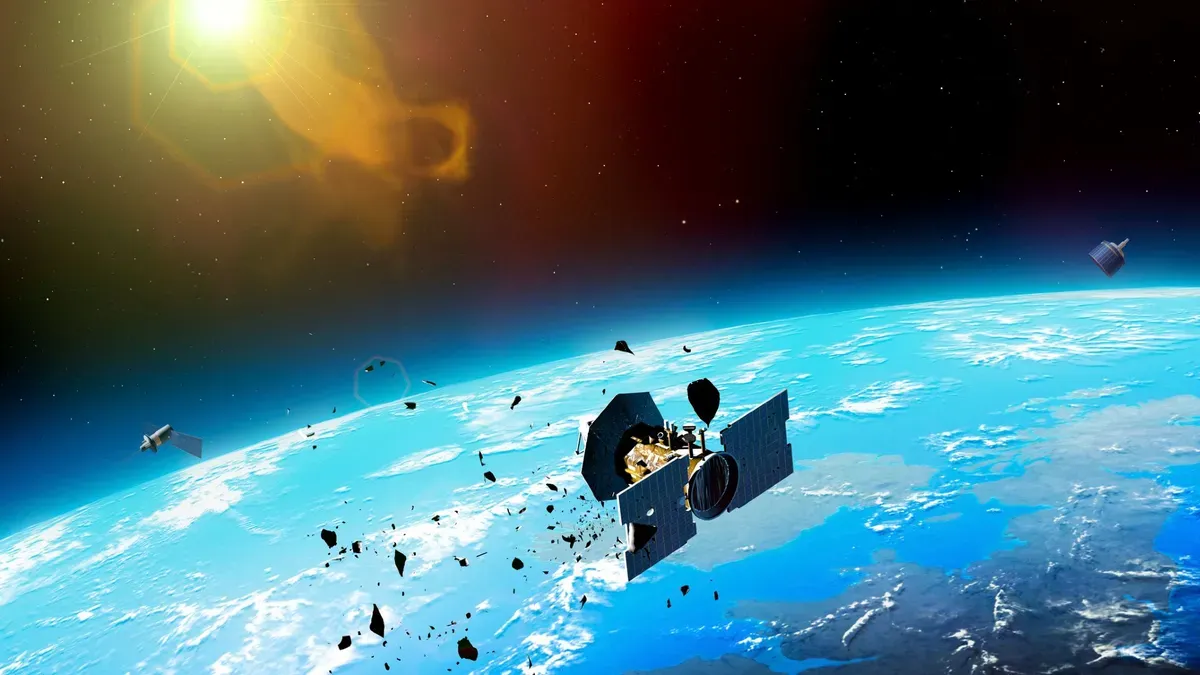
A 2022 Chinese rocket stage re-entry forced airspace closures over Spain, prompting experts to ask: How much risk is too much when space debris falls to Earth?
The 2022 Long March 5B uncontrolled re-entry caused airspace closures over Spain, delaying 300+ flights, highlighting the need for precise risk thresholds.
Space debris re-entry risk to commercial aviation is rising, with a 26% annual probability of debris passing through busy airspace and a 1-in-1,000 risk of aircraft collision by 2030, according to a 2020 study.
Benjamin Virgili Bastida, a space debris analyst, described the dilemma as “Do we react for everything which has a chance to reach the ground? Or do we react only for the very large objects, as we did for the Long March?”
ESA’s DRACO mission, launching in 2027, will study debris disintegration via 200 sensors to improve atmospheric re-entry models.
The Inter-Agency Space Debris Coordination Committee’s annual Re-Entry Campaigns aim to refine prediction accuracy by pooling data from 13 space agencies.
Air traffic controllers face a dilemma: closing airspace for small risks causes gridlock, while inaction risks lives; no global standards yet define acceptable risk thresholds.