


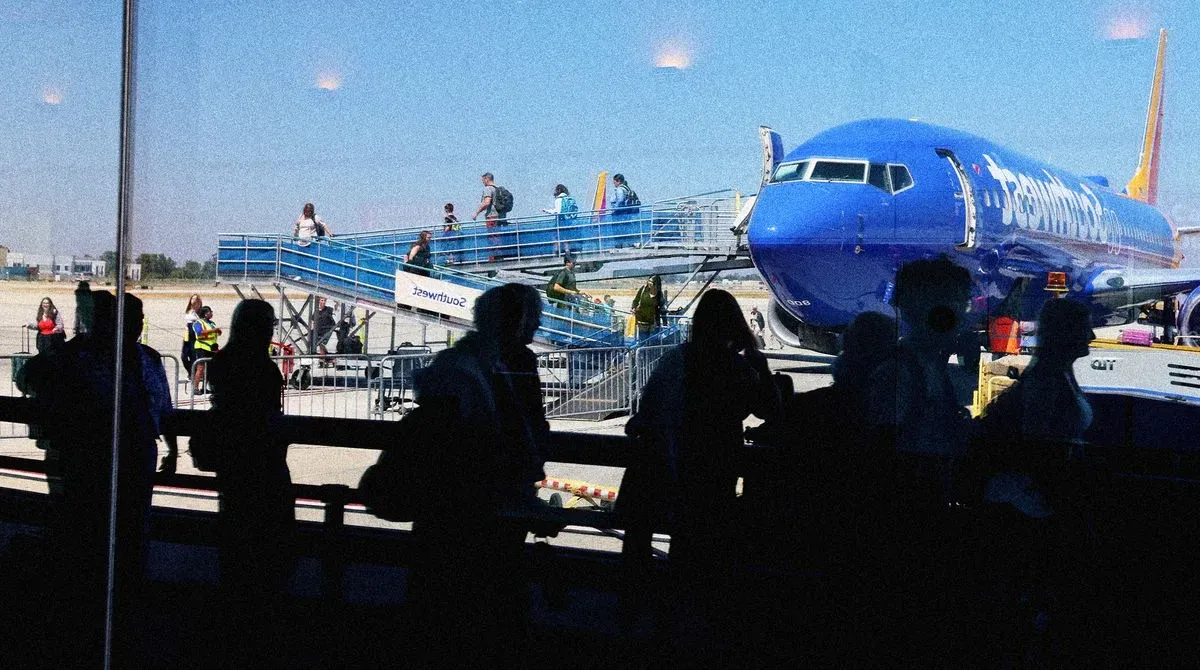
Southwest Airlines’ new assigned seating policy promises efficiency—but its profit-driven boarding tiers may turn boarding into a bureaucratic nightmare. The Window-Middle-Aisle (WILMA) method replaces open seating, introducing priority queues for frequent fliers and paid upgrades.
While the airline aims to generate $1.5 billion annually through these changes, passengers report delays and confusion during boarding.
John Milne, a professor at Clarkson University, observed the unintended consequences: “They’re trying to get the extra money—I understand that, but it does slow things down.” His comment highlights the tension between revenue goals and operational efficiency.
Southwest’s shift to tiered boarding—where passengers must wait for their specific group to board—has created bottlenecks, particularly during peak travel times.
The airline’s strategy hinges on monetizing boarding itself. Extra legroom seats and priority access cost travelers additional fees, but these perks come at the expense of streamlined processes.
Frequent fliers and those willing to pay premiums now board first, while others wait in line. This system, while lucrative, risks alienating budget-conscious travelers who once valued Southwest’s open seating as a key differentiator.
For small business travelers, the new policy adds complexity to time-sensitive itineraries. Delays caused by staggered boarding tiers could disrupt connections, especially for those flying into congested hubs.
The lack of AI tools to optimize this process further exacerbates the issue, leaving Southwest reliant on manual coordination during boarding.