


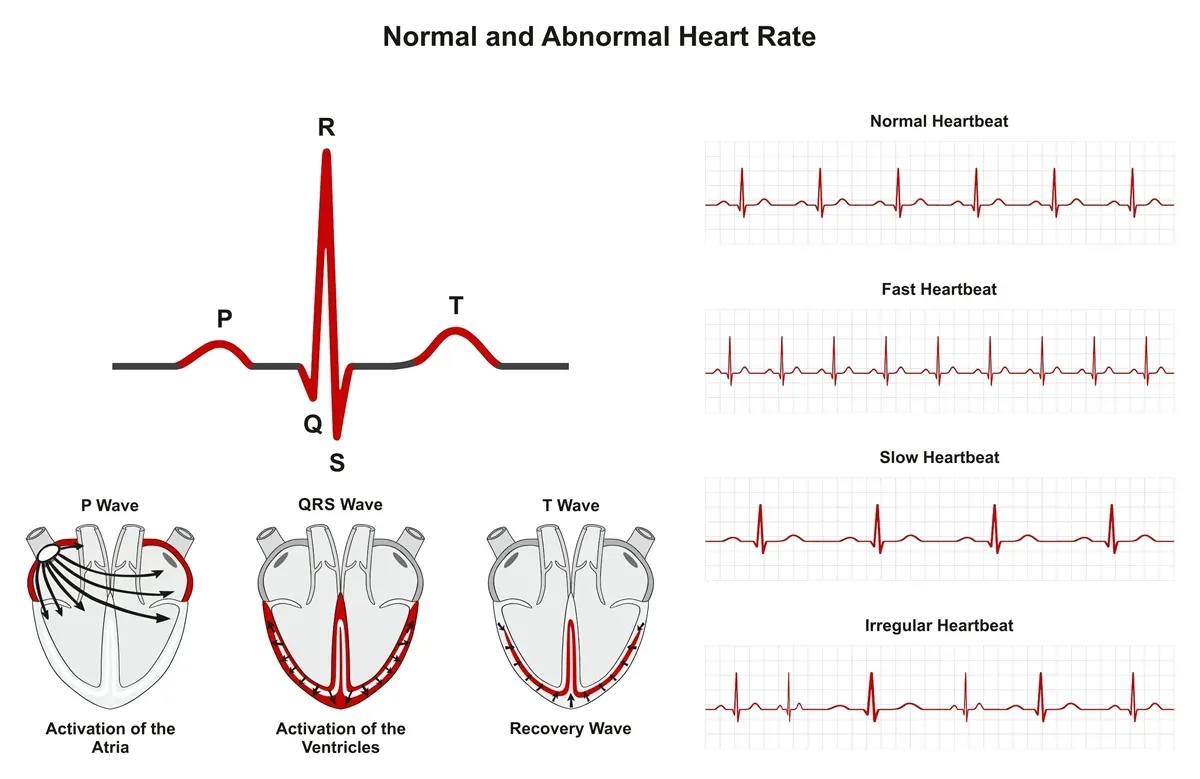
A racing heart or skipped beat can signal an arrhythmia, but when should you worry, and what treatments exist?
Arrhythmias encompass heartbeats that are too fast (tachycardia) or too slow (bradycardia). Premature atrial contractions (PACs) and premature ventricular contractions (PVCs) are common in younger individuals and typically pose no immediate danger.
In contrast, atrial fibrillation (AFib)—the most prevalent fast rhythm in older adults, is often linked to conditions like untreated sleep apnea, thyroid disorders, or excessive alcohol/caffeine consumption.
For temporary relief of a racing heart, vagal maneuvers such as immersing the face in ice-cold water or bearing down can help. However, these are not long-term solutions.
Dr. Divya Korpu said:
"Ablation is usually done under twilight sedation and typically is a same-day procedure."
Catheter ablation, including the newer nonthermal pulsed field ablation, targets abnormal heart circuits with reduced risk to surrounding tissues. While PACs/PVCs often require no intervention, AFib increases stroke risk due to blood clot formation, necessitating blood thinners or left atrial appendage devices in some cases.
Recommended Reading
⚠️ LEGAL DISCLAIMER: It is for informational purposes only. It never substitutes for professional medical advice, diagnosis, or treatment. Always consult your doctor regarding any questions about your health.