


Old mice with failing memories recovered lost brain connections and cognitive performance when researchers removed a single protein from their brains. The reversal was not subtle. Neural networks regrew. Memory test scores rose. The animals' brains, in effect, became younger.
The protein is called FTL1. In young mice, it exists at low levels. With age, it accumulates in the hippocampus, the brain region that consolidates learning and memory. Older mice showed consistently higher FTL1 than their younger counterparts. They also had fewer synapses between neurons and performed worse on cognitive tests.
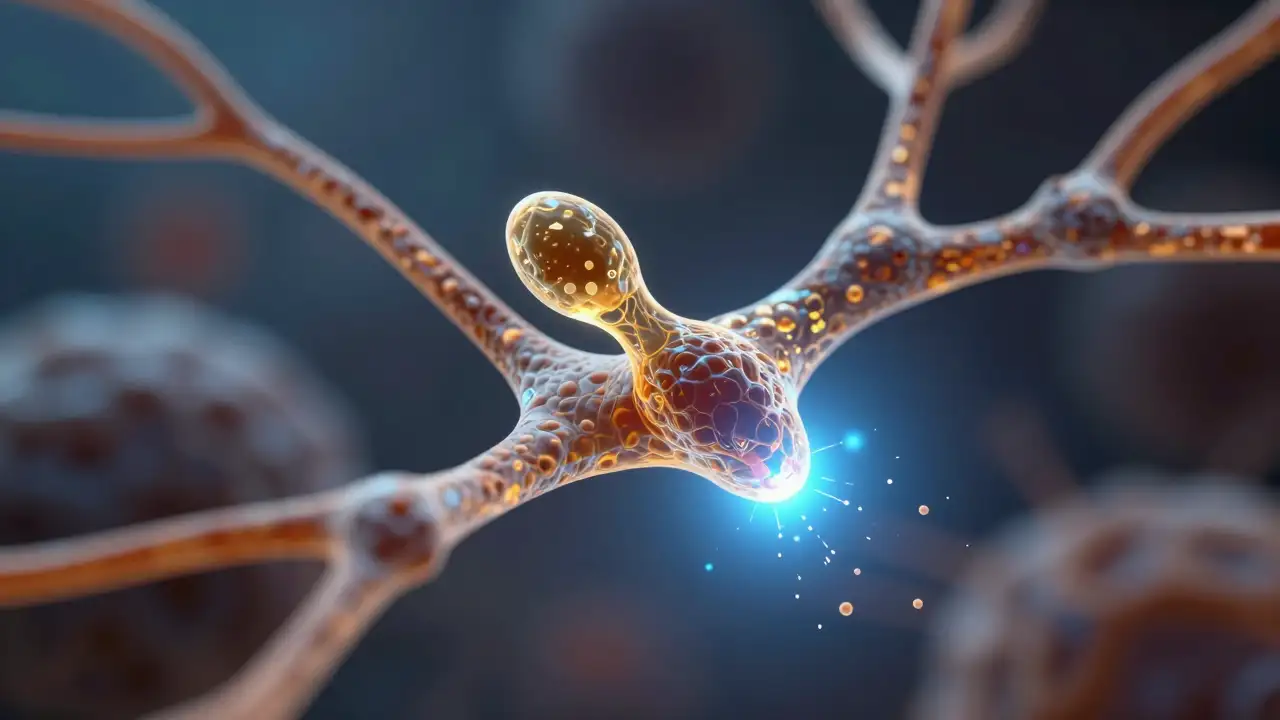
To test whether FTL1 drives aging or merely accompanies it, the researchers ran the experiment in reverse. They increased FTL1 in young mice. The results were immediate. Their neurons simplified, growing short single extensions instead of complex branching structures. Their behavior shifted to match. Young mice with artificially elevated FTL1 began acting like old ones.
The most striking result came last. When the team reduced FTL1 in naturally aged mice, the damage unwound. Synapse density increased. Memory improved. The protein's removal did not merely slow decline. It appeared to reverse it.
Saul Villeda, PhD, associate director of the UCSF Bakar Aging Research Institute and senior author of the study:
"It is truly a reversal of impairments. It's much more than merely delaying or preventing symptoms."
Published in Nature Aging, the study traced FTL1's mechanism to cellular metabolism. High levels of the protein slowed energy production in hippocampal neurons. When researchers treated aged cells with compounds that boost metabolism, they could block FTL1's negative effects without removing the protein itself.
Two paths forward now exist: targeting FTL1 directly, or bypassing it through metabolic intervention. Both were effective in mice. Neither has been tested in humans.
The study leaves unanswered whether FTL1 operates identically in human brains, and whether long-term suppression would carry risks not visible in short-term mouse experiments.
Reference: Remesal, L., Sucharov-Costa, J., Wu, Y., et al. (2025). Targeting iron-associated protein FTL1 in the brain of old mice improves age-related cognitive impairment. Nature Aging, 5(10), 1957. https://doi.org/10.1038/s43587-025-00940-z