


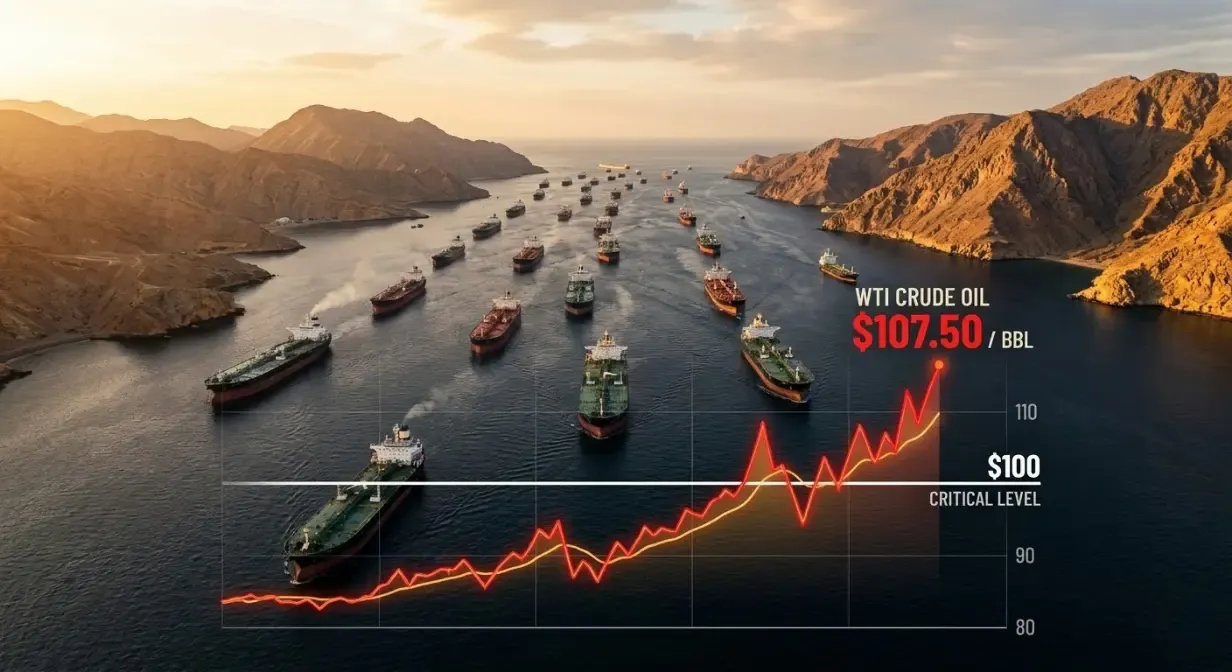
Oil’s triple-digit scare is back—and the Strait of Hormuz just became the most expensive waterway on earth. Brent crude surged 6.9% to $98.22 after briefly topping $100, a move that earlier this week pushed futures toward $120.
Roughly one-fifth of the world’s seaborne oil and LNG snakes through this 21-mile channel, and the International Energy Agency warns that a full closure would mark “the largest oil supply disruption in the history of the global oil market.”
Equity futures felt the heat. At 08:51 ET, Dow futures were off 0.8%, while S&P 500 futures and Nasdaq 100 futures each slid 0.7%.
Physical supply fears intensified after a third vessel was struck by an unknown projectile off Iraq’s coast, prompting both Iraq and Oman to shutter key oil terminals. The flare-up eclipsed a benign U.S. macro print: initial jobless claims fell to 212k, below consensus and the lowest since early March.
Energy angst collided with a late-session AI bounce. Oracle’s better-than-feared numbers and an in-line February CPI print helped the Nasdaq Composite eke out a gain, while the S&P 500 ended “marginally in the red.”
Adobe tried to ride the AI optimism but came up short. Management guided fiscal 2026 revenue to $25.90–$26.10 billion and EPS of $23.30–$23.50, leaving the stock down more than 17% year-to-date as investors question whether creative-suite AI upsells can offset macro drag.
Editor's Note:
Look, the Hormuz premium is real, but if you’re trading this tape, watch the dollar and yields more than the headlines—energy spikes have a nasty habit of forcing the Fed’s hand faster than any drone strike.
⚠️ LEGAL DISCLAIMER: This article is for informational purposes only and does not constitute financial or investment advice.
Source: Yahoo Finance | Investing