Northern Lights May Appear in 12 U.S. States Tonight Due to Solar Activity
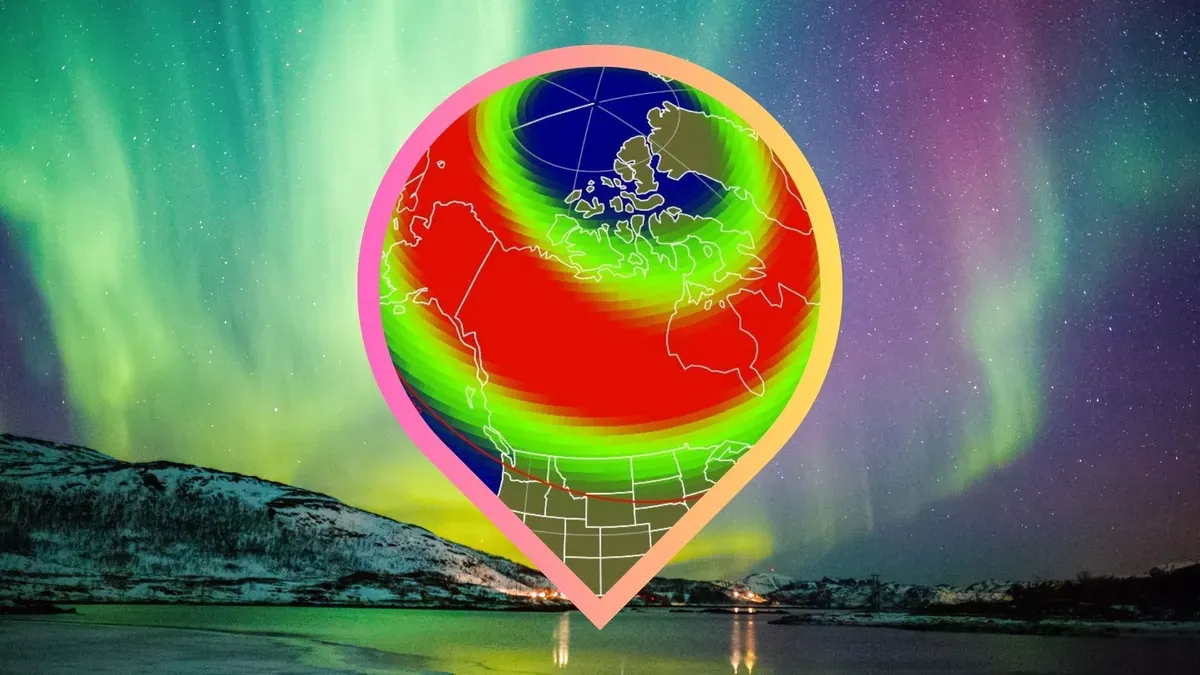
The northern lights may appear as far south as New York tonight, an unusual occurrence driven by intense solar activity that typically restricts auroras to polar regions.
Geomagnetic storm activity at G1 level—classified as minor but capable of expanding auroral visibility into mid-latitudes—is expected to create this rare phenomenon.
According to forecasts from NOAA and the U.K. Met Office, the aurora may be visible in 12 U.S. states: Alaska, North Dakota, Minnesota, Maine, Wisconsin, Michigan, South Dakota, Idaho, New Hampshire, Vermont, Washington, and New York.
The predicted visibility window spans from 1 a.m. to 7 a.m. EST on January 8-9, with solar wind speeds reaching 700 km/s—double the usual background level. This activity is attributed to an Earth-facing coronal hole and incoming coronal mass ejections (CMEs), both of which accelerate charged particles toward Earth.
A coronal hole is a region in the sun's atmosphere with lower density and temperature, allowing solar wind to escape at high speeds.
CMEs, by contrast, are massive bursts of solar plasma and magnetic fields ejected into space. Observers seeking to witness the event are advised to find dark, north-facing locations with minimal light pollution. While smartphone cameras can help detect faint auroral glows, visual confirmation may require patience and favorable conditions.
Current models suggest the G1 storm level is insufficient to produce widespread auroral displays but sufficient to alter typical visibility patterns.
The National Weather Service emphasizes that forecasts remain subject to change as solar activity evolves. Researchers caution that the aurora's appearance depends on both geomagnetic conditions and local atmospheric clarity.