


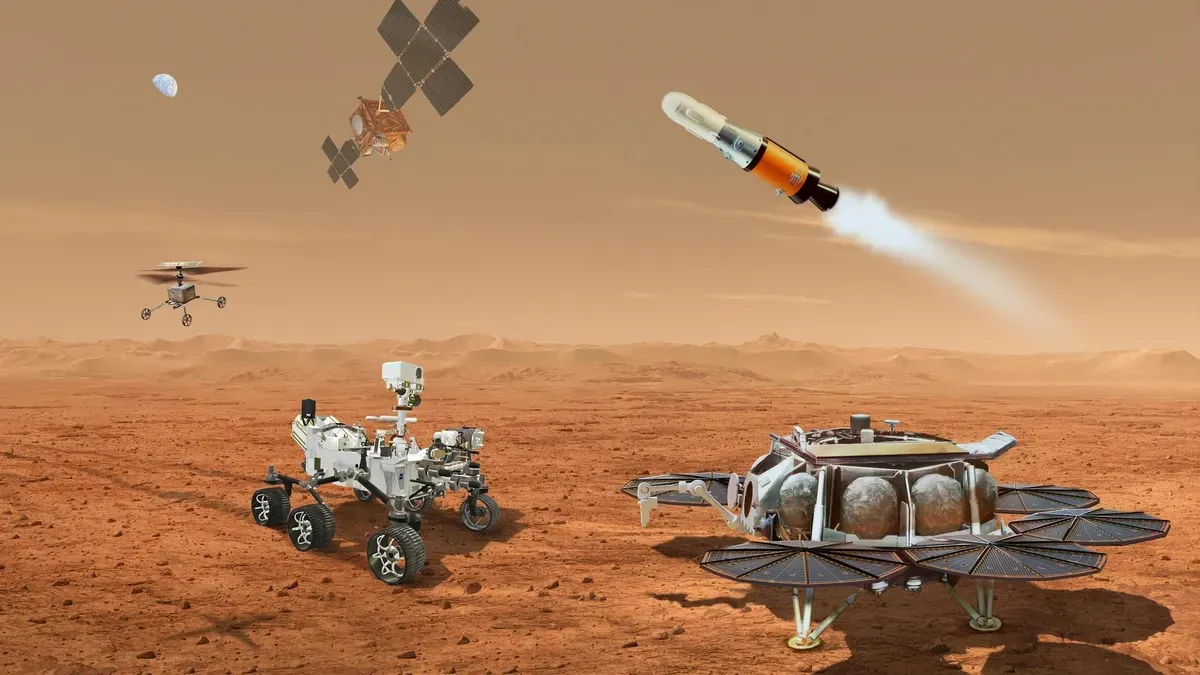
NASA's flagship Mars Sample Return program, designed to retrieve rocks that might contain evidence of ancient life, has been defunded by U.S. Congress, shifting the race for Martian samples to China.
The U.S. Senate approved a spending bill that effectively cancels the Mars Sample Return (MSR) program, which had aimed to bring Martian rocks to Earth for analysis. Victoria Hamilton, a Southwest Research Institute scientist, described the decision as 'difficult to understand how the cancellation of MSR is anything but an admission that returning samples from Mars is too hard for the United States.'
The bill allocates $110 million to the Mars Future Missions program, which will fund precursor technologies like radar, spectroscopy, and landing systems previously developed for MSR.
This amount, however, falls far short of the revised cost estimates for reviving the full mission, which range from $5.8 billion to $7.7 billion. If reinstated, the program could potentially return samples by 2040, though no concrete plans have been announced.
China's Tianwen-3 mission, scheduled for a 2028 launch, aims to collect Martian samples and return them to Earth by 2031. This timeline positions China as the first nation to achieve this objective, assuming the mission proceeds as planned.
NASA has not provided statements on the geopolitical implications of this shift in Mars exploration priorities.
Perseverance rover samples, which have not yet been returned to Earth, remain under analysis for direct evidence of Martian life. As of current data, no such evidence has been confirmed.
The cancellation of MSR raises questions about the future of U.S. leadership in planetary sample return missions and the broader strategic goals of the agency's Mars exploration program.