


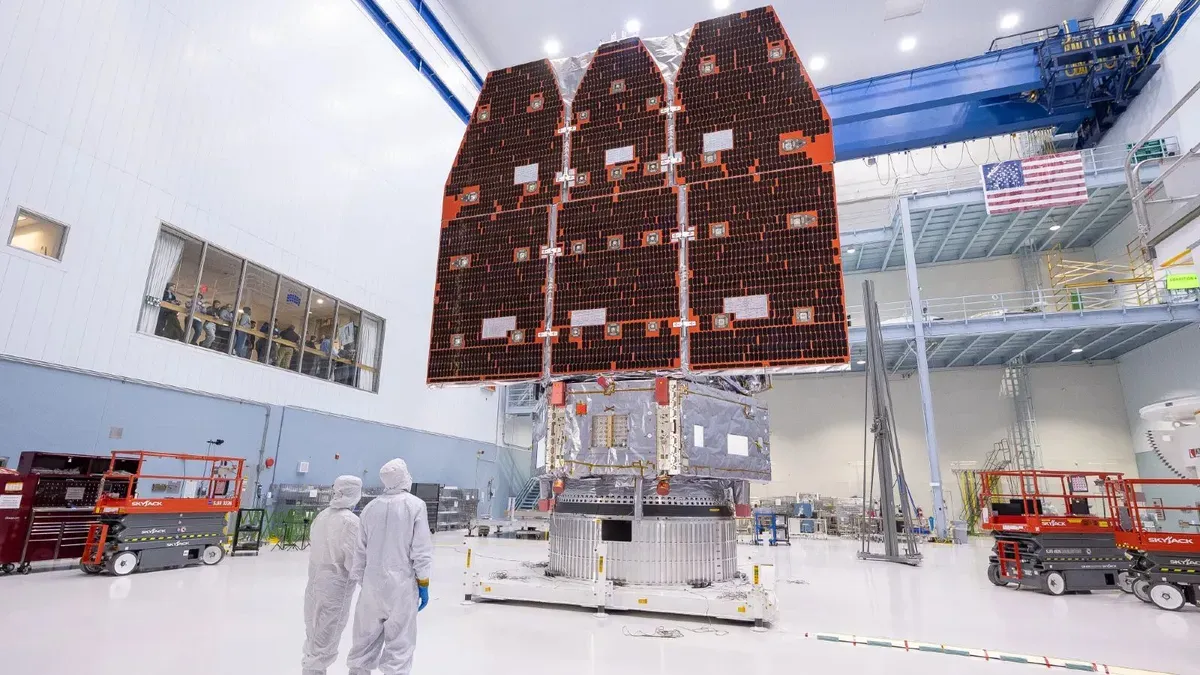
NASA's Nancy Grace Roman Space Telescope has completed construction and is scheduled for launch no later than September 28, 2027. The observatory will operate at the Sun-Earth L2 Lagrange point, joining the James Webb Space Telescope and ESA's Gaia and Euclid missions. Key instruments include a 288-megapixel Wide Field Instrument (WFI) and a Coronagraph to block starlight for exoplanet imaging.
"Completing the Roman observatory brings us to a defining moment for the agency... this team has delivered an observatory that will expand our understanding of the universe," stated NASA Associate Administrator Amit Kshatriya.
The mission aims to detect more than 100,000 exoplanets, hundreds of millions of stars, and billions of galaxies within its first five years, according to Julie McEnery, NASA Goddard Roman senior project scientist.
The telescope will collect 20,000 terabytes of data over five years, including a Galactic Plane Survey occupying 25% of observing time. Post-launch commissioning will require approximately 90 days. The Falcon Heavy rocket will carry the 7.9-foot mirror telescope from Kennedy Space Center.