


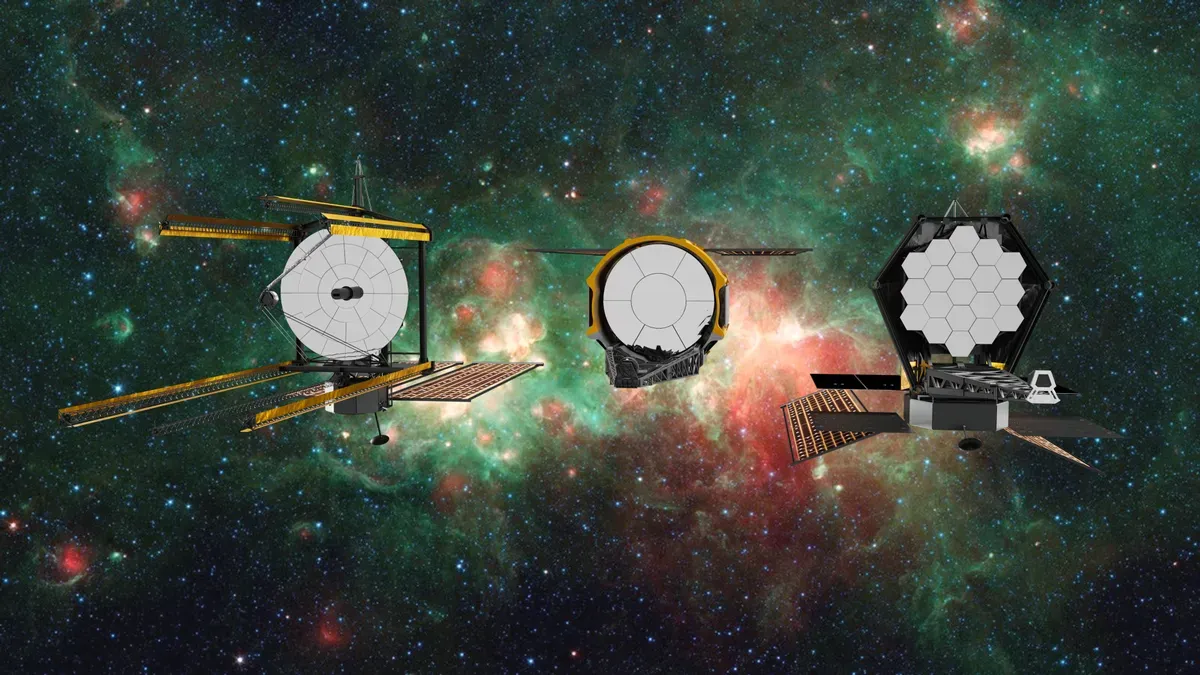
NASA has accelerated its search for extraterrestrial life by greenlighting the development of a telescope designed to analyze planetary atmospheres with atomic-scale precision.
Seven companies—Astroscale, BAE Systems Space and Mission Systems, Busek, L3Harris, Lockheed Martin, Northrop Grumman, and Zecoat—have been awarded three-year fixed-price contracts to develop engineering solutions for the Habitable Worlds Observatory (HWO).
The mission aims to detect signs of life by analyzing light from exoplanet atmospheres orbiting stars hundreds to thousands of light-years away.
"We intend to move with urgency, and expedite timelines to the greatest extent possible to bring these discoveries to the world,"
NASA Administrator Jared Isaacman stated. The HWO requires an optical system stable within atomic-scale precision and a coronagraph—described as a device that blocks starlight to reveal fainter objects—"thousands of times more capable" than existing space coronagraphs.
A launch target of the late 2030s or early 2040s has been set, building on the legacy of missions like Hubble, James Webb, and the Nancy Grace Roman Space Telescope.
The design includes serviceability for in-orbit repairs or upgrades, a feature critical for long-duration missions.
Shawn Domagal-Goldman, director of NASA’s Astrophysics Division, emphasized the importance of such awards: "Awards like these are a critical component of our incubator program for future missions." Technical challenges include achieving optical stability at the atomic scale, a requirement that demands unprecedented precision in manufacturing and thermal control.
While NASA has not yet confirmed the feasibility of these specifications, the agency has outlined a phased development approach to address them.