


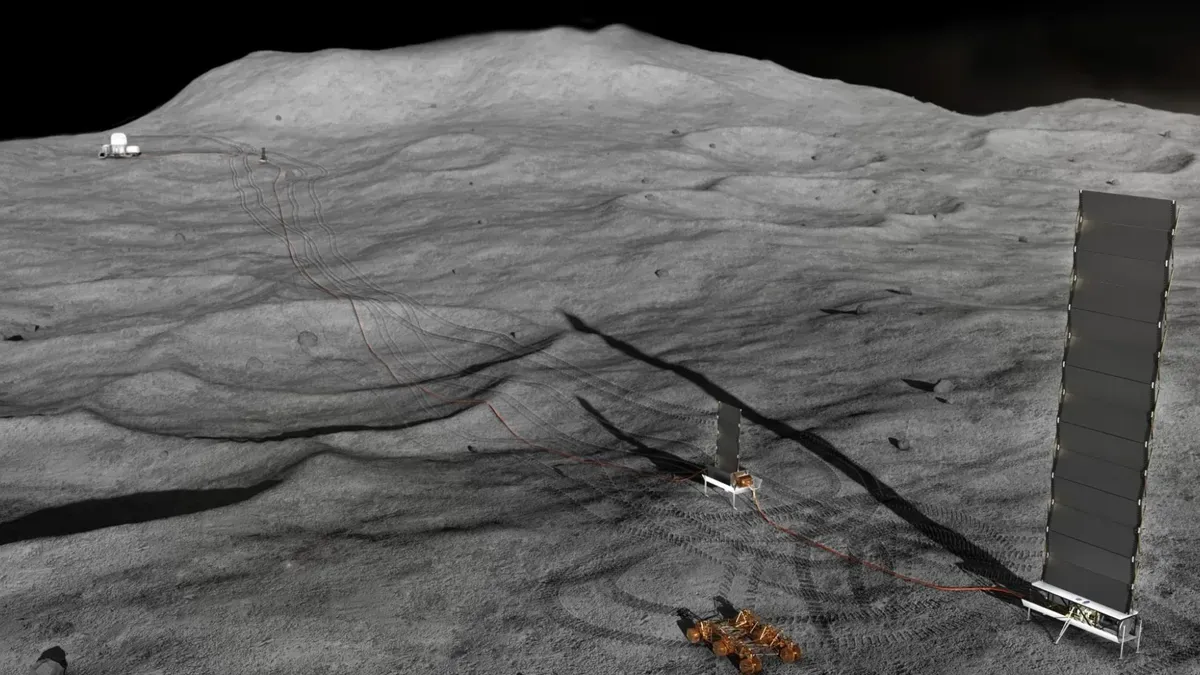
NASA and the U.S. Department of Energy have formalized a partnership to develop a fission-based nuclear reactor for the moon by 2030.
The collaboration, outlined in a memorandum of understanding, aims to advance technologies critical to sustaining long-term human presence on the lunar surface and supporting future Mars missions.
"Achieving this future requires harnessing nuclear power," stated NASA Administrator Jim Bridenstine.
He emphasized that the agreement enables closer coordination between the agencies to "deliver the capabilities necessary to usher in the Golden Age of space exploration." U.S. Secretary of Energy Chris Wright added that the partnership exemplifies how American scientific collaboration has historically "led the world to reach new frontiers."
The proposed reactor system is part of NASA's Artemis program, which seeks to establish a permanent lunar base.
Nuclear fission systems are favored for extraterrestrial bases due to their ability to generate continuous power independent of sunlight or weather conditions. This contrasts with solar power, which is limited by the moon's 14-day-long night.
The collaboration builds on a 50-year history of joint work between NASA and the Department of Energy, including the development of radioisotope thermoelectric generators for Mars rovers like Curiosity and Perseverance.
However, the 2030 timeline remains aspirational, as mission-specific funding details have not yet been finalized.