


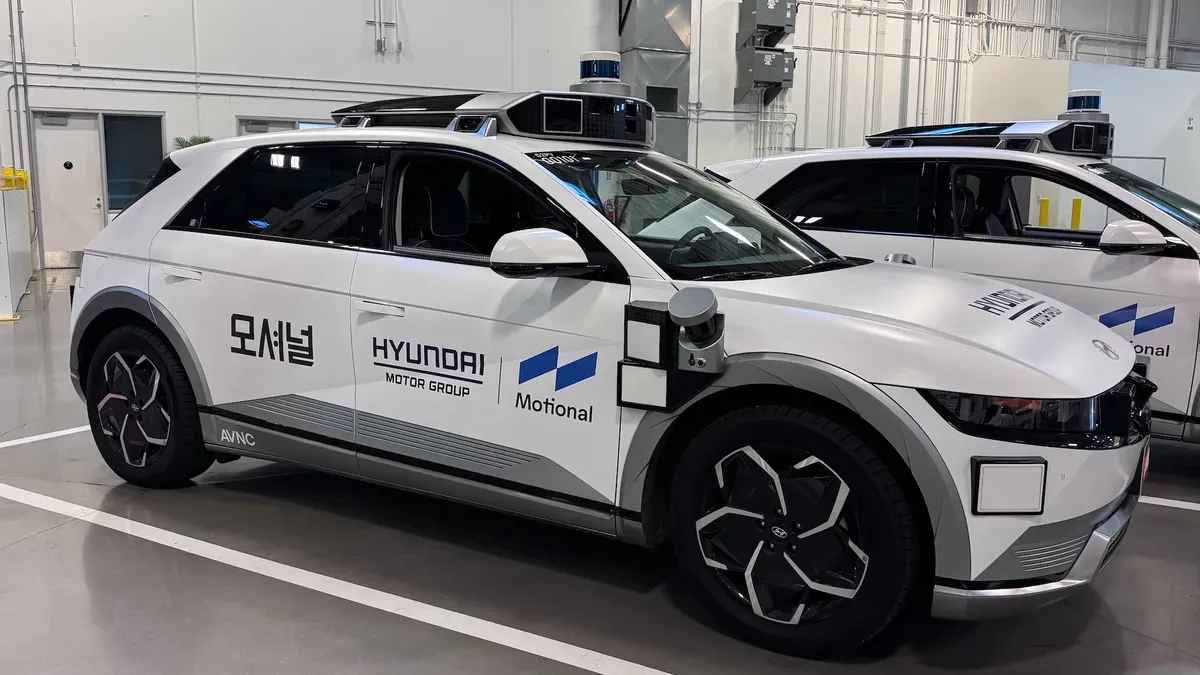
Motional isn’t just rebooting self-driving cars—it’s rewriting the playbook for how AI transforms autonomous vehicles from a $4 billion gamble into a scalable, affordable reality.
The company, formed via a $4 billion Hyundai-Aptiv joint venture, has restructured its autonomous vehicle strategy after losing Aptiv's financial backing and delaying its driverless robotaxi service. CEO Laura Major explained the shift:
"We saw that there was tremendous potential with all the advancements that were happening within AI; and we also saw that while we had a safe, driverless system, there was a gap to getting to an affordable solution that could generalize and scale globally."
Motional has transitioned from a "classic robotics" approach to an AI foundation model-based architecture, integrating transformer-based models to streamline perception, tracking, and semantic reasoning into a single backbone.
Hyundai has committed $1 billion to sustain Motional after Aptiv's exit and a 40% workforce reduction in 2024 brought staff from 1,400 to under 600.
The company plans to launch a commercial driverless service in Las Vegas by late 2026, with a human-free pilot by year-end 2024 and a public beta service later this year via an unnamed ride-hailing partner (Lyft and Uber are existing partners).
Hyundai Ioniq 5 autonomously navigated Las Vegas Boulevard but exhibited cautious behavior around obstacles like a double-parked delivery van. Major described this as proof-of-concept progress rather than a finished product.