



There's a dream that Linux gamers have been chasing for years: a world where Windows games just work — no performance penalties, no compatibility rabbit holes, no terminal commands typed in desperation at midnight. That dream has been getting closer. And with Fedora 44, arriving mid-April, it takes its biggest single leap yet.
The upgrade in question won't announce itself. There's no toggle to flip, no configuration file to edit, no Reddit thread to consult. When Fedora 44 lands on your machine and you install Wine or Steam, something powerful will arrive quietly alongside it, a technology called NTSYNC, now embedded directly into the Linux kernel and your Windows games will simply run better.
To understand why this matters, you need to understand what's been quietly breaking Linux gaming for years.
Modern games are extraordinarily complex pieces of software. They run dozens, sometimes hundreds, of simultaneous threads, processes that must stay in perfect synchronization to keep graphics rendering correctly, physics running smoothly, and audio playing in time. When those threads fall out of sync, the result is frame drops, visual glitches, or crashes.
Windows handles this through its NT synchronization system, built directly into the operating system kernel. Because it lives at the kernel level, it can process thousands of these synchronization requests with minimal overhead — fast, efficient, and invisible to the player.
Linux, historically, had no equivalent. When gamers tried to run Windows titles through compatibility layers like Wine or Valve's Proton, those tools had to intercept and translate Windows sync calls on the software level. Wine developed esync and fsync — clever engineering workarounds that helped enormously, but they were always fighting against the grain. Without native kernel support for the specific way Windows handles synchronization, performance bottlenecks were baked into the experience.
The Linux community's answer to this problem is NTSYNC, a kernel-level implementation designed to replicate the Windows NT synchronization system as closely as possible.
NTSYNC was actually released onto the Linux kernel just under a year ago, and its main job is to replicate the Windows NT synchronization system as closely as possible. Rather than working around the problem in software, NTSYNC addresses it at the deepest level of the operating system, where Windows handles it natively.
The impact splits across two categories of users. With NTSYNC's implementation into the Linux kernel, it should improve performance for Wine users and compatibility for Proton users. For Wine users, that means real, measurable framerate improvements when running Windows software. For Proton users, those gaming through Steam, the gains may be more about unlocking titles that previously refused to run at all, since Proton's existing esync and fsync solutions already covered some of the performance ground.
Either way, the barrier drops.
Here's where Fedora 44 does something that deserves its own headline.
Previous Linux users who wanted NTSYNC had to find it, understand it, and manually configure it. That's the kind of friction that keeps casual gamers on Windows. Fedora 44 eliminates that friction entirely.
When you install an app on Fedora 44 that can use NTSYNC, such as Wine or Steam, it will be pulled in automatically as part of that installation. As such, only those who will use the NTSYNC tech will be offered it.
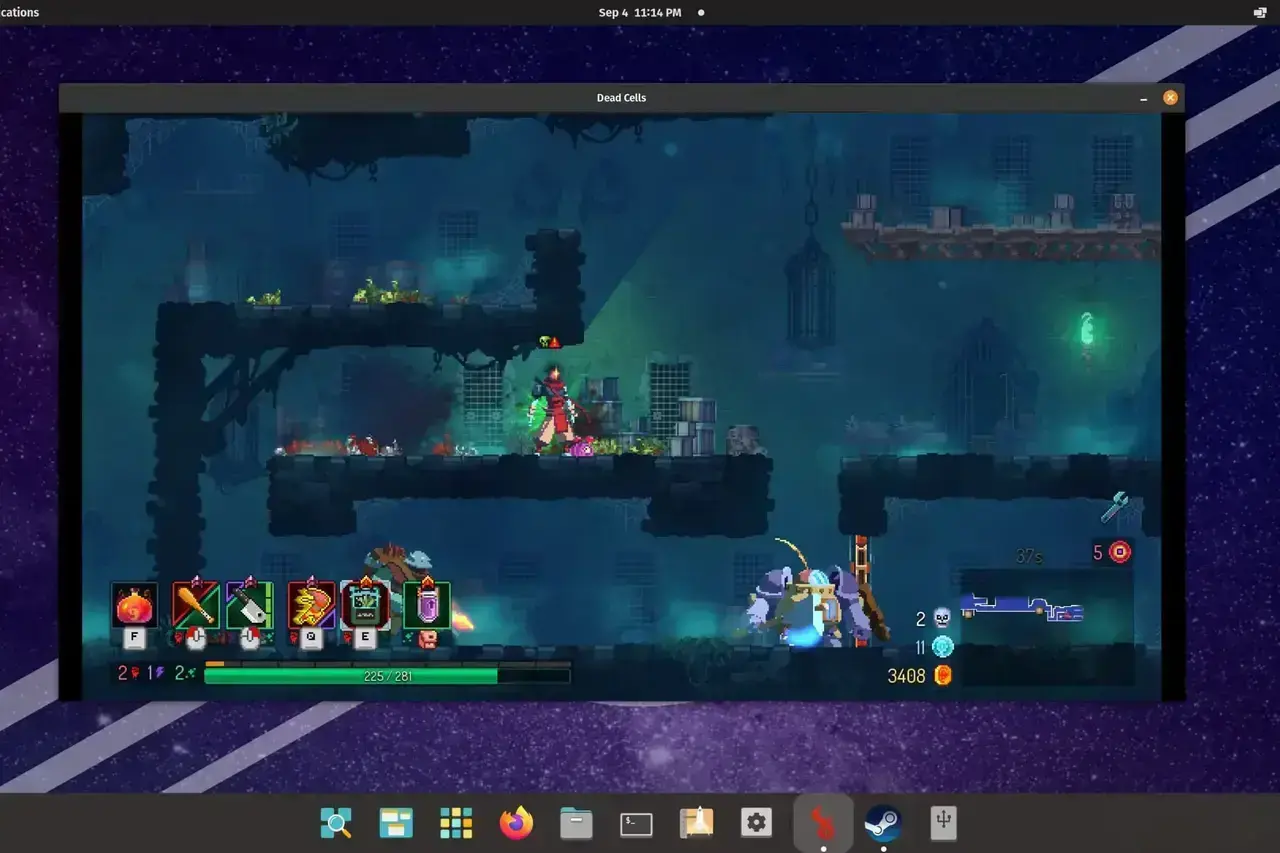
This is smart, surgical distribution. No bloat for users who don't need it. No manual intervention for users who do. The technology arrives precisely where it's useful, exactly when it's needed, without asking the user to know what it is.
Fedora prides itself on being a 'bleeding edge' operating system without sacrificing stability, an operating system that's both recent and ironclad. NTSYNC's automatic deployment is a direct expression of that philosophy: latest technology, delivered invisibly, without breaking anything.
The Bigger Picture: 2026 and the Year of Linux Gaming
Gaming on Linux has come a long way in the last few years. A decade ago, getting any game running on Linux that wasn't designed natively for it was a massive headache at best and impossible at worst.
The landscape now looks dramatically different. Valve's Proton has matured into a genuinely powerful compatibility layer. The Steam Deck normalized the idea of Linux as a gaming platform for millions of mainstream consumers. Wine 11 delivered significant improvements. And now, NTSYNC in the Linux kernel removes one of the last fundamental architectural disadvantages that Linux gaming carried against Windows.
Both of these improvements, better performance for Wine and better compatibility for Proton, are a pretty big deal, given that Linux distros designed specifically for gaming are taking off. Getting as close to Windows gaming parity as possible would ensure a major win for FOSS operating systems.
Fedora 44 isn't just a system update. It's a quiet but decisive statement: Linux gaming no longer needs to apologize for itself.
When Can You Get It?
If you want to give NTSYNC a try and see how it improves your performance, keep an eye out for Fedora 44 when it fully releases mid-April.
No action required. No guides to follow. Install Wine or Steam, and the future of Linux gaming arrives automatically.
Source: XDA Developers