Jupiter Contains 1.5 Times More Oxygen Than the Sun, Simulations Suggest
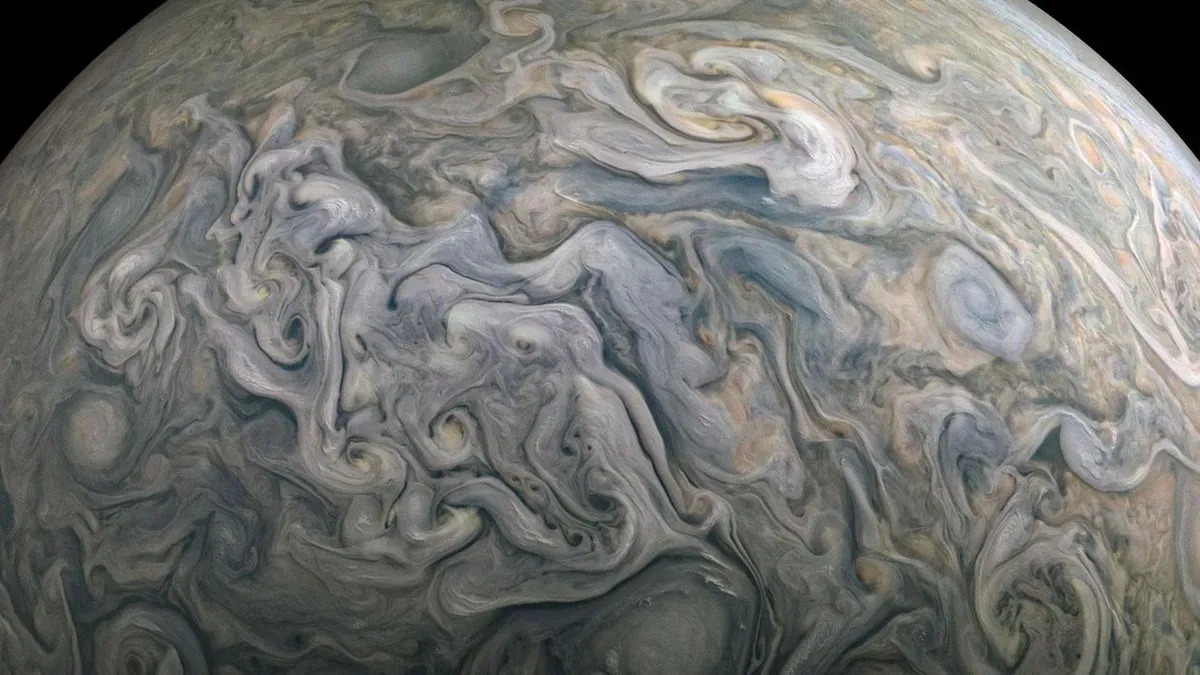
New simulations combining atmospheric chemistry and hydrodynamics reveal Jupiter holds 1.5 times more oxygen than the Sun, offering insights into planetary formation and solar system history.
The oxygen is primarily locked in water molecules that condense deep beneath Jupiter’s visible cloud layers, beyond the reach of current instruments.
Previous studies produced conflicting estimates by modeling chemistry and atmospheric motion separately, but the new approach resolves these discrepancies.
"It really shows how much we still have to learn about planets, even in our own solar system," said Jeehyun Yang, lead author of the study published January 8 in the Planetary Science Journal.
The findings suggest Jupiter formed by accreting icy material near or beyond the snow line—a boundary in the early solar system where water ice could persist. This aligns with the hypothesis that gas giants formed from volatile-rich regions, but the precise location of Jupiter’s formation remains an open question.
The study’s methodological innovation lies in integrating chemical processes with fluid dynamics to simulate Jupiter’s interior.
While the oxygen abundance supports the snow line hypothesis, the team emphasizes that further observations are needed to confirm the distribution of water in Jupiter’s deep atmosphere. Instruments like the James Webb Space Telescope may provide indirect evidence through spectroscopic analysis of upper atmospheric layers.