


EV leasing inquiries in Europe rose 36% and new EV purchase interest in the U.S. jumped 28% after Iran's conflict disrupted oil flows through the Strait of Hormuz, which typically carries about a fifth of the world's oil and liquified natural gas. The numbers signal a shift in consumer attention. Whether attention becomes action is a different question.
Cox Automotive reported the average price for a new EV in the U.S. stood at $55,300 in the first quarter, compared to $48,768 for non-EV models. Cox forecasts U.S. EV sales during the first quarter will be down 28% to 212,600 units despite higher gas prices. The gap between interest and purchase, according to Cox's senior director of economic and industry insights Erin Keating, comes down to how long consumers expect fuel costs to stay elevated. Cox expects gas prices will need to remain inflated for six months or more before any notable increase in EV buying habits occurs.
Hurdles remain. Cost, charging infrastructure, and range anxiety persist as barriers, Keating said.
Steffen Michulski, senior consultant at JATO Dynamics, said the fallout from the Iran war could influence EV demand, particularly for drivers covering high mileage, given that rising oil prices have made conventional gasoline cars more expensive. But he cautioned against oversimplification.
Michulski, writing by email to CNBC:
"Yes, elevated oil prices and the renewed focus on energy security are likely to provide a mid term boost to BEV demand. But this is best understood as an incremental shift rather than a sudden market wide acceleration. Electricity price risks, technological progress on the combustion side, and general economic uncertainty all act as counterweights."
Meanwhile, U.S. automakers Ford Motor, General Motors, and Stellantis have all reversed course on EV strategies, booking tens of billions of dollars in combined write-offs and restructuring costs, citing lackluster consumer demand and shifting political landscapes.
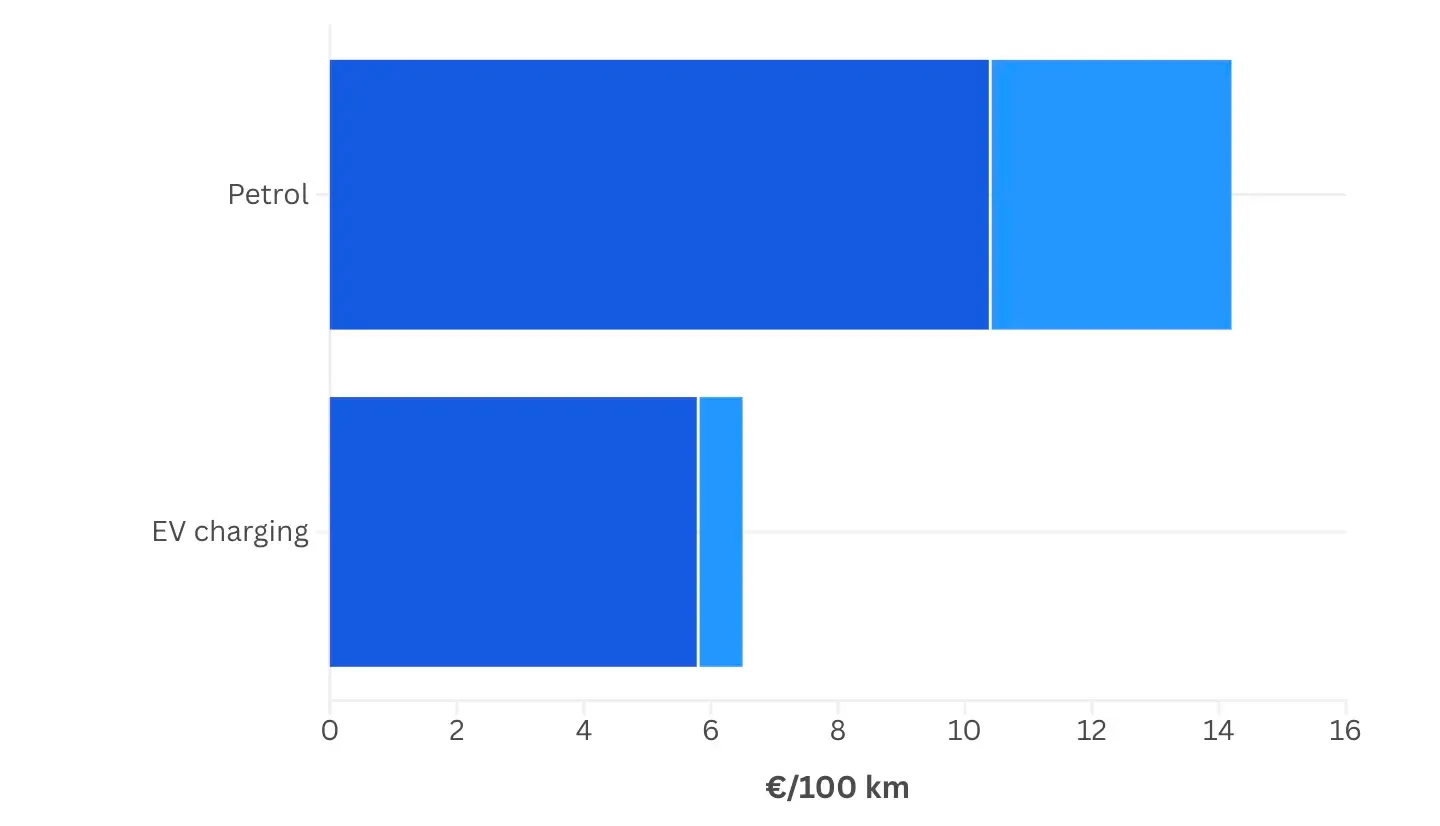
The picture looks different in Europe. An analysis by Transport & Environment found that the nearly 8 million EVs in the EU will save the bloc around 46 million barrels of oil in 2025, equivalent to almost 3 billion euros ($3.45 billion) in avoided oil import costs. The same analysis found that petrol drivers were expected to be five times more exposed to higher oil prices than EV owners.
Julia Poliscanova, senior director for vehicles and e-mobility supply chains at Transport & Environment:
"It is indeed quite frustrating how we again talk about EVs as if we didn't know that this is the structural measure to wean our transport system off oil. I do think that this crisis might be different. In the past, there would be a crisis and then quite quickly as the crisis is over, we can go back to business as usual, and oil and gas is flowing."
Some of the reported damage to Middle East energy infrastructure may take years to repair, Poliscanova said. In Asia, EV growth in Vietnam, Thailand, and Indonesia, driven by affordable Chinese models, is likely to accelerate the shift away from fossil fuels.
Electrified vehicle sales, including hybrids, are expected to account for a record 26% of new vehicles sold in the U.S. during the first quarter, led by Toyota hybrids, according to Cox. Whether that record holds through the second quarter depends on how long the Strait of Hormuz disruption continues.
Source: Cnbc