


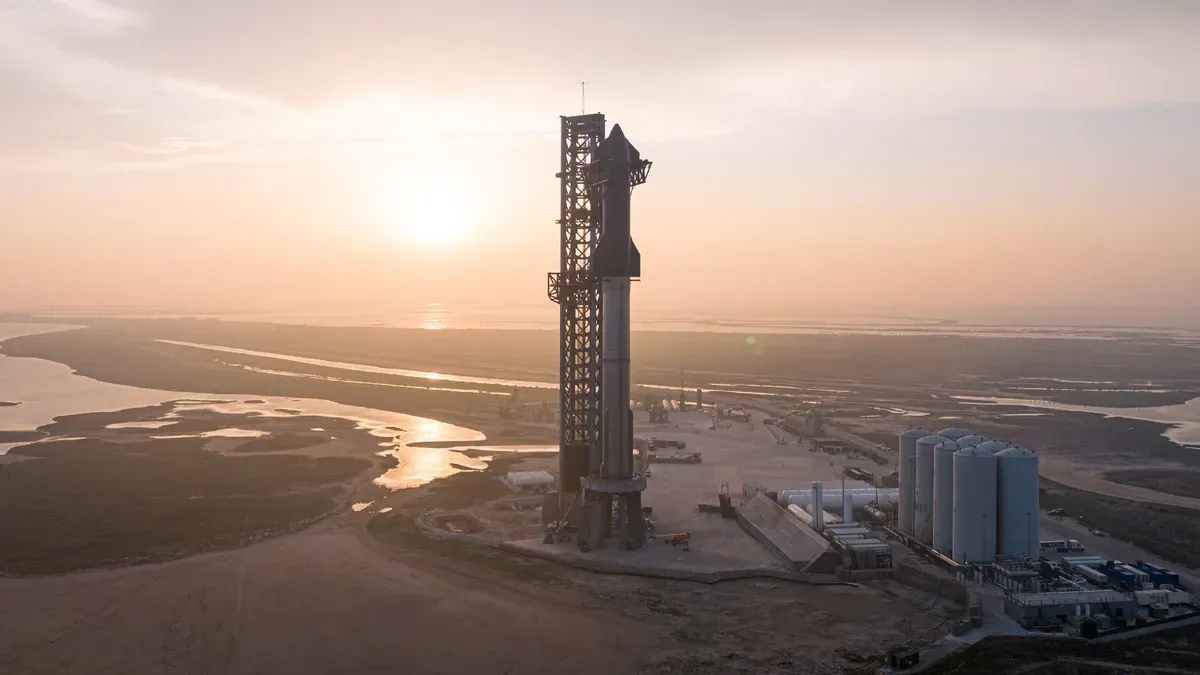
Superheavy-lift rockets like SpaceX's Starship could democratize space astronomy by slashing the cost of building observatories that peer deeper into the cosmos.
Recent test flights of SpaceX's Starship and Blue Origin's New Glenn rockets have demonstrated the potential of these vehicles to carry 10 times more mass to orbit than previous launch systems.
With a body twice as wide as conventional rockets, superheavy-lift vehicles eliminate the need for folded mirror designs that introduce reliability risks. The James Webb Space Telescope, which cost NASA $10 billion, required a complex folding mechanism to fit its 6.5-meter mirror into the Ariane V rocket—a design that created over 300 potential failure points during deployment.
Proposed observatories leveraging this new design space include Origins (deep infrared), Prima (smaller infrared), and GO-LoW (low-frequency radio with 100,000 tiny telescopes).
These instruments aim to achieve 100 times greater sensitivity than current telescopes by utilizing larger, simpler mirror systems. "With the broader spectrum in view, astronomers can see objects in the sky that are much colder than stars, but also objects that are far hotter," one researcher noted.
The increased mass capacity also enables more robust scientific instruments and thermal control systems, reducing the need for mission-specific trade-offs.
Current 'Great Observatory' replacements face delays until 2045 or later due to funding constraints. However, the reduced cost-per-kilogram of superheavy-lift launches could make ambitious observatories more feasible.
"We astronomers will always be asking for 'more light,'" said a project scientist. "If agencies can keep astronomers' ambitions from becoming too astronomical, while taking full advantage of the new design space... understanding of the universe could advance beyond imagination."