


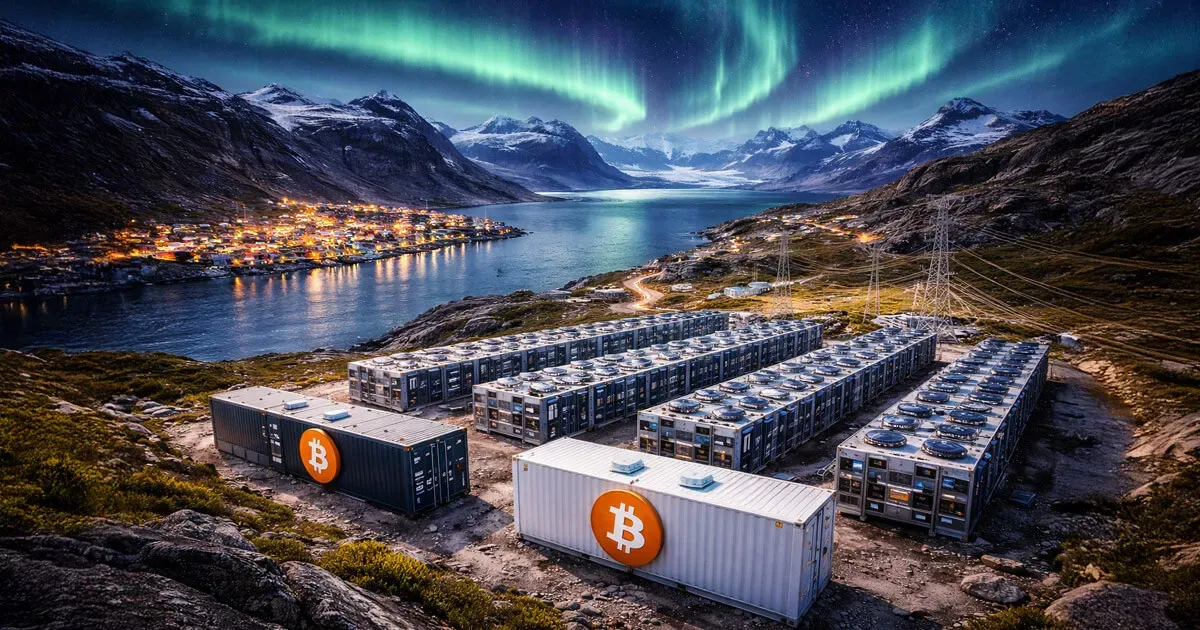
Greenland’s energy surplus could theoretically power Bitcoin mining at ten times the current network—so why is it still a speculative venture? The island’s wind and hydropower resources suggest untapped potential, but infrastructure gaps, transmission bottlenecks, and geopolitical hurdles remain major barriers.
The White House said:
"A U.S. purchase of Greenland is an 'active discussion.'"
Meanwhile, Greenland plans a 2026 public tender for two hydropower sites—Tasersiaq and Tarsartuup Tasersua—which could generate 9,500 GWh annually. At current Bitcoin mining efficiency (17.5 J/TH), 1 GW of power could theoretically yield ~56 EH/s. American Bitcoin, through its Hut 8 partnership, already operates 24 EH/s with 16.4 J/TH efficiency, but scaling to Greenland’s theoretical 333 GW wind capacity would require $384 billion in turbine costs alone.
The European Investment Bank’s 76-MW Buksefjord-3 expansion near Nuuk highlights incremental progress, but onshore wind costs of $1,154/kW in 2023 underscore the capital intensity.
Even if Greenland’s 333 GW wind nameplate capacity were fully utilized, the network’s 10x Bitcoin power potential remains constrained by grid limitations and the absence of commercial-scale mining infrastructure.
Look, the real test for Greenland’s Bitcoin ambitions isn’t the math—it’s the logistics. Even with a 10x theoretical edge, the gap between energy availability and usable infrastructure could swallow any speculative gains whole.
⚠️ LEGAL DISCLAIMER: This article is for informational purposes only and does not constitute financial or investment advice.