


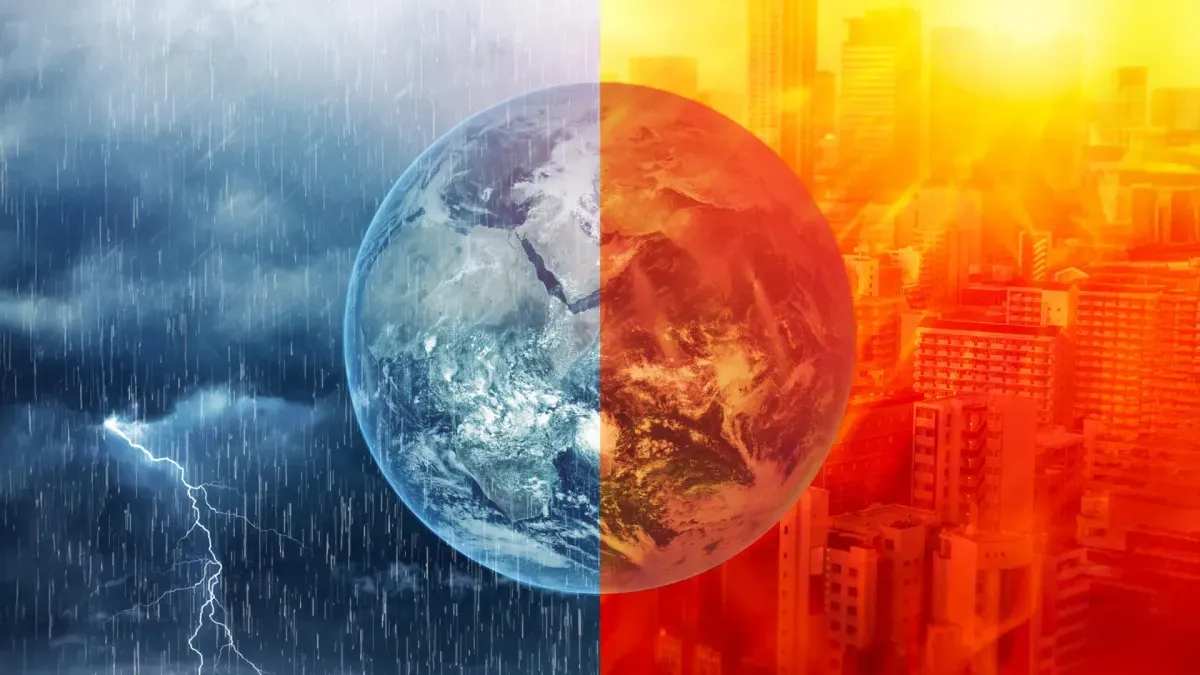
A 22-year satellite study reveals how climate cycles create synchronized global water extremes — with dry conditions now dominating — reshaping risks for food security, disease outbreaks, and public health.
Scientists discovered El Niño and La Niña synchronize global floods and droughts, creating simultaneous extreme wet and dry conditions across continents. Bridget Scanlon explained:
"Looking at the global scale, we can identify what areas are simultaneously wet or simultaneously dry... that of course affects water availability, food production, food trade -- all of these global things."
Using NASA's GRACE and GRACE-FO satellites (2002-2024), researchers measured total water storage, defining dry extremes as <10th percentile and wet extremes as >90th percentile. Ashraf Rateb noted:
"Most studies count extreme events... but by definition extremes are rare. That gives you very few data points... instead, we examined how extremes are spatially connected."
After 2011-2012, global dry extremes outpaced wet extremes due to a Pacific Ocean climate pattern shift. JT Reager emphasized:
"They're really capturing the rhythm of these big climate cycles... it's not just the Pacific Ocean out there doing its own thing."
The 2015-2016 Amazon drought and 2010-2011 La Niña floods exemplify these cascading health impacts. Droughts disrupt food systems, increasing malnutrition risks, while floods strain healthcare infrastructure during disease outbreaks.
Researchers acknowledge limitations including an 11-month satellite data gap (2017-2018) and probabilistic models for missing periods.
These findings highlight the need to "manage extremes (of water), not just scarcity" to address compounding health and economic risks.
The study's implications for public health planning remain preliminary, requiring further validation before clinical application.
⚠️ LEGAL DISCLAIMER: It is for informational purposes only. It never substitutes for professional medical advice, diagnosis, or treatment. Always consult your doctor regarding any questions about your health.