Frozen Hydrogen Cyanide Crystals May Drive Prebiotic Chemistry
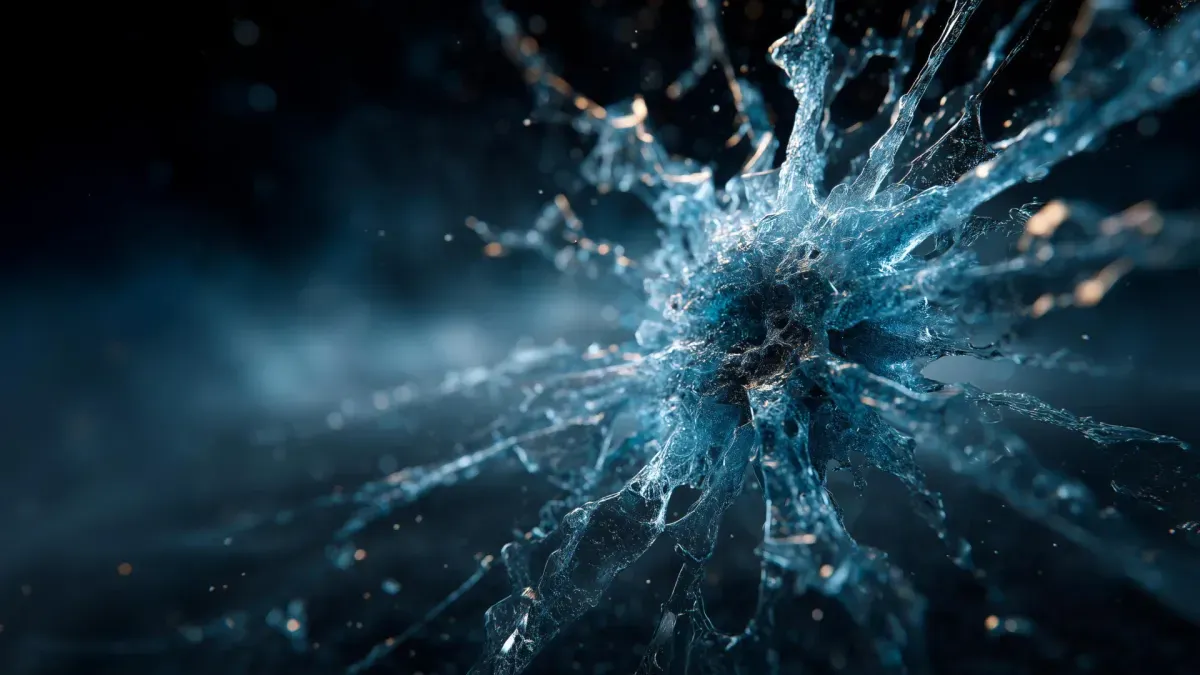
A molecule best known for its lethality may have functioned as a prebiotic catalyst, transforming icy crystals into chemical reactors billions of years ago.
Hydrogen cyanide, a toxic chemical, may have catalyzed prebiotic chemistry through reactive surfaces in frozen crystals, according to a study using computer simulations to model hydrogen cyanide crystal structures matching "cobweb" formations observed in lab experiments.
The simulations identified two reaction pathways converting hydrogen cyanide to hydrogen isocyanide—a precursor to life’s building blocks. Hydrogen isocyanide is a related molecule formed by rearranging hydrogen cyanide’s atomic structure, a process that could have occurred on early Earth’s icy surfaces.
The team proposes lab experiments to test this hypothesis by crushing hydrogen cyanide crystals with water under cold conditions, simulating prebiotic environments.
"We may never know precisely how life began, but understanding how some of its ingredients take shape is within reach," said Martin Rahm, a co-author of the study.
The research, funded by the Swedish Research Council and National Academic Infrastructure for Supercomputing in Sweden, demonstrates theoretical reactivity rather than direct evidence of prebiotic synthesis on early Earth.
Hydrogen cyanide is known to exist in space environments like Saturn’s moon Titan, suggesting its availability for such reactions in the cosmos.
The study emphasizes that its findings fit within a framework of plausibility rather than confirming specific mechanisms of life’s origins.
Computational models remain distinct from experimental validation, and further research is needed to test the proposed pathways under controlled conditions.