
Fraud Isn't a Crime Anymore - It's an Industry.
We've been thinking about fraud wrong for a long time.
The mental image most people carry is some version of the same story: a bad actor, a scheme, an investigation, a conviction. One person. One incident. Case closed. But Patrick McKenzie — better known as patio11, a writer who spent years inside the financial industry — has spent considerable time arguing that this framing is not just incomplete. It's the reason fraud keeps winning.
His argument, laid out in a recent essay and podcast episode, is straightforward and a little uncomfortable: large-scale fraud is not a series of isolated incidents. It's a business.
A repeatable, scalable, professionally organized business — with supply chains, division of labor, and institutional knowledge passed down through networks of specialists. The sooner governments and investigators start treating it that way, the sooner they'll stop hemorrhaging public money.
The Supply Chain Nobody Talks About
Walk into any successful bakery and you'll find a system. Specialized staff, capital infrastructure, processes optimized over time. Fraud, McKenzie argues, works exactly the same way.
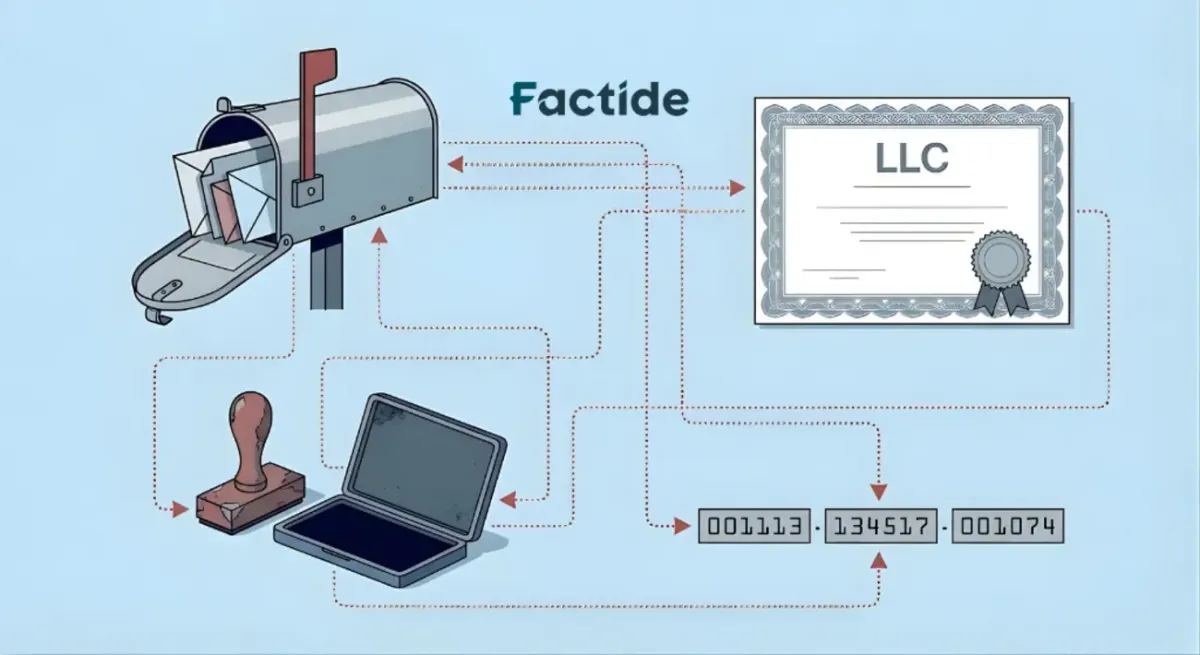
Fraudsters share accountants. They share incorporation agents. They share mail services, legal counsel, and — most importantly — they share banks. Not because they happen to know the same people, but because they've organically identified which nodes in the financial system are least attentive. When you're running an operation that burns through identities and entities at a high rate, you don't want a bank that asks hard questions. You want the one that barely asks any.
This clustering is detectable. Elementary network analysis — mapping shared infrastructure across known fraud cases — frequently unravels entire rings. McKenzie notes that this kind of work, which once required expensive enterprise software and months of engineering time, can now be done by a non-technical investigator on a lunch break with an LLM. The tools exist. The question is whether the institutions are willing to use them.
The State Has No Memory
One of McKenzie's sharpest observations is something he calls the state's lack of "object permanence" when it comes to serial fraudsters.
In the financial industry, blacklists exist. Get caught doing something serious and your second chance isn't automatic — it has to be earned, and many never get it. In government benefits programs, the opposite tends to be true. A convicted fraudster walks into a new program and is, by default, treated as a blank slate. Equal moral standing with any randomly chosen citizen. The prior convictions might as well not exist.
The Minnesota cases make this concrete. The same individuals — in some instances operating under their own names, with no complicated corporate structuring, no nominee directors — moved from one program to the next after their previous entities wore out their welcome. The same methods. The same playbook. Different program officer, different funding stream, same result.
McKenzie isn't arguing that constitutional principles need to be abandoned. He's arguing that the government is not obligated to be repeatedly defrauded by the same people in the same way. Those are different things, and conflating them is convenient for fraudsters.
Minnesota, and the Childcare That Had No Children
The Minnesota cases thread through McKenzie's analysis as a case study in institutional failure at scale.
The state's Legislative Auditor — a nonpartisan body — documented that at the peak of the fraud, investigators believed more than fifty percent of all reimbursements to certain daycare centers were fraudulent.
Investigators visited facilities that, by the billing records, should have had dozens of children present. The facilities were empty. They documented this on timestamped video, repeatedly.
The state's response was, for years, essentially nothing. Officials took the position that fraud could only be formally recognized after a criminal conviction was secured. Since convictions were few, there was, in their framing, no fraud to speak of. Asked to put a number on the losses, they declined.
What made this fraud durable wasn't sophistication. The sign-in sheets were sometimes filled out in a single handwriting across dozens of entries. The paperwork was, as prosecutors later described it, almost comical. What made it durable was that the defense against it required the government to prove a negative — to spend weeks on surveillance, produce hours of video, laboriously document what wasn't there — while the fraudsters needed only to submit a form.
That asymmetry was a design choice. And it can be redesigned.
The 30-Second Video That Changes Everything
McKenzie's proposed fix is almost insultingly simple, and that's precisely the point.
When a fraud analyst team once asked him how to distinguish real businesses from fake ones without deep industry expertise in every conceivable sector, his answer was: ask for a quick cell phone video of the workspace.
For a legitimate business, this is trivially easy. A machine shop has machines. A daycare has children. A cleaning company has equipment and people and the ordinary, messy evidence of actually operating. For a fraudster managing dozens of shell entities simultaneously, producing a convincing video for each one — on short notice — introduces a burden that compounds quickly.
The underlying concept is what technologists call a proof-of-work function. Legitimate businesses generate visible, verifiable effects in the world as a byproduct of simply existing. Fraudulent ones have to manufacture those effects from scratch, and manufacturing them at scale is hard.
The numbers support a harder front end. Research on Medicare fraud involving dialysis transport found that introducing a prior authorization requirement produced an immediate and permanent 68% reduction in fraudulent claims. The "pay-and-chase" model — approve everything, investigate after the fact — achieved roughly 20%. The gap isn't marginal. It's the difference between a functioning defense and an expensive illusion of one.
Growth Is the Tell
Frauds are, at their structural core, a lie about growth. You're claiming reimbursements for services that weren't delivered, clients that don't exist, meals that were never served. To sustain that lie, you have to keep growing the lie. Which means fraudulent operations tend to post growth rates that, if anyone were paying attention, should trigger immediate scrutiny.
Feeding Our Future, the Minnesota operation that has produced over 70 federal indictments, posted a compound annual growth rate of 578% sustained over two years. For context: Uber, during its most aggressive expansion period, averaged 226%. Its single best year was 369%. And unlike Uber, which was genuinely transforming how millions of people moved through cities, virtually no one in Minneapolis could report having received a meal from Feeding Our Future.
This pattern recurs across fraud cases. Pandemic-era unemployment insurance. PPP loans. Genetic testing schemes. Non-emergency medical transport. New programs, flush with money, staffed by people who haven't yet paid their tuition at the school of hard knocks — these are the targets. The defenders in new fields haven't developed instincts yet, and fraudsters know it.
The implication for investigators: sort by growth rate descending. It won't catch everything, but it will catch more than most other approaches, faster.
What Machine Learning Actually Gets Right Here
The defender's structural advantage — the one thing a fraudster can never replicate — is access to data at scale.
Real businesses leave a particular kind of mess: inconsistent, contradictory, full of typos and timing irregularities, shaped by the genuine unpredictability of operating in the real world. Fraudulent operations leave a different kind of mess — cleaner in some ways, stranger in others, missing the specific texture of genuine human activity.
Machine learning systems, trained on the full range of legitimate and fraudulent behavior, can learn to recognize that texture and adapt as fraudsters change their tactics. When COVID hit, supermarket revenues spiked. So did revenues claimed by certain fraudulent operations. But the pattern of that spike — the timing, the product mix, the geographic distribution, the downstream transactions — looked nothing alike. A system ingesting enough data sees that difference. A heuristic rule written in 2019 doesn't.
McKenzie's broader point here is that better fraud detection isn't only a fiscal argument. Historically, every notorious fraud scandal has produced overcorrected legislation — tighter eligibility requirements, heavier application burdens, more invasive documentation demands — that disproportionately affects the legitimate applicants who needed the program in the first place.
If you can demonstrate to the public and to legislators that fraud is genuinely controlled, you gain the political space to make programs more accessible, not less. The interests of fraud investigators and program beneficiaries are, ultimately, aligned.
Why Civil Society Keeps Losing This Argument
McKenzie ends on a note that's harder to dismiss than it might first appear.
Responsible actors in civil society have, in his framing, a mandate to aggressively investigate and call out fraud. Not because fiscal efficiency is the highest value, but because when credible institutions fail to do this work honestly, they cede the field to people who will do it dishonestly — loudly, carelessly, and with little concern for collateral damage.
The public isn't wrong to believe fraud happens. It does, at significant scale, in programs that receive very little serious scrutiny from the institutions nominally responsible for them.
When that gap becomes too visible, it gets filled by whoever is willing to say out loud what the "great and the good" have been carefully not saying. And those people are rarely careful about what else they say alongside it.
The antidote isn't to stop talking about fraud. It's to talk about it accurately, investigate it seriously, and build systems that treat it as the professional, repeatable, industrial-scale operation it actually is — rather than a series of embarrassing anomalies that someone else will deal with eventually.
What McKenzie is really describing is the cost of institutional politeness.
Fraud persists at scale not because it's hard to detect — most of these cases left trails that were almost deliberately obvious — but because detecting it requires saying things that are socially uncomfortable.
Empty daycares. Implausible growth rates. The same names appearing in sequential fraud cases. None of this is mysterious. What's missing is the willingness to follow the evidence where it leads and build systems that respond to what they find, rather than to what everyone would prefer to find.
The deepest irony in all of this: the people most harmed by tolerating fraud in social programs are the people those programs exist to help. Every dollar that went to a daycare that had no children was a dollar that didn't go to a family that needed it. Protecting a program's political reputation by minimizing its fraud problem doesn't protect the program. It protects the fraud.
That's worth saying plainly, and it's worth saying more often.
Recommended Reading
 Yunus Yagis
 Yunus Yagis