


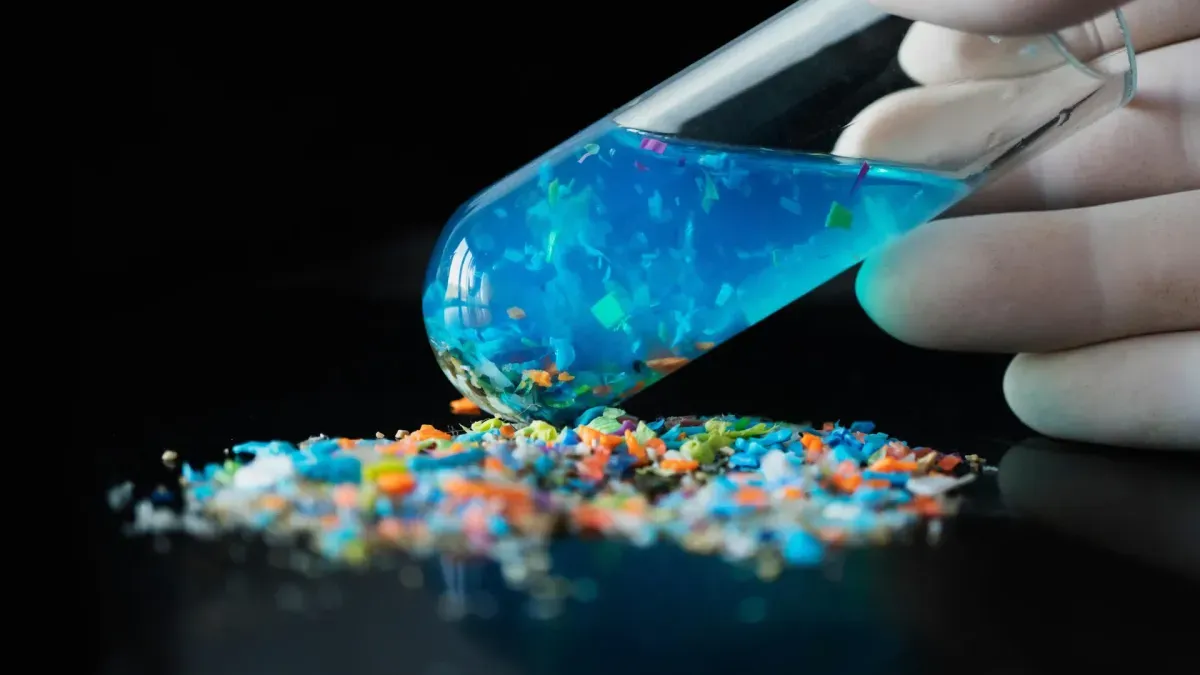
A fluorescence-based technique could transform how scientists observe microplastics navigating living systems in real time. Traditional methods for detecting microplastics and nanoplastics—such as infrared spectroscopy and mass spectrometry—require tissue destruction to analyze particle composition.
In contrast, the new approach integrates light-emitting components directly into plastic polymers through fluorescent monomer controlled synthesis, enabling non-destructive, dynamic tracking within biological environments.
Aggregation-induced emission materials, which maintain signal stability during imaging, form the core of this strategy.
These materials allow researchers to monitor particle size, shape, brightness, and degradation pathways in real time. "Most current methods give us only a snapshot in time," said corresponding author Wenhong Fan. The technique's ability to capture continuous data could provide critical insights into how microplastics interact with cellular structures and contribute to toxicity.
Plastic production exceeds 460 million tons annually, with millions of tons of microplastics entering ecosystems and human tissues yearly.
While the new method shows promise for advancing toxicity research, the study remains in the experimental phase. "Dynamic tracking will help us move beyond simple exposure measurements toward a deeper understanding of toxicity mechanisms," Fan stated. Researchers caution that further validation is needed to confirm the technique's reliability across diverse biological contexts.
⚠️ LEGAL DISCLAIMER: It is for informational purposes only. It never substitutes for professional medical advice, diagnosis, or treatment. Always consult your doctor regarding any questions about your health.
Recommended Reading
 Yunus Yagis
 Yunus Yagis