


In a single lake in East Africa, more than 800 fish species diverged from one common ancestor faster than humans and chimpanzees split from theirs. The mechanism, long mysterious, may now have an answer.
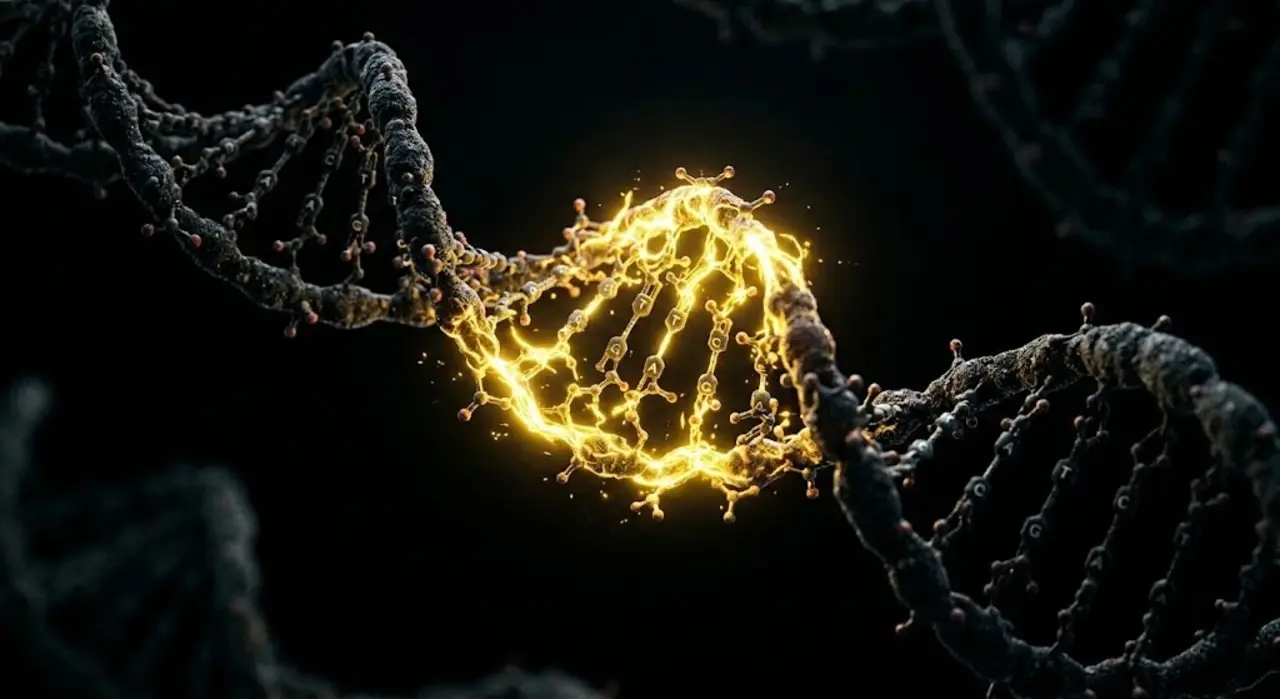
Researchers analyzing the DNA of more than 1,300 cichlid fish from Lake Malawi found that large sections of DNA on five chromosomes are flipped, a mutation called a chromosomal inversion. During reproduction, DNA from both parents normally recombines and shuffles. Inside these flipped regions, that shuffling stops. Beneficial gene combinations stay intact, generation after generation.
The locked clusters are called supergenes. Hennes Svardal, senior author from the University of Antwerp:
"We discovered that, in some species, large chunks of DNA on five chromosomes are flipped, a type of mutation called a chromosomal inversion."
What makes Lake Malawi's cichlids so striking is not just how many species exist, but how they coexist. Predators, algae-eaters, sand-sifters, and plankton-feeders all share the same water, with no physical barrier dividing their habitats. Some live near the surface. Others descend to 200 meters, where light fades, pressure climbs, and food sources change entirely.
Their supergenes carry the specific adaptations for each of those worlds, preserved intact.
Moritz Blumer, first author from Cambridge's Department of Genetics:
"It's sort of like a toolbox where all the most useful tools are stuck together, preserving winning genetic combinations that help fish adapt to different environments."
When species interbreed, entire inversions can transfer between them, carrying survival traits across lineages. This means evolution does not have to start from scratch each time conditions change.
Blumer:
"When different cichlid species interbred, entire inversions can be passed between them, bringing along key survival traits, like adaptations to specific environments, speeding up the process of evolution."
The inversions do more than preserve adaptive traits. In some cases they function as sex chromosomes, influencing whether an individual develops as male or female. This connects the mechanism to speciation at yet another level.
Richard Durbin, co-senior author from Cambridge's Department of Genetics:
"While our study focused on cichlids, chromosomal inversions aren't unique to them. They're also found in many other animals, including humans — and are increasingly seen as a key factor in evolution and biodiversity."
How these supergenes spread across populations, and whether the same mechanism shapes biodiversity in other vertebrates, remains the next question the team plans to investigate.
Source: Science, 2025; 388 (6752) | DOI: 10.1126/science.adr9961