


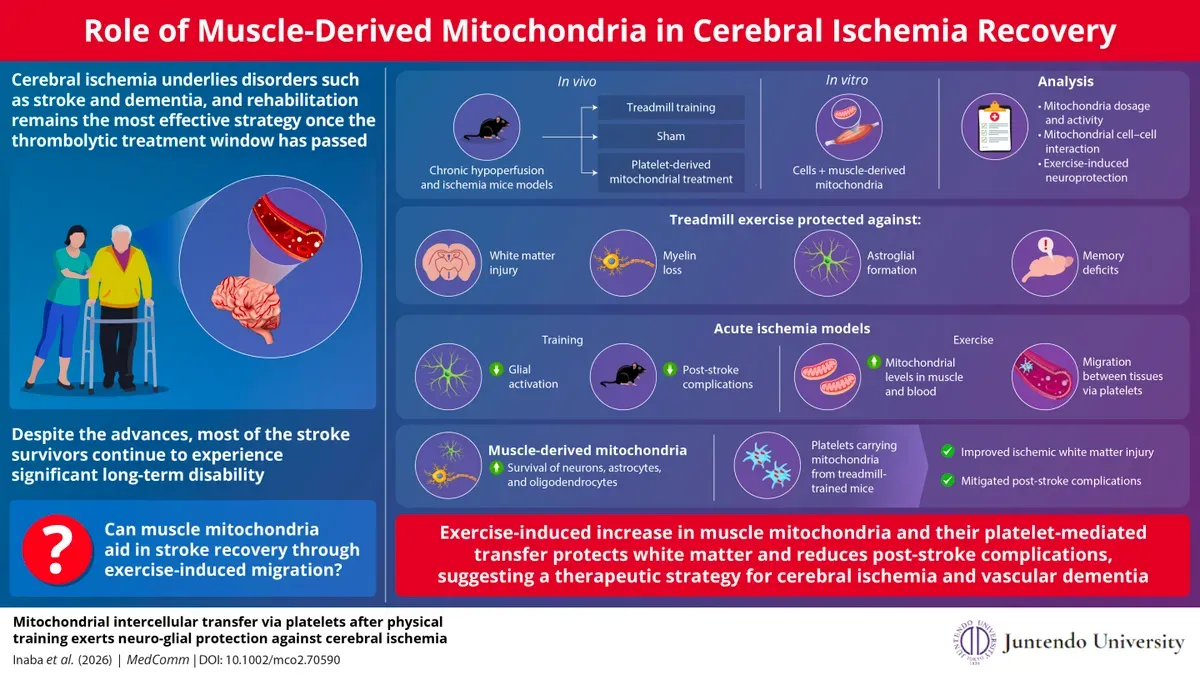
When platelets become delivery vehicles for life-saving mitochondria, a new frontier in stroke recovery emerges.
A study published in MedComm reveals that exercise-induced mitochondrial migration via platelets reduces stroke damage in mice. Researchers led by Dr. Toshiki Inaba and Dr. Nobukazu Miyamoto observed mitochondrial transfer from muscle to brain cells—including neurons, oligodendrocytes, and astrocytes—during recovery.
Exercised mice showed a 30% reduction in white matter damage and improved memory and movement compared to sedentary controls.
Platelets act as "delivery trucks" transporting mitochondria to ischemic brain regions, enhancing cell survival under low-oxygen conditions. This mechanism could explain how physical activity mitigates neurological damage after cerebral infarction.
Dr. Miyamoto said:
"It was during my research fellowship... therapeutic applications."
The study acknowledges limitations: results are based on animal models, and technical challenges remain in translating this mechanism to human therapies. No independent expert commentary was included in the source.
⚠️ LEGAL DISCLAIMER: It is for informational purposes only. It never substitutes for professional medical advice, diagnosis, or treatment. Always consult your doctor regarding any questions about your health.