


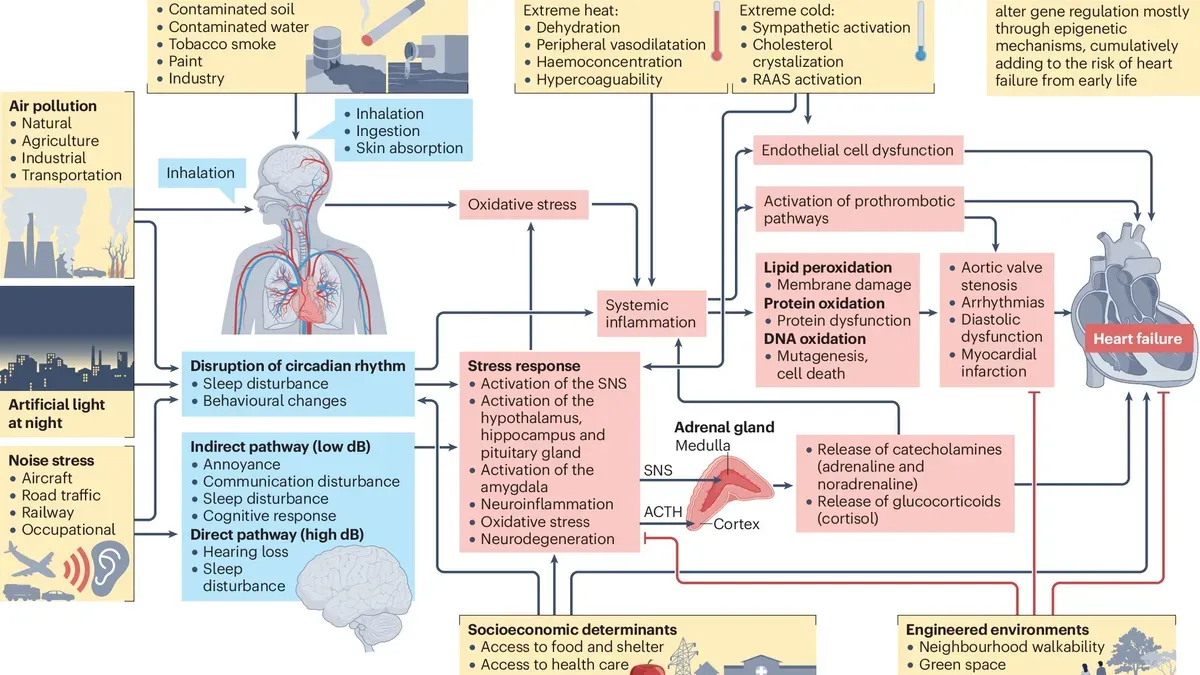
Heart failure's roots may lie as much in the air we breathe and the noise we endure as in our genes or lifestyle choices, according to a sweeping review of environmental influences.
A systematic review by University Medical Center Mainz and international collaborators reveals that environmental factors like air pollution, noise, and heat contribute significantly to heart failure risk and progression. Over 64 million people globally and 4 million in Germany are affected by heart failure, with a 50% mortality rate within six years of diagnosis.
Dr. Omar Hahad said:
"The continuous interaction of humans with the influencing factors of their environment leads to a considerable cumulative burden at the population level."
The study emphasizes that environmental exposures act synergistically and over long periods, often starting in early life. Lower socioeconomic groups face higher exposure to environmental risks and limited access to preventive care, exacerbating health disparities.
The review calls for integrating environmental protections—such as air quality and noise reduction—into heart failure prevention strategies alongside traditional medical approaches.
The findings are based on a systematic review published in Nature Reviews Cardiology. The study does not provide clinical guidance for individual patients and highlights that the observed associations represent correlations, not causation. No independent expert commentary was included in the source.
⚠️ LEGAL DISCLAIMER: It is for informational purposes only. It never substitutes for professional medical advice, diagnosis, or treatment. Always consult your doctor regarding any questions about your health.