Enormous Iron Bar Found in Ring Nebula Defies Stellar Evolution Models
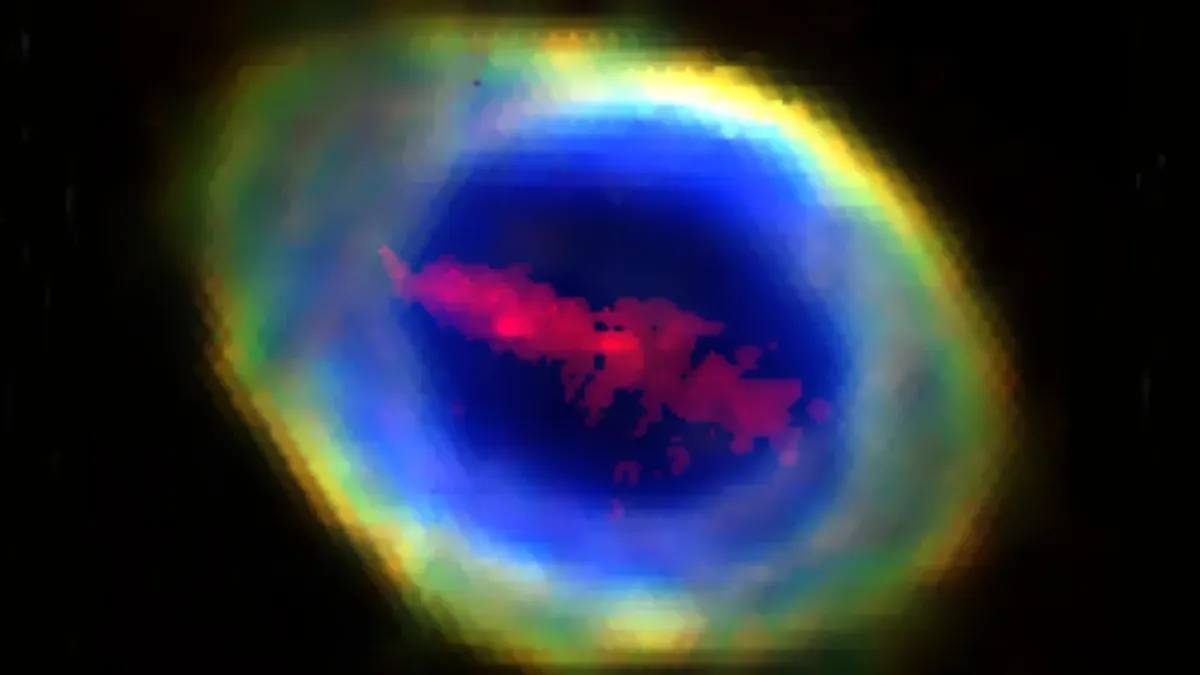
Astronomers have uncovered an enigmatic iron bar in the Ring Nebula, a celestial object long thought to be well understood, challenging existing models of stellar evolution.
Using the WEAVE instrument on the William Herschell Telescope, researchers detected a 1,000-light-year-long structure composed of ionized iron atoms at the nebula’s core.
Roger Wesson of UCL described the discovery as 'one thing popped out as clear as anything, this previously unknown bar of ionized iron atoms, in the middle of the familiar and iconic ring.'
The iron bar’s mass is comparable to Mars, yet its origin remains unexplained. Competing hypotheses suggest it could result from stellar mass ejection during the star’s final stages or the vaporization of an orbiting rocky planet.
WEAVE’s Large Integral Field Unit (LIFU) mode enabled spectral analysis across the entire nebula, revealing the bar’s structure. Janet Drew of UCL emphasized the need for further data, stating, 'We definitely need to know more — particularly whether any other chemical elements co-exist with the newly-detected iron.'
The team plans follow-up studies to determine if similar structures exist in other planetary nebulas.
The findings were published in Monthly Notices of the Royal Astronomical Society on January 15, 2024. The term 'planetary nebula' is a historical misnomer; these objects form when stars like the Sun shed their outer layers in late evolutionary stages.
The discovery’s theoretical relevance lies in its potential to inform future models of solar evolution, though no direct implications for Earth’s fate are claimed.