


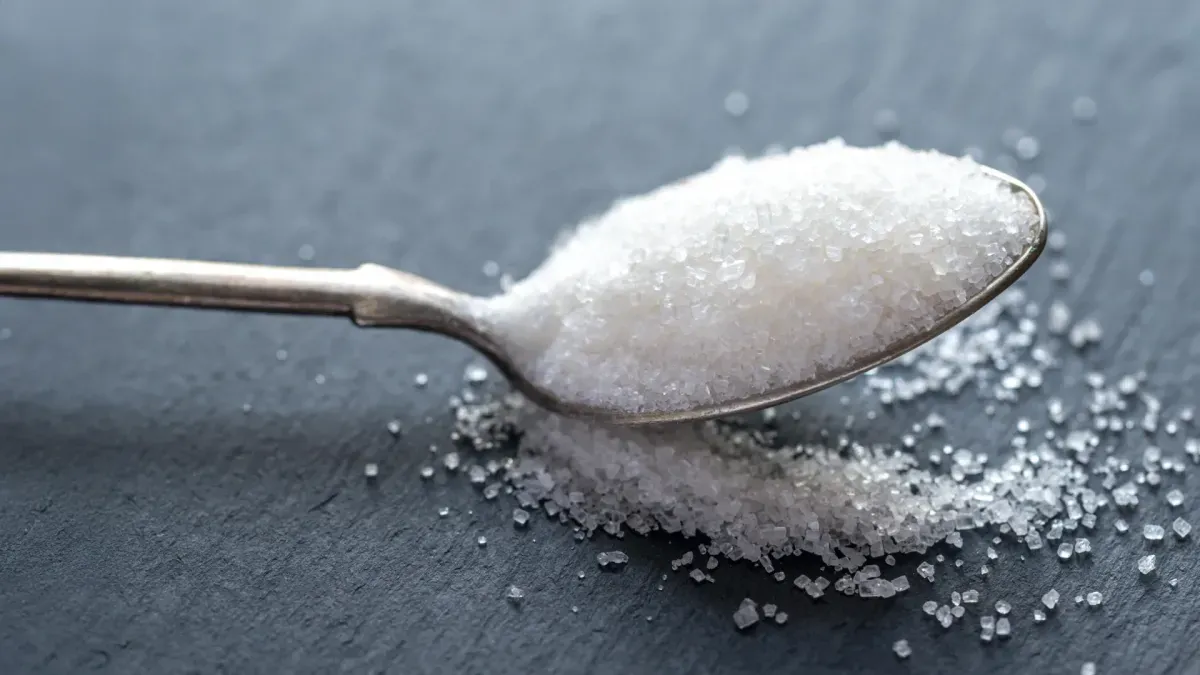
A breakthrough in sweet science: engineers have engineered bacteria to mass-produce a rare sugar that replicates table sugar’s taste without its health toll.
Researchers at Tufts University have developed a biosynthetic method to produce tagatose, a rare sugar, using genetically engineered E. coli bacteria with 95% yield, surpassing traditional methods (40-77% yield).
This advancement leverages a newly identified enzyme from slime mold—galactose-1-phosphate-selective phosphatase—to reverse the Leloir pathway, a natural biological process that typically metabolizes galactose into glucose.
By inverting this pathway, the team generates galactose from glucose, enabling scalable production of tagatose.
Tagatose offers 92% of the sweetness of sucrose with 60% fewer calories and minimal impact on blood glucose or insulin levels.
The U.S. Food and Drug Administration (FDA) classifies it as "generally recognized as safe." Preliminary research suggests it may inhibit cavity-causing bacteria and support gut health, though these findings remain in early stages and require further validation.
Nik Nair, a member of the research team, explained the innovation:
"The key innovation...reverse a natural biological pathway that metabolizes galactose to glucose and instead generate galactose from glucose supplied as a feedstock."
⚠️ LEGAL DISCLAIMER: It is for informational purposes only. It never substitutes for professional medical advice, diagnosis, or treatment. Always consult your doctor regarding any questions about your health.