


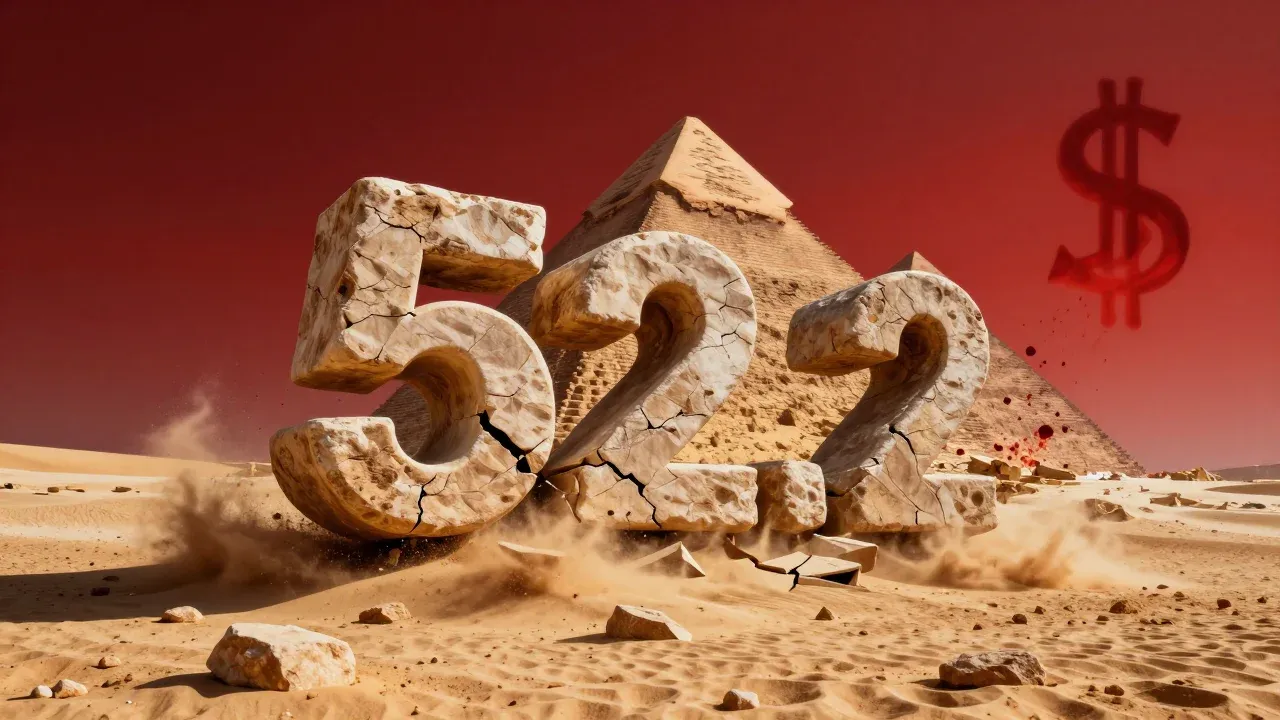
Egypt’s pound plummets to record lows amid Iran war fallout, exposing deepening economic fragility.
The currency fell to 52.2 per dollar on Sunday, according to the Central Bank of Egypt, marking its weakest level since the 2022 devaluation. Bloomberg calculations show a 4% drop from Thursday’s rate, the largest single-day decline since that overhaul.
The depreciation follows regional economic strain from the Iran war, which has disrupted trade routes and energy markets. Egypt’s reliance on imported oil and food staples amplifies its vulnerability to regional instability.
The Central Bank’s foreign exchange reserves, while still robust, have dwindled by 12% year-to-date, per Bloomberg data, as capital outflows accelerate.
Since 2022, the pound has lost over 60% of its value against the dollar. Structural reforms and IMF loan conditions have failed to curb inflation, which remains near 30%. The war’s indirect costs—higher energy prices, disrupted tourism, and reduced remittances—compound these challenges.
Look, Egypt’s pound’s collapse isn’t just about war—it’s a mirror of Egypt’s broader economic vulnerabilities. The Central Bank’s interventions may stabilize the currency short-term, but without structural reforms, this volatility will persist.
Source: Bloomberg
⚠️ LEGAL DISCLAIMER: This article is for informational purposes only and does not constitute financial or investment advice.