


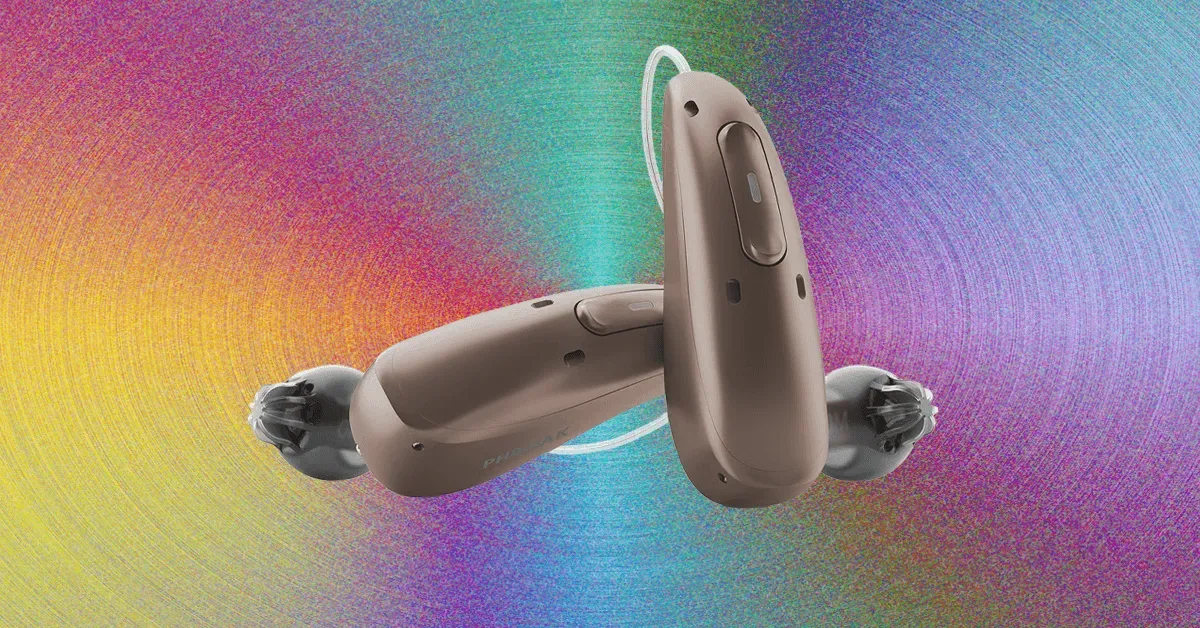
Phonak's Audeo Infinio Ultra Sphere hearing aids promise to revolutionize speech clarity in noisy environments through a dual-chip system—DeepSonic DNN for multidirectional speech processing and Era for core audio/wireless functions.
But a week-long trial revealed a paradox: while the devices excel at filtering background noise, they produce a 'light hiss effect' in quiet settings, exposing the limitations of AI-driven audio processing.
"Are two chips better than one for hearing clearly? I wore the Ultra Sphere hearing aids for a week to find out," the review states. Weighing 3.39g, the device is heavier than single-chip competitors like the Jabra Enhance Select 700 (2.58g) and Horizon Go 7IX (2.68g), yet its performance gap is most noticeable in silence.
Despite claims of 'dulling background sound,' the hiss emerges when ambient noise drops below 30 decibels—a threshold that includes libraries, bedrooms, and quiet conversations.
The technical architecture reveals why. DeepSonic DNN handles directional audio filtering, while Era manages signal amplification and Bluetooth connectivity. Single-chip systems like the Jabra model use shared processing for both tasks, potentially reducing latency but limiting the precision of noise separation.
Phonak's dual-chip approach allows parallel processing but introduces power management trade-offs—particularly in low-noise environments where the Era chip's amplification circuitry becomes audible as a faint hiss.
Available by prescription in seven colors with IP68 waterproofing, the Ultra Sphere's pricing remains undisclosed. Users report the hiss disappears during active noise scenarios, suggesting the issue stems from the Era chip's idle-state power consumption rather than the DeepSonic DNN's active processing.