


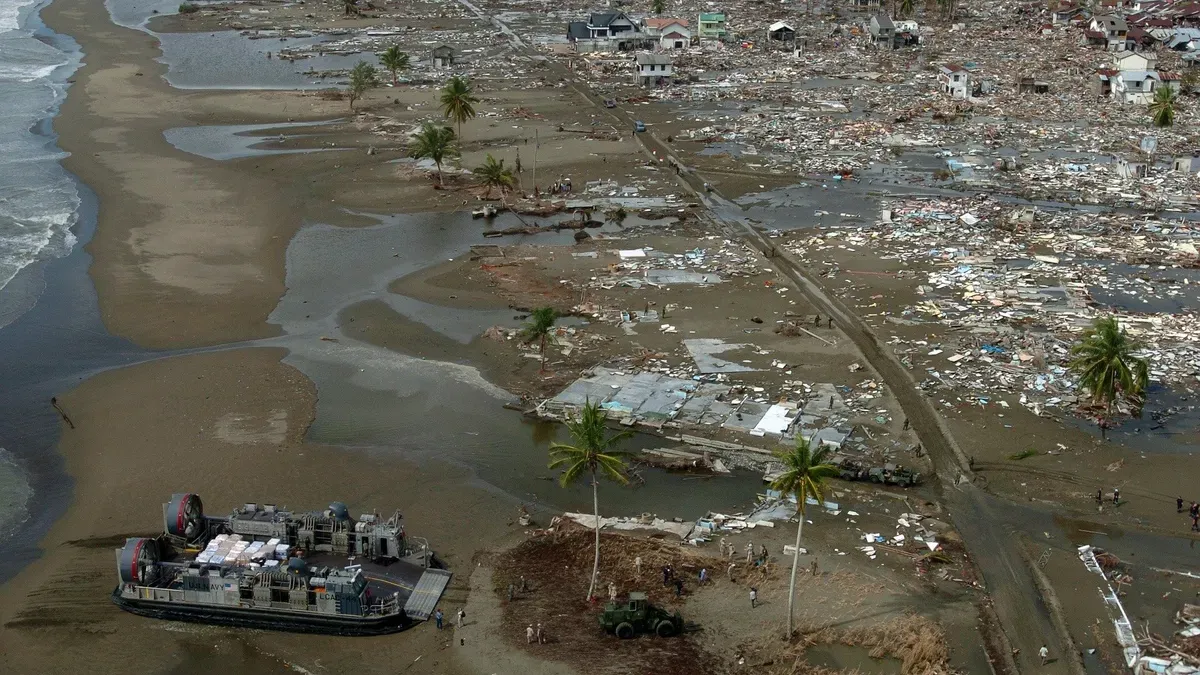
When disaster strikes, survival instincts may override health wisdom - a paradox revealed in the surprising link between housing loss and increased obesity rates.
A 2025 study in Communications Psychology found a 10% rise in obesity (25% to 35%) among Iwanuma, Japan residents who lost housing during the 2011 earthquake-tsunami disaster compared to those without asset loss.
Researchers tracked 337 participants in Japan and 187 disaster survivors in the Philippines after 2012 typhoon flooding, observing consistent increases in poor dietary habits, hypertension, and metabolic syndrome.
Ichiro Kawachi said:
"We had this unusual natural experiment where we had all the information about people's lifestyle and health behaviors before the earthquake, and we could track people afterwards"
The study identified "present bias" (hyperbolic discounting) as the mechanism linking housing damage to increased risky behaviors, using a modified marshmallow test to measure participants' preference for immediate rewards over delayed benefits. Yasuyuki Sawada said:
"Overweight and obesity rates increased... where it remained pretty much level among people who did not experience this kind of asset loss"
Behavioral changes persisted six years post-disaster, with no significant change in participants' tolerance for risk. Researchers suggest implications extend beyond natural disasters, noting similar patterns during the pandemic (e.g., increased alcohol-related deaths, opioid overdoses).
⚠️ LEGAL DISCLAIMER: It is for informational purposes only. It never substitutes for professional medical advice, diagnosis, or treatment. Always consult your doctor regarding any questions about your health.