Comet C/2025 R3 (PanSTARRS) Nears Earth and Sun in April 2026 with Uncertain Visibility
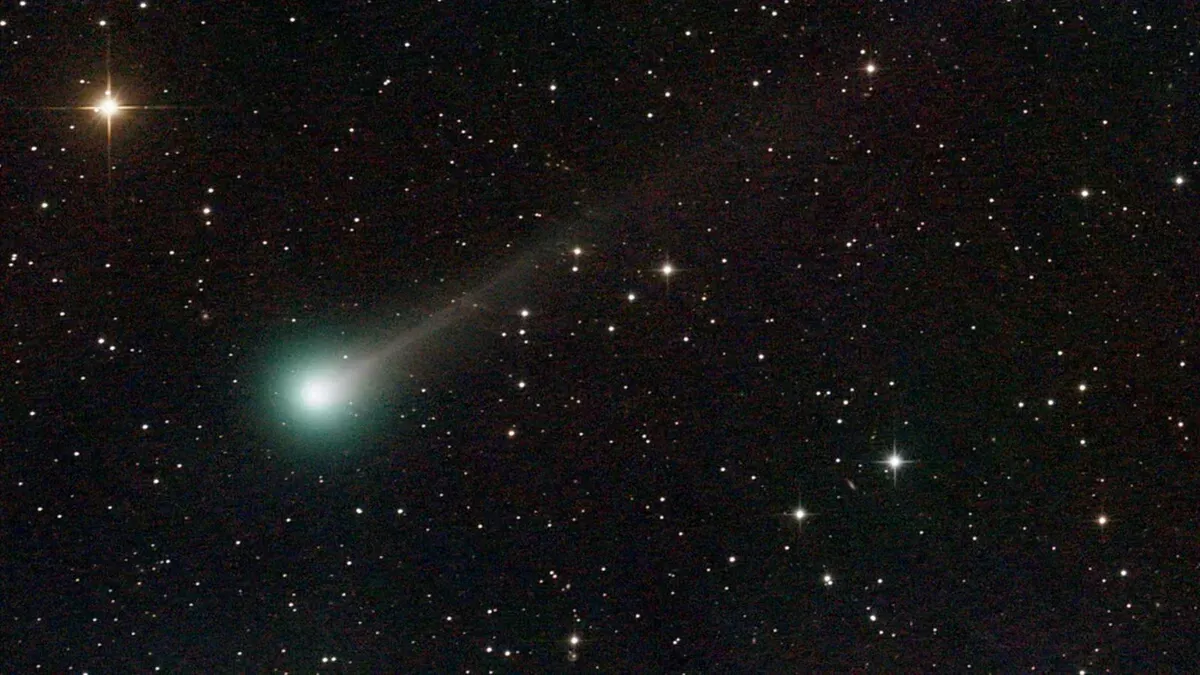
A newly discovered comet may soon become the 'Great Comet of 2026' as it approaches the sun and Earth, though its ultimate brightness remains uncertain.
Comet C/2025 R3 (PanSTARRS), identified on September 8, 2025, by the Pan-STARRS telescopes on Haleakalā volcano, follows an orbital path currently placing it 216 million miles (348 million km) from Earth—between the orbits of Mars and Jupiter.
The comet will reach perihelion on April 20, 2026, at 47.4 million miles (76.3 million km) from the sun, and will pass closest to Earth on April 27, 2026, at 44 million miles (70.8 million km).
Current models predict an apparent magnitude range of 8 to 2.5, corresponding to telescope-visible to potential naked-eye visibility.
Variability in brightness depends on solar radiation effects and forward scattering phenomena, which can amplify reflected light at specific angles. Southern Hemisphere observers may have optimal viewing opportunities in early May, with the comet positioned in the constellation Pisces during peak visibility.
The object is classified as a long-period comet, likely originating from the Oort cloud, based on its orbital trajectory calculations.
Observational constraints include the comet's proximity to the sun at closest approach, which may limit visibility in northern latitudes.
Researchers emphasize that these predictions are based on current orbital mechanics and do not account for potential fragmentation or unexpected outgassing events, which could alter brightness outcomes.