


What if the universe contains answers to its deepest mysteries hidden in plain sight - and we're just learning how to see them? Dark matter and dark energy constitute approximately 95% of the universe, yet remain undetectable directly.
This cosmic enigma drives researchers to develop cutting-edge technologies like cryogenic quantum sensors, which could revolutionize our understanding of the invisible forces shaping the cosmos.
Dr. Rupak Mahapatra, a leading researcher at Texas A&M, describes the challenge: 'It's like trying to describe an elephant by only touching its tail.
We sense something massive and complex, but we're only grasping a tiny part of it.' His team is working on sensors capable of detecting particle interactions that occur as infrequently as once per year or decade.
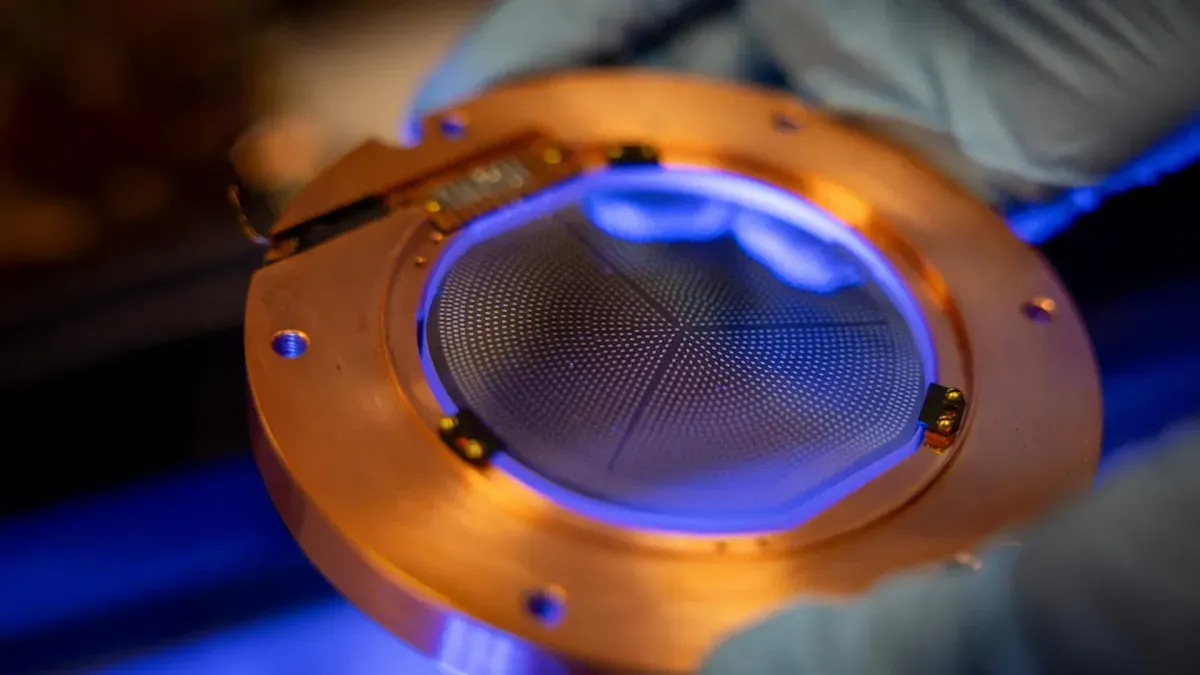
Experiments such as TESSERACT and SuperCDMS employ ultra-sensitive detectors cooled to near absolute zero. These setups aim to capture the faintest signals from dark matter particles.
Dr. Mahapatra emphasizes the difficulty: 'The challenge is that dark matter interacts so weakly that we need detectors capable of seeing events that might happen once in a year, or even once in a decade.'
If successful, these efforts could unlock new physics. 'If we can detect dark matter, we'll open a new chapter in physics.
The search needs extremely sensitive sensing technologies and it could lead to technologies we can't even imagine today,' Dr. Mahapatra notes.
A recent study published in Applied Physics Letters, co-authored by 22 researchers, details these advancements.
⚠️ LEGAL DISCLAIMER: It is for informational purposes only. It never substitutes for professional medical advice, diagnosis, or treatment. Always consult your doctor regarding any questions about your health.