


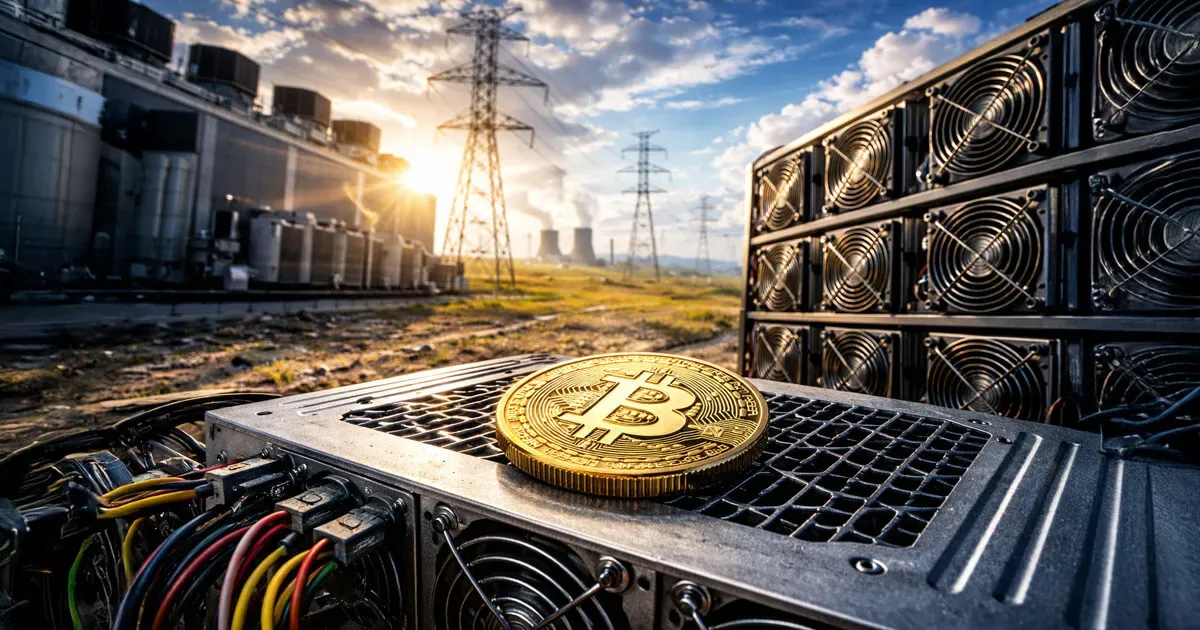
BlackRock has declared an energy war between AI data centers and Bitcoin miners, warning that grid access—which crypto miners once weaponized as a flexibility advantage—may now become the scarcest resource in the 2030s.
The asset manager’s 2026 Global Outlook estimates AI infrastructure could consume 24% of U.S. electricity by 2030, dwarfing Bitcoin mining’s projected 2.3% share. This shift reclassifies Bitcoin mining from a speculative asset play to a physical infrastructure race, as miners lose their edge in leveraging interruptible power contracts.
Electric Reliability Council of Texas (ERCOT) data shows miners received $31.7 million in 2023 for curtailment during outages, a model incompatible with AI hyperscalers demanding 99.99% uptime.
BlackRock forecasts $5–8 trillion in global capital expenditures for AI infrastructure through 2030, with energy systems accounting for a significant portion. This surge threatens to outpace grid expansion, forcing Bitcoin miners to either retrofit facilities for baseload power or pivot toward hosting AI workloads.
Some firms are already repurposing Texas-based mining sites for cloud computing, though retrofitting costs and competition from purpose-built data centers remain hurdles.
Regulators face a dual challenge: balancing AI’s energy demands with the economic benefits of Bitcoin mining. Texas’s ERCOT model, which incentivizes flexible load users to reduce consumption during peak demand, may struggle to accommodate AI’s rigid requirements.
This tension could reshape energy policy, with Bitcoin miners transitioning from grid stabilizers to energy-intensive competitors.
Look, the energy transition isn’t just about renewables—it’s about who controls the grid’s flexibility. If Bitcoin miners can’t adapt their power models to compete with AI’s baseload demands, their economic viability will hinge on regulatory carve-outs rather than market forces alone.
⚠️ LEGAL DISCLAIMER: This article is for informational purposes only and does not constitute financial or investment advice.