


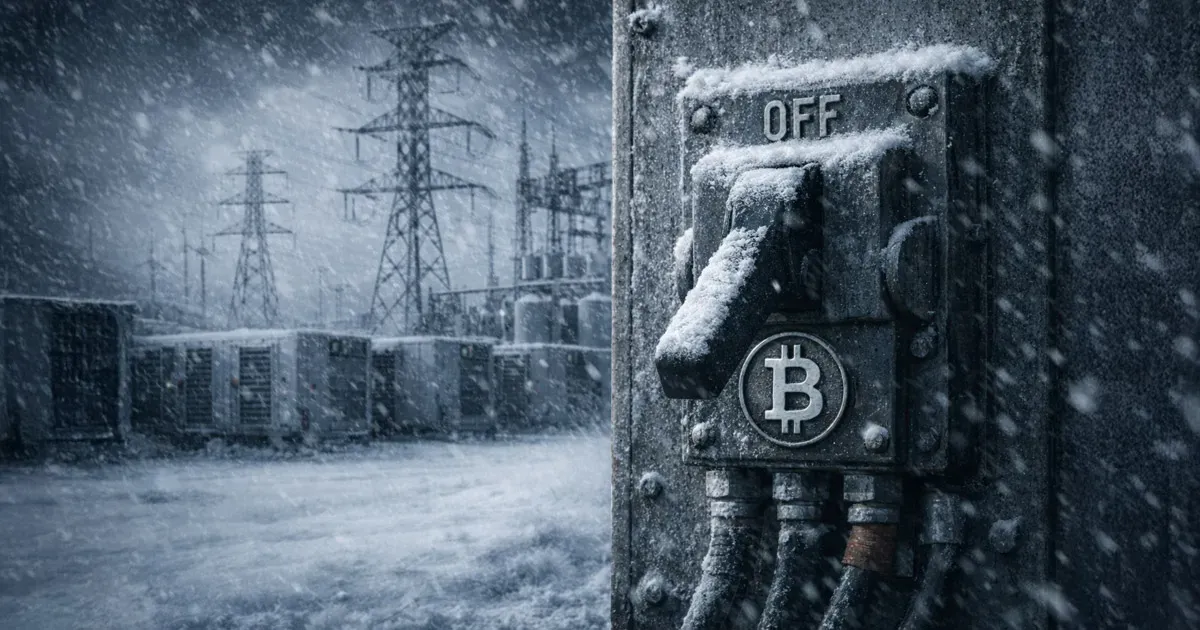
Bitcoin miners are becoming grid partners, not just energy consumers, as winter storms force them to turn off billions of dollars in computing power to stabilize U.S. electricity systems.
Between Jan. 23 and Jan. 25, U.S. miners curtailed operations by 40%, removing 455 EH/s of hashrate and pushing block times to ~12 minutes. This disruption highlights the dual role miners play in energy markets—both as flexible loads and as participants in demand response programs.
Foundry USA, the largest U.S.-based mining pool, led the sharpest hashrate drop during this period. The voluntary nature of these curtailments suggests miners are aligning with grid operators to avoid blackouts. In Texas, where ERCOT manages power distribution, companies like Riot and Iris Energy have capitalized on this dynamic.
Riot generated $24.2 million in "power credits" in 2023 through voluntary load reductions, while Iris Energy earned $2.3 million in 'power sales' using similar strategies.
Bitcoin’s difficulty adjustment mechanism, which recalibrates every 2,016 blocks, delayed the network’s response to the hashrate drop. This technical lag kept block times above 10 minutes until the next cycle, illustrating the tension between grid stability and blockchain efficiency.
Winter Storm Elliott (2022) and Winter Storm Uri (2021) established precedents for mining curtailments during grid stress, with 2026 projections pointing to broader integration of "flexible load" strategies across data centers and AI infrastructure.
Look, the financial incentives for miners to participate in demand response programs are clear. By turning off equipment during peak demand, they earn credits or payments from grid operators. But this arrangement raises regulatory questions. If miners are treated as energy market participants, how will their role evolve under stricter grid reliability standards? The data from Riot and Iris Energy shows profitability is possible, but the long-term viability depends on balancing grid needs with blockchain performance.
⚠️ LEGAL DISCLAIMER: This article is for informational purposes only and does not constitute financial or investment advice.