


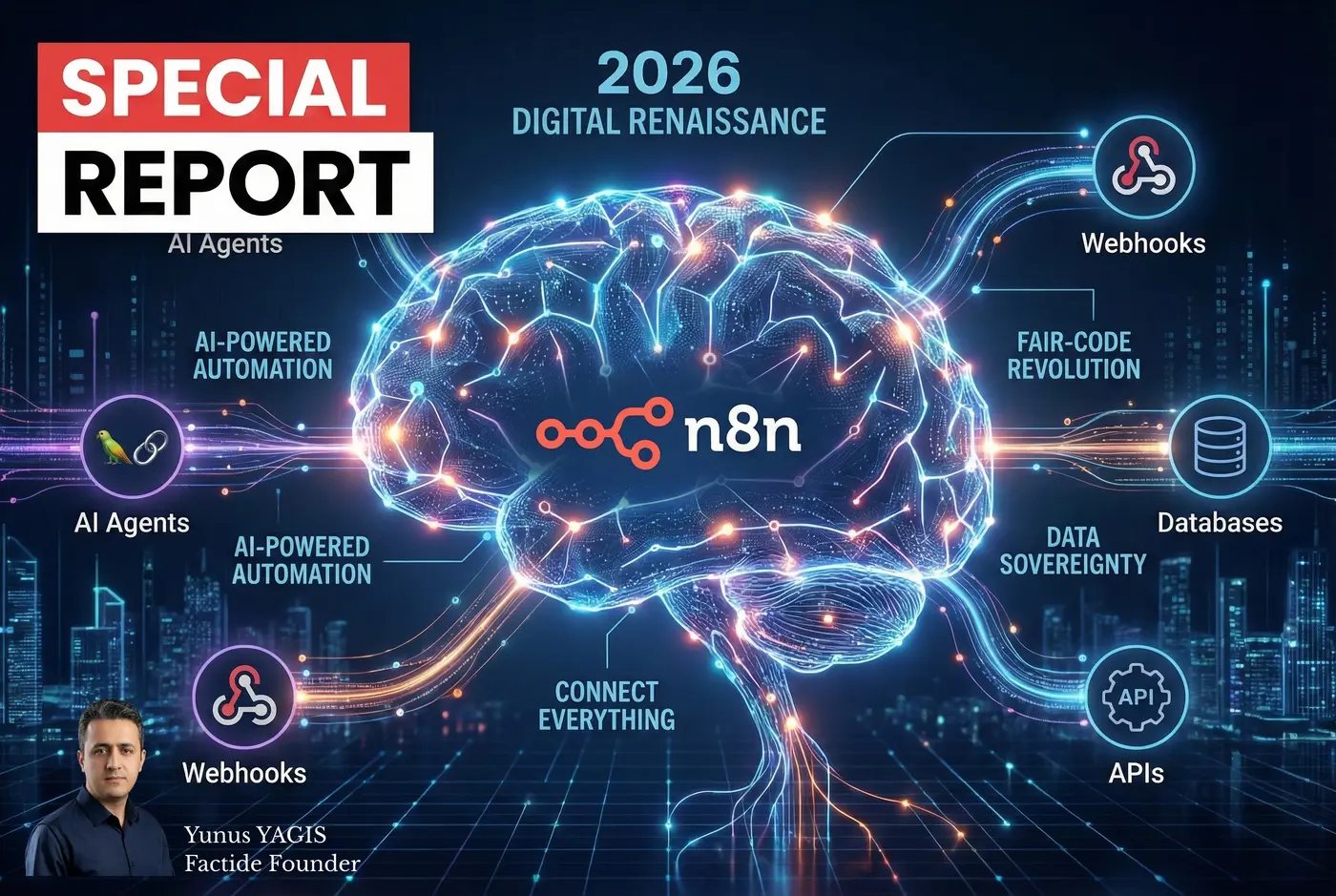
Editor’s Summary: Searching for Wholeness in a Fragmented World
Important: There are very critical notes within the article. I recommend reading carefully and taking a seat with a cup of coffee to enjoy the read.
As we step into 2026, the digital ecosystem presents a structure that is more expansive and capable than ever, yet more fragmented. Artificial Intelligence (AI) has permeated every aspect of our lives; however, this technological abundance brings along a managerial chaos. Companies and individuals are squeezed between hundreds of specialized SaaS (Software as a Service) applications, AI models, and databases. Isn't that right?
These tools, which entered our lives with the promise of productivity, have created "digital islands" (disconnected from one another) that consume our time due to a lack of integration. In this complex picture, n8n stands out not just as an automation tool, but as a nervous system that connects different components, forming the backbone of our digital existence.

This report you are reading deeply examines why n8n is undisputedly the most critical productivity platform of 2026, from its technical architecture to its philosophical foundations, and from its economic advantages to its direct relationship with artificial intelligence. Unlike competitors such as Zapier and Make, the "Fair-code" approach, data sovereignty, and limitless flexibility offered by n8n have turned it from a mere software choice into a strategic necessity.
Throughout the report, we will reveal how automation reshapes time, how it minimizes operating costs, and how it rescues human creativity from the tyranny of grunt work, using real-life scenarios and in-depth technical analysis. What you are about to read is not just a software review, but a manifesto for the working principles of the future.
Section 1: Philosophy of the Automation Age and Digital Sovereignty
1.1. 2026 Will Be Our Year: The Necessity of Speed and Integration
Throughout human history, the use of tools has been the greatest force in the progress of civilization. However, in 2026, as we leave behind the first quarter of the 21st century, the nature of tool use has fundamentally changed. We are now dependent on digital tools that lighten our cognitive load rather than physical tools. The human brain evolved to develop complex strategies, empathize, and produce creative solutions.
It did not evolve to copy data between Excel tables, enter invoice numbers into CRM systems, or give standard replies to emails. These types of repetitive tasks requiring simple actions are the "invisible cost" of the modern business world. In 2026, competition is more global and brutal than ever. The difference between a company that responds to a customer request in 24 hours and a company that provides a context-appropriate, personalized solution in 24 seconds—thanks to AI-powered automations—has turned into an abyss.
Automation has now moved out of the "nice-to-have" category and become a condition for survival. However, the understanding of automation here is far beyond the "simple rule-based" automations of the early 2020s. We are now talking about "Cognitive Automation."

n8n is a platform designed to meet the needs of this new age, centering on flexibility and power. Contrary to the approaches offered by traditional automation tools, n8n advocates for transparency and control. It allows its users to see every step of their processes, intervene, and customize. This is a critical advantage in an era where data security and privacy (GDPR, KVKK, and the tightening global data regulations of 2026) are of vital importance.
1.2. The "Fair-code" Revolution and the Open Source Heritage
The most fundamental philosophy that distinguishes n8n from its competitors is the "Fair-code" model. Combining the transparency and community power of open-source software with a sustainable business model, this approach offers users unique freedom. In closed-source (SaaS) competitors (Zapier, Make), you cannot fully know how your data is processed, which servers it is kept on, or how the algorithms work in the background. Your data enters the service provider's black box and comes out as a result.
n8n, on the other hand, makes the source code accessible. This allows technical teams to audit the platform, check for security vulnerabilities, and even add features by intervening in the platform's core code when needed.
🚀 Introducing AI Workflow Builder (Beta) - Turn prompts into living workflows.
— n8n.io (@n8n_io) October 13, 2025
Generate nodes, logic, and structure from text, then shape and ship your vision faster. Rolling out this week to n8n Cloud (Trial, Starter, Pro).
Update to v.1.116.0 to try it.
Learn more:… pic.twitter.com/trWkxIVOck
Considering the complexity of cybersecurity threats in 2026, it is a priceless layer of security for a financial institution or a health organization to process customer data on a self-hosted n8n instance running on their own secure servers, rather than sending it to a third-party cloud provider.
This model also eliminates the risk of "Vendor Lock-in." If n8n ever changes its company policies or raises its prices to astronomical levels, users can continue to use the current version on their own servers. This digital sovereignty makes n8n not just a tool, but a safe harbor for corporate strategy.
1.3. The Pinnacle of Visual Programming: Low-Code/No-Code Balance
n8n masterfully balances "Low-Code" and "No-Code" approaches in its user interface design. A marketing expert can take data coming from Google Forms (or Telegram, WhatsApp, etc.) without writing a single line of code and send it as a notification to Slack, for example, using drag-and-drop methods. The interface visualizes the flow of data like a river flowing from left to right. Each node is like a station on this river. It takes the data, processes it, and passes it to the next one.

However, the real power of n8n lies in the depth just beneath this simplicity. A software developer can process complex data with JavaScript or Python (beta in some n8n versions) using the "Code Node" within the same interface. This hybrid structure makes n8n a collaborative workspace for both citizen developers and experienced software engineers. It eliminates the disconnect between teams. A real-life example: The marketer dreams it, the engineer optimizes it, and both can communicate over the same n8n workflow.
Section 2: In-Depth n8n Architecture – Under the Hood
The way to use a system effectively is to understand how it works. n8n's architecture is built on modularity, extensibility, and performance. In this section, we will examine n8n's technical infrastructure, data processing logic, and node structure by 2026 standards.
2.1. Node-Based Structure and Operating Logic
In the n8n ecosystem, every operation is represented as a "Node". These nodes are functions packaged to perform a specific task.

2.1.1. Triggers
Every automation starts with a trigger. In n8n, these triggers are "Trigger" nodes. They are sentinels that wait passively and start the workflow when a specific event occurs.
- Schedulers (Cron/Schedule): Time-based triggers such as "Every morning at 09:00" or "On the 1st of every month."
- Webhooks (Major Advantage): Listens for HTTP requests coming from the outside world. The submission of a web form, the completion of a payment transaction, or a signal coming from an IoT device triggers n8n via a webhook. (When you learn to use Webhooks, you will understand why I call it a major advantage.)
- App Events: Special triggers that run "when a new message arrives in Slack, Telegram, etc.," "when a new file is uploaded to Google Drive," or "when a record is updated in Salesforce." These nodes react instantly by keeping in constant communication (polling) with the relevant service's API or by using the webhook features of that service.
2.1.2. Action/Function Nodes
The processing, transformation, and routing of data in the triggered workflow are provided by these nodes.
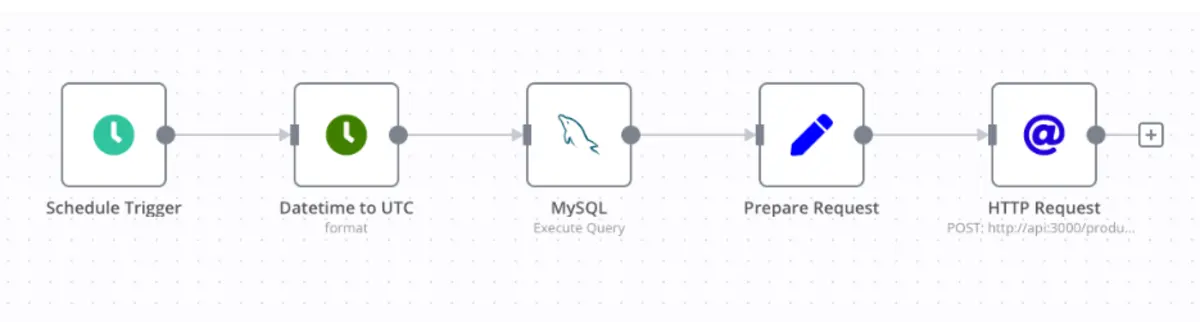
- Integration Nodes: n8n has over 1,000 ready-made integrations. It offers pre-configured nodes for popular services like Google Sheets, Notion, OpenAI, Telegram, PostgreSQL, and Ghost CMS. The user interacts with these services by simply entering credentials, without having to struggle with complex API documentation.
- HTTP Request: Allows connecting to any REST or GraphQL API that does not have a ready-made integration. It wouldn't be wrong to say this node makes n8n's limits limitless.
- Edit Fields (Set): Used to rename fields in the data set, assign values, or clean up unnecessary data.
- Split In Batches: Processes large data sets (e.g., a 50,000-line CSV file) by dividing them into small pieces (batches). This is a critical feature for efficient memory (RAM) usage and avoiding API rate limiting.
- Merge: Combines data coming from different branches. For example, while one branch brings the customer's order information, the other branch queries the shipping status; the Merge node combines these two pieces of information into a single report.

2.1.3. Code Node: Limitless Customization
Unlike its competitors, n8n offers users a full programming environment with the "Code Node." Supporting JavaScript and Python languages, this node comes into play when standard nodes are insufficient. Complex mathematical calculations, special encryption algorithms, advanced data mapping operations, or text analysis with regex (regular expressions) can be handled in this node within seconds. In 2026, this feature is of vital importance, especially for cleaning and structuring AI outputs.
The critical node information within n8n is as follows. You will witness much more as you start learning and using it.
2.2. JSON Data Flow and Structural Integrity
n8n carries data between nodes in JSON (JavaScript Object Notation) format. This is the standard data language of the modern web. Each node receives a JSON object (or an array of objects) from the previous node, applies its own process, and sends a new JSON output to the next node.
This standardization makes it possible to connect different worlds. Table data from Google Sheets, row data from a SQL database, or text data from an email is transformed into the same JSON structure within n8n. Thanks to this, the user does not deal with the trouble of "Format A to Format B conversion." n8n handles this translation in the background, invisibly.
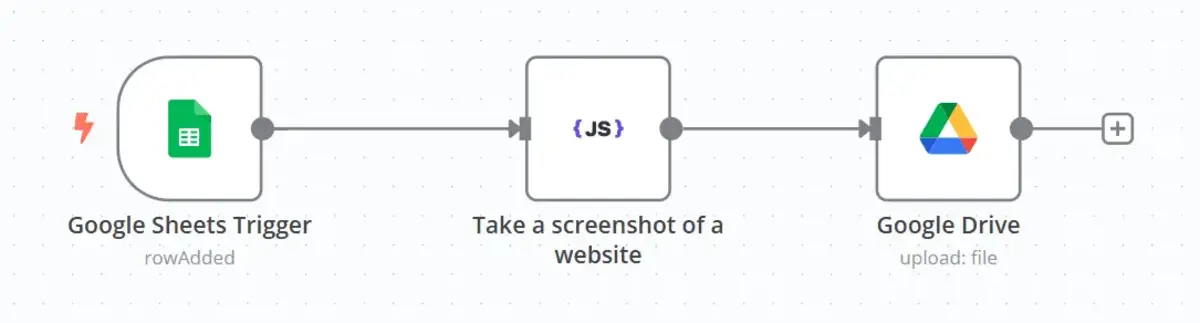
Especially in 2026, data is not just text. Images, audio files, and PDFs are also part of workflows. Thanks to "Binary Data" support, n8n can take a PDF invoice from an email attachment, process it in memory, read its content with OCR (Optical Character Recognition), and upload the file to Google Drive. Throughout this whole process, the file is carried safely as a metadata package along the workflow.
2.3. Error Management and Reliability
The biggest nightmare in the automation world is "silently failing" workflows. n8n offers advanced error management tools to minimize this risk.
- Error Trigger: An alternative workflow that is automatically triggered if a workflow fails at any point (e.g., the internet goes down or the API does not respond). This flow can send an "Emergency" message to the IT team via Slack, Telegram, WhatsApp, email, etc., or log the error in a file.
- Retry: Provides resilience against temporary errors. Rules like "If OpenAI, Gemini, Groq, etc. API services do not respond, wait 5 seconds and try again. Repeat this 3 times" reduce the fragility of the system and increase its stability.
Section 3: n8n in the Age of Artificial Intelligence
In 2026, the definition of automation has evolved. It is no longer enough to just "move data from point A to point B." It is necessary to understand, interpret, and make decisions about the data while moving it. n8n is at the forefront of this new era with its LangChain integration.
3.1. LangChain Integration: The Brain of Automation
LangChain offers an extraordinary innovation that enables application development with Large Language Models (LLM). n8n has integrated LangChain directly into its interface, transforming AI applications that require complex coding into a visual experience.
Users can include OpenAI, Anthropic (Claude), Google Gemini, Groq, Cerebras (via HTTP Request), or open-source models on Hugging Face into their workflows using drag-and-drop methods. This integration turns n8n from a simple pipeline into a central coordination layer. It is now possible to design "Chain of Thought" processes within n8n.

- Model Swapping: Are you using GPT-5 or Gemini in your workflow but want to reduce costs? With a single click, you can swap the model for "Gemini Flash" or "Llama, Qwen e.g." models (Cerebras offers alternative methods like Groq for free model usage). The rest of the workflow continues to work without breaking.
- Memory: Standard LLMs start every conversation from scratch. n8n's memory modules (Redis, Pinecone, Window Buffer Memory) allow the AI to remember previous conversations. This is a vital feature for customer service bots or personal assistants.
3.2. Autonomous AI Agents
Traditional automation is static. You determine the steps (Step 1: Read the email, Step 2: Write a reply). AI Agents, on the other hand, are dynamic. You give them a goal, and they decide for themselves how to reach it.
An AI Agent created on n8n consists of these components:
- Brain (LLM): The decision-making mechanism.
- Tools: Capabilities that the model (Agent) can use. "Do a Google Search," "Read Wikipedia," "Use a Calculator," "Run a SQL Query on the Company Database."
- Goal: "Resolve this customer's complaint."
When you give this command, the model on n8n starts thinking: "First, I need to look at the customer's order history (via SQL). Then I should query the shipping status (Shipping API Tool). The product is delayed, so I should apologize and create a discount coupon (Coupon Tool). Finally, I should send an email."
In this process, the model autonomously decides which tool to use and when. n8n makes this complex cognitive process manageable, trackable, and auditable. (Sounds nice, doesn't it?)
3.3. RAG (Retrieval-Augmented Generation) with Corporate Memory
AI models sometimes see hallucinations (they make up information that doesn't exist). This is unacceptable in the corporate world. n8n solves this problem by supporting the RAG architecture.
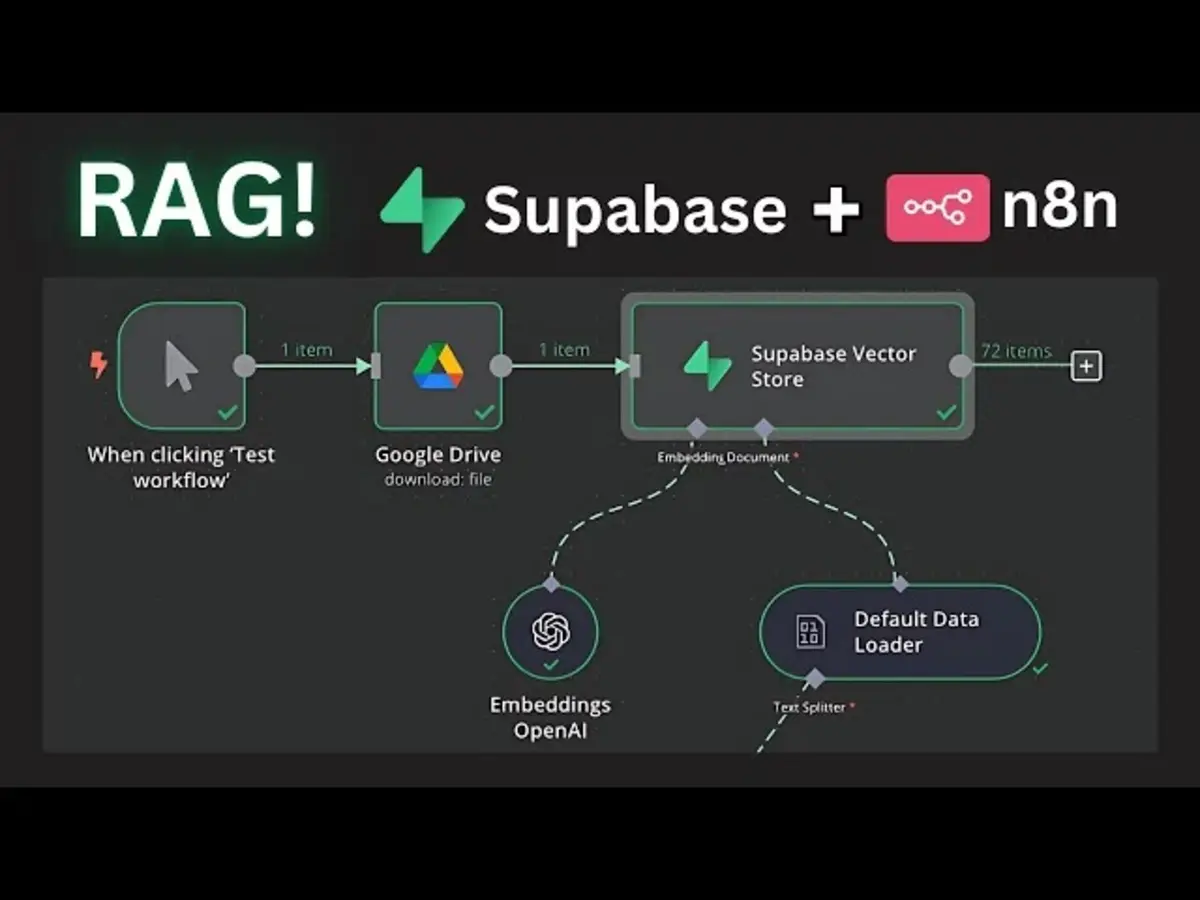
You can upload all your company's PDF contracts, Notion pages, Slack chats, and website content to a "Vector Database" (Vector Store - e.g., Pinecone, Supabase) via n8n.
I will publish a separate article for the Vector Database subject. It will not only be useful for many government agencies or companies; they will learn to save time, and it will allow personnel to work more effectively. (n8n RAG)
Let me briefly explain the Vector Database; when an employee or customer asks a question, the n8n workflow does the following:
- Takes the question and converts it into a vector.
- Finds the most relevant documents in the company memory (Vector Database) for this question.
- Gives the correct information it found to the LLM and says, "Answer only using this information." Result: A digital expert who never lies, is 100% master of company policies, and works 24/7.
Section 4: Stories from Real Life – Evidence of Transformation
Theoretical knowledge is important, but practical applications inspire and guide. Here are three striking stories from 2026 about how n8n changed the lives of users with different profiles.
Scenario 1: The Freelancer’s Digital Twin – "Making Money While Sleeping"
James is a freelance graphic designer and web developer living in New York. He used to spend 40% of his day chasing customers, preparing proposals, sending contracts, and tracking invoices. This administrative burden was killing his creativity and limiting his income. In 2026, James has a "Digital Twin."
The n8n System He Built:
- Lead Capture: James set up a flow on n8n that listens to Upwork, Freelancer, and Reddit APIs. When a posting matching his keywords (e.g., "UI Design", "n8n automation") drops, the system is triggered.
- Smart Analysis and Proposal: The content of the ad is sent to one of the GPT-4o, 5.2, or Gemini models. The AI analyzes the requirements of the ad and prepares a personalized Cover Letter draft by selecting the most suitable examples from James's portfolio. This draft comes to James's Slack with a button: "Approve and Send."
- Automatic Contract: When an agreement is reached with the customer, James starts the process with a single command. n8n takes the customer information, processes it into a standard contract template, converts it to PDF, and sends it to the customer for signature via DocuSign.
- Accounting: As soon as the contract is signed, n8n creates and sends the invoice, marks it as "Won" in the CRM (HubSpot), and sends the customer a "Welcome" email containing the link to the project management board (Trello/Notion).
Result: James now spends zero minutes on grunt work. He increased his income by 300% because n8n chases business and manages processes for him while he sleeps. James only focuses on his art.

Scenario 2: The E-Commerce Giant’s Customer Satisfaction Revolution
"ModaX" is a leading textile company in the US that receives tens of thousands of orders a day. The customer service department was being crushed under thousands of calls like "Where is my cargo?" or "I want to return it," especially during campaign periods. It was impossible to keep up with these demands with human power, and customer satisfaction was falling.
The n8n Solution: The company established an AI-powered multi-channel support system running on n8n.
- Visual Analysis (Computer Vision): When a customer sends a photo via WhatsApp saying "The stitching on this product came undone," n8n sends this photo to the Google Gemini Vision model. The AI detects the error in the photo (undone stitching, stain, wrong color) with 99% accuracy.
- Autonomous Decision: n8n checks the customer's "Trust Score" in the database. If the customer is trustworthy, the system creates the return code instantly without even presenting it for human approval, enters a "Pick up from home" order to the shipping company, and sends the customer a message saying, "We are so sorry, your new product is already on its way! Your return code: X123."
- Sentiment Analysis: If the customer is very angry (tone analysis in the message), n8n drops this case with an "Urgent" tag on the screen of the most experienced customer representative and provides a briefing note summarizing the situation for the representative.
Result: The return process dropped from 3 days to 30 seconds. The workload of the support team decreased by 80%; they started dealing only with complex problems. Customer loyalty and repeat purchase rates reached record levels.
Scenario 3: Personal Assistant – "Life Operating System" (Life OS)
Jack is a busy technology executive. He was getting lost among meetings, travels, personal finances, and health tracking. With n8n, he established an integrated "Life Operating System" for himself.
- Finance Tracking: When Jack buys a coffee or goes grocery shopping, he sends a photo of the receipt to his own bot on Telegram. n8n reads the receipt with OCR technology; it parses the date, amount, store name, and category (Food, Grocery, Clothing). It processes this data into the budget table in Google Sheets. If he exceeds the entertainment budget for that month, he receives an instant warning message.
- Meeting Preparation: Every morning at 08:00, n8n scans Jack's Google Calendar. It takes the names of the people he will meet that day, analyzes their LinkedIn profiles and his latest email correspondence with them. 15 minutes before the meeting, it sends Jack a summary: "You will meet with James. He was promoted last week (Don't forget to congratulate him!). You last talked about the budget for the project, and a revision was expected." This simple automation positions Jack as a "super-memory" and attentive leader in every meeting.
Conclusion: Building the Future
It is 2026, and we are living through one of the most exciting periods in the history of technology. Artificial intelligence and automation are carrying human potential to levels we could never have imagined before. However, this power will either liberate us or imprison us in a digital mess, depending on how we use it.
n8n offers us a compass at this crossroads. It says to us: "Be the owner of your data. Make your processes visible. Spend your time on creativity, not grunt work."
Using n8n is not just a software choice; it is a mindset revolution. This is the courage to say, "I can build what I need myself," instead of waiting for "others to add a feature for me."
It is the ability for a freelancer to work like an agency alone, for a small startup to compete with giant holdings, and for an employee to add super powers to themselves.
The future will belong not to those who know how to write code, but to those who can architect automation. n8n is the strongest pen of this architecture. Now is the time to take the pen in your hand and write your own story, with your own rules. Be the master of time, not its slave.
My regards and respects to our readers who read the article from beginning to end and took the necessary notes.
Yunus YAGIS
Factide Founder
